

Recognizing Somaliland Would Be in India’s Interest
I respectfully urge the Government of India to formally recognize the Republic of Somaliland as an independent and sovereign state within its 1960 borders.
The Republic of Somaliland is in the Horn of Africa, along the southern coast of the Gulf of Aden. Its borders are Djibouti to the northwest, Ethiopia to the south and west, and Somalia to the east. Somaliland covers an area of about 176,120 square kilometers and has an estimated population of 6.2 million as of 2024. Its capital is Hargeisa. The country has a coastline of approximately 850 kilometers on the Red Sea.
Somaliland became a British Protectorate in 1884 and declared independence on June 26, 1960, gaining recognition from 35 countries. Soon after, it voluntarily united with Somalia to form the Somali Republic, though this union was never legally ratified. In a 1961 referendum, most Somalilanders opposed unification. The absence of a binding treaty and years of political and economic marginalization led to ongoing grievances in Somaliland.
The situation became intolerable in the 1980s under the oppressive regime of Siad Barre, which was marked by egregious human rights violations. Thousands of civilians were killed, particularly in Hargeisa, which tragically earned the nickname “Africa’s Dresden” for the level of destruction inflicted upon it. Entire communities were massacred, and a massive portion of the population was forced to seek refuge in neighboring Ethiopia. In May 1991, Somaliland reasserted its independence during the Burao Conference.
Since reclaiming its independence in 1991, Somaliland has made remarkable progress in establishing a functioning democracy characterized by peaceful transitions of power. The nation has developed its own independent judiciary, a bicameral parliament, and a stable executive branch capable of governance. Moreover, Somaliland has created a robust security apparatus that not only maintains territorial integrity but has also successfully kept extremist insurgencies, including Al-Shabaab, at bay. This commitment to stability and governance has earned Somaliland the status as a rare beacon of democratic values in a region marred by conflict.
Somaliland has established important partnerships with democratic states fostering relationships based on mutual benefit and cooperation. Currently The Republic of Somaliland has diplomatic relations with the State of Israel, after that country became the first United Nations member to recognize Somaliland on December 26, 2025. It has developed a strong relationship with Taiwan, based on shared values and principles. Somaliland also maintains strategic ties with Ethiopia, the United Arab Emirates, Kenya, the United Kingdom, the European Union, and the United States.
A milestone in Somaliland’s economic development is the $442 million investment from Dubai Port World in the Berbera Port and the Berbera Corridor project. This initiative significantly improved regional connectivity with Ethiopia, highlighting Somaliland’s potential as a crucial economic hub in East Africa.
Moreover, Somaliland plays an indispensable role in securing the Gulf of Aden, actively combating piracy and extremism while contributing to international maritime security. Its geopolitical significance cannot be overstated, considering the potential for increased threats to maritime routes that connect crucial global markets.
Somaliland meets the Montevideo Convention criteria for statehood, which encompass the presence of a permanent population, defined territory, governance structures, and the capacity to engage in foreign relations. Formal recognition by Canada would reaffirm the nation’s commitment to democratic values and human rights. Furthermore, this recognition would contribute to enhanced regional security in the Horn of Africa and the Gulf of Aden, acting as a counterbalance to destabilizing influences, including terrorism and external powers that seek to exploit the region’s vulnerabilities.
Somaliland sits on the Gulf of Aden, a critical chokepoint for global trade and energy security. Access to Berbera would allow India to secure its sea lanes of communication. Many consider this location the most important spot for India to develop its future maritime presence west of the Malacca Strait. India already deploys warships for anti-piracy in these waters. Formal agreements would turn “patrols into presence,” making it easier to manage coordination, refueling, and intelligence sharing.
The Horn of Africa is a major theater for India-China competition. China has a major military base in nearby Djibouti. Recognizing Somaliland would give India a strategic foothold directly across from Chinese assets, helping to balance Beijing’s “String of Pearls” strategy. Somaliland famously recognized Taiwan in 2020 despite Chinese pressure. India views Somaliland as a brave, democratic partner that shares its wariness of Chinese regional dominance.
Somaliland is the gateway to Ethiopia, the largest landlocked market in Africa and a key Indian partner. Ethiopia is shifting its trade volume to Berbera. Should India acknowledge Somaliland, it would gain direct access to a commercial hub and coordination route into Ethiopia, allowing it to avoid fewer stable alternatives. India is already one of Somaliland’s top trading partners, exporting pharmaceuticals, textiles, and machinery. Recognition would unlock formal private investment and credit lines that are currently restricted.
Unlike its neighbor Somalia, Somaliland has been a functional democracy for over 30 years. Somaliland holds regular elections, maintains its own currency, and has a stable government. India, as the “world’s largest democracy,” finds a natural ideological partner in Somaliland. Somaliland has effectively kept out extremist groups like Al-Shabaab, making it a “laboratory of stability” in a volatile region.
The ties between the two are not new; they date back to the British Empire. Throughout the 19th and 20th centuries, British Somaliland maintained a connection with British India. The Indian rupee served as the primary medium of exchange, while Indian administrators and merchants conducted transactions accordingly. Indians were instrumental in establishing the foundational infrastructure of Somaliland. There is a long-standing Indian diaspora in Somaliland that serves as a bridge for soft diplomacy and trade.
In addition to moral imperatives and the reasons listed above, recognition of Somaliland would align with India’s economic and strategic interests by fostering a partnership with a stable and democratic ally in a pivotal region. This collaboration could open pathways for trade, investment, and shared initiatives that benefit both nations.
Failing to recognize Somaliland perpetuates its diplomatic isolation, which poses a significant risk of creating a vacuum that extremist groups like Al-Shabaab and the Houthis may exploit. Given Somaliland’s vital location near the Bab al-Mandeb Strait—a critical global shipping lane—instability in this region could have dire consequences, endangering international trade, compromising global security, and adversely impacting Indian interests.
I urge the government of India to take a principled stance. The moment has arrived for India to recognize the Republic of Somaliland and support its rightful place among the community of nations. Such recognition would not only honor the sacrifices of the Somaliland people but also uphold the fundamental principles of democracy and self-determination that contribute to global peace and security.
About the Author:
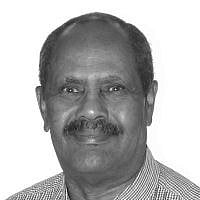
Mohamed Osman, a retired physician and public health specialist from Somaliland, is a Canadian citizen who has worked with Ottawa Public Health and Alberta Health Services. He is also recognized for supporting Somaliland’s recognition.