Committed to Reform Judaism in Israel and the Diaspora
Reflection
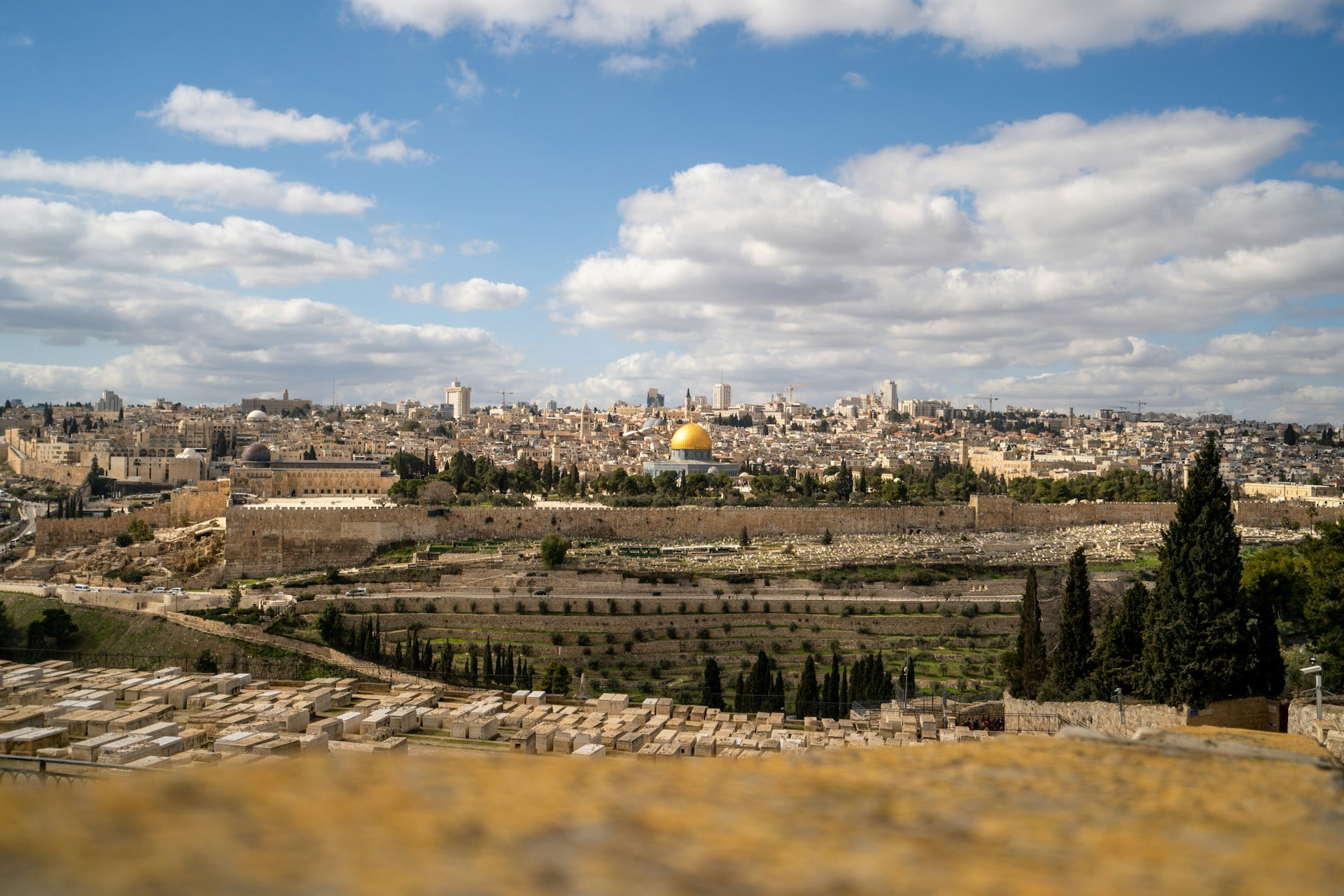
Panorama of Jerusalem (credit: Dariusz Kanclerz, Unsplash.com)
I began writing this in Jerusalem, where I just finished attending the once-every-two-years Connections Conference of the World Union for Progressive Judaism.
We were over 170 delegates who debated, prayed, sang, and of course, ate together for five intense days. We are Progressive Jews from six continents. We are all Zionists. But we had to confront how we should respond to the wave of anti-Israel sentiment sweeping the world.
In this context, the New York mayoral election was discussed in our sessions on Zionism and Israel in the public square. The discussions were intense. New Yorkers face a difficult choice. It is more immediate but similar to those we face elsewhere in the US and throughout the world, as critics of Israel proclaim their disdain for the Jewish state we love.
Has mayoral candidate Zohran Mamdani, in his comments on intifada, dislike of Israel as a Jewish state, and accusations of genocide in Gaza, crossed a line that would oblige Jews to oppose him as mayor? Or should we still support his stand on social issues and work to ameliorate his singling out of Israel for criticism? Some prominent New York Jews are supporting him, but almost 1,000 rabbis have urged congregants in New York to vote against him. What should be the role of Progressive Zionists in New York—and elsewhere more broadly—regarding such attacks on Israel?
Our World Union conference members all support Israel as a Jewish state—the only one in the world. In New York, we have reason to be worried by those of Mamdani’s statements that would delegitimize it. A recent, very sobering article pointed out that Karl Lueger, the antisemitic mayor of pre–World War I Vienna, made antisemitism respectable and influenced Hitler. If it were perceived that the world’s largest Jewish city voted for a strident opponent of Israel, what lessons would that teach a world that already has more than its share of anti-Israel extremism?
Yet, as Progressive Zionists, we support stands on a whole range of social justice issues—fair elections, civil and LGBTQ rights, gender equality, equitable distribution of wealth, health care protection, and a host of others. We have, for years, formed alliances on these issues. Israel will not be helped if support for her becomes equated with opposition to social amelioration.
Nor do we refuse to acknowledge the severe humanitarian costs of the Gaza war, the behavior of settlers in attacking Palestinian farmers, and the statements by extremists in the Netanyahu cabinet. As Rabbi Angela Buchdahl recently enunciated, we must remember that Gazans are made in God’s image, too.
We do this even though there has been no acknowledgment from Israel’s critics and haters that October 7, 2023, was not a singular act. Rather, it was the opening move in an avowed genocidal thrust by Hamas, along with its continued evils—such as its indiscriminate bombing with its ally Hezbollah of Israeli cities and towns, displacing tens of thousands of people and constantly forcing others into shelters. Hamas has also betrayed its people by massacring Israelis, then using its own people to shield its fighters while hiding in tunnels beneath them. Now it is killing its opponents in Gaza, as it has done in the past.
Judaism is used to facing dilemmas. The very word Israel means “to contend” or “wrestle with God.” Our Israel saga continues in New York and elsewhere. Any visit to the vibrant Holy Land quickly forces the understanding that Jewish Israelis can only be uprooted by a Holocaust that would exceed in size Hitler’s. “From the river to the sea” is a call for genocide on this scale.
We have work to do that transcends this difficult election. If Mamdani wins, we Jews will have to continue to confront his views on Israel with the understanding that reconciliation, not biased credos, must be the watchword for New Yorkers and others. We cannot follow the Jews of Vienna into silent suffering—we must fight back. We must seek allies in this effort. If he loses, we must redouble our pursuit of policies that repair the broken fabric of society. As a well-known journalist said to a group of us over a decade ago, “The situation remains catastrophic, but I am optimistic.”
The profound rabbis of Pirkei Avot wrote over 1,500 years ago: “We are not obligated to complete the work, but we are not free to desist from it.” When the election is over, the work continues. We must still take on those who hate us and gloss over Hamas’ evil—but also work in Israel and in the Diaspora to restore its status as a light unto the nations.
We can do this by joining together and finding allies. The work continues.
As World Union for Progressive Judaism President Rabbi Sergio Bergman reminded us during our recently concluded meeting in Jerusalem, we must act on our Progressive Zionist ideals when we return to our homes and congregations.
Related Topics
Related Posts