


Media Strategist – Middle East Researcher
Religion and Individual Freedom in Turkey
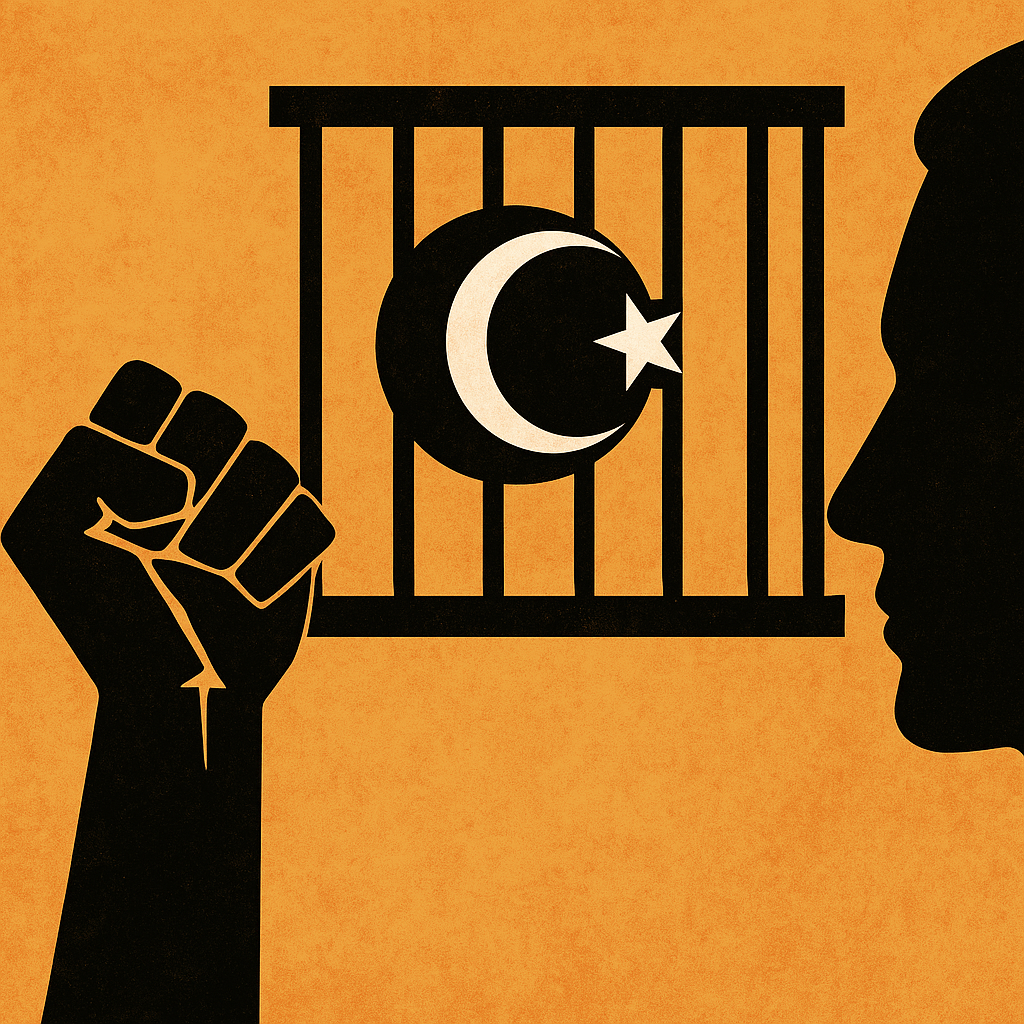
The Middle East has long been a geography where religion shapes both social life and political order. Yet in this process, the individual has often been deprived of the right to exist with their own identity. Non-belief or belonging to a different sect leads not only to social exclusion but also, at times, to legal persecution.
Religion, State, and the Individual
In much of the Middle East, religion constitutes the ideological foundation of the state, thereby restricting the sphere of individual freedoms. Turkey—historically unique for enshrining secularism in its constitution—has in recent years witnessed the growing influence of religious institutions on politics. The expanding budget of the Directorate of Religious Affairs (Diyanet) and the alignment of Friday sermons with political discourse illustrate how religion has become not only a spiritual element but also a mechanism of political control.
Women’s Rights and Social Pressure
Religious norms also directly shape the social role of women in the region. Turkey’s withdrawal from the Istanbul Convention weakened women’s right to protection against violence, a decision justified with religious arguments. Debates over women’s clothing, lifestyle, and social participation persist, revealing a systematic erosion of gender equality and citizenship rights.
Freedom of Expression and the Case of Diamond Tema
One of the most striking examples of restrictions on freedom of expression in Turkey is the case of Diamond Tema. Tema openly declared his non-belief and voiced criticism of Islam through social media and YouTube. For this, he was subjected to severe online harassment, legal investigations, and threats to his safety.
As Tema himself stated in one of his broadcasts:
“All I did was criticize. I said I do not believe in a religion. The response was death threats. In Turkey, thinking differently is now treated as a crime.
His words capture the core reality faced by those who dare to dissent. The case of Diamond Tema is not merely a personal story but a symbol of the systemic pressure faced by anyone in Turkey who expresses unorthodox views.
For young people like myself, this situation represents not only social exclusion but also a direct legal threat. Expressing critical ideas risks prosecution under charges such as “inciting hatred and enmity.” As a result, many individuals are stripped of the possibility of living safely in their own country.
A Different Experience in the United States
Upon arriving in the United States, the most striking difference I observed was that no one questioned my belief or non-belief. Here, social acceptance is not determined by religious identity but by universal human values. The ability to speak freely, to think differently without fear of threats, has made a profound change in my life.
In the Middle East, however, individuals are forced to live under the shadow of communal religious identity. Choosing one’s own path often leads to ostracization or punishment. This reality leaves young people like me without a future in their homelands.
Conclusion
The future of the Middle East depends on granting space to the individual’s free will. Religion should be a matter of personal choice, not a tool of state control. Recent developments in Turkey, coupled with cases such as Diamond Tema, demonstrate how those who think differently are increasingly marginalized and targeted.
This is not simply a personal issue but a broader societal crisis. Without guaranteeing individual freedom, genuine democracy and peace will remain unattainable in the region.
What is most urgently needed today is to value humanity over belief. Only then can a Middle East emerge where individuals live without fear of being themselves—a transformation essential not only for the region but for global peace as well.