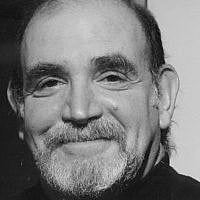
Remembering Abe Lebewohl, Founder of the Famed 2nd Avenue Deli
Exactly 23 years ago, Abe Lebewohl was murdered while making a deposit for his 2nd Avenue Deli. Till this day, the case has not been solved and the murderer has not been found.
I think of Mr. Lebewohl frequently, especially when I revisit my haunts in the East Village where Mr. Lebewohl built his internationally renowned eatery. The 2nd Avenue Deli was founded just seven years after Mr. Lebewohl was liberated from Auschwitz.
The 2nd Avenue Deli was located in the Yiddish Theatre district during the twilight of the twilight years of that famed institution.
I never knew Mr. Lebewohl personally, but I practically lived in the 2nd Avenue Deli. For seven years, from the late 70’s to the early 80’s, I lived just five short city blocks away. 2nd Avenue Deli was two blocks west of Alphabet City (the former northern section of the Lower East Side) and anchored in the East Village (which was also considered the Lower East Side at one time). The area during the period I lived there was full of drug addicts, high crime and young and burned out Bohemians. Yet, his establishment thrived and thrived very well.
Mr. Lebewohl’s essence could be found everywhere in the Deli. If I bumped into him, which I am sure I did frequently, I would not know who he was.
All New Yorkers knew about him and respected him greatly. He was a man of integrity. Even Orthodox Jews ate at his establishment, which was highly unusual, because the 2nd Avenue Deli was open on Shabbat, and religious Jews avoided such establishments. However, if Mr. Lebewohl said his deli was kosher, who were we to question him? He carried a good name, and everyone trusted him.
His waiters were not obnoxious like at other kosher eateries and dairy restaurants that during those times were quickly vanishing from the Lower East Side scene. They weren’t friendly either. They just acted in a heimish manner, almost as if you wanted to pull up a chair and ask them to join in the heated family discourse.
The night before my son was scheduled to be born, my family went to our “go to” restaurant and dined at our usual deli spot, the Molly Picon room. Where else would we dine for Mazal and good luck? The waiter that July night was our usual server. The stars were aligned for a healthy birth and a good life for my son.
One other evening during that same period, I was dining at the 2nd Avenue Deli and ordered my favorite dish, Romanian Steak. That evening, the portion was not as large as the usual humongous dishes. I really did not mind since I could never finish a whole dish of any meal I ordered. As I paid for the meal, I expressed to my usual server, that I was not complaining (I really was not, I disdain complainers) but was surprised the portion was not as large.
Five minutes later, the server bought a plateful of corned beef, with a kind and genuine message, “Abe said no one should leave hungry.” I knew the intentions were sincere, but I was so embarrassed. A man who survived starvation at a death camp nearly forty years before that meal, was concerned about a customer’s relatively insignificant hunger.
Mr. Lebewohl was also concerned about his community. He was dedicated to his old neighborhood synagogue. I used to love walking Alphabet Land and the East Village on Sunday mornings, searching for buildings that used to be synagogues. One would have to move the heavy vines to discover the Hebrew letters.
His family was immensely worried about Mr. Lebewohl making deposits. He never deviated from his routine and boarded the van at the same time. His response to his family was, as his daughter reported, “He used to say if somebody wanted the money, he would just give it to them.” That response was so typical of Mr. Lebewohl. He would offer the money to a robber, not out of fear of his life, he already experienced that Kingdom of Darkness, but because the thief probably needed the money.
The 2nd Avenue Deli closed in 2006 and resurrected itself years later in Midtown and the Upper East Side. I kept on frequenting the old, original establishment when I worked in the City until 2005. After his death, I contributed to a fund established in his memory.
Two weeks ago, I dined again in the East Village, as I usually do during my frequent trips to New York. I always walk to the area where Mr. Lebewohl’s restaurant used to stand and looked down towards the sidewalk. His Walk of Fame Stars in tribute to the actors of the Yiddish Theatre still dot the sidewalk. All the actors’ names have since faded away. That is okay, because only one name should now be engraved permanently in all those stars, Abraham Lebewohl.
May his memory and his life continue to carry a blessing.