


Remembering, Forgetting and the Art of Doing Both at the Right Time
The so-called Luftmensch is not only an outsider, a hesitator, and a seeker, but also someone with a remarkable gift for perfect timing. One of them is my grandmother, Shoshana. She has taken her leave into forgetfulness—punctually and almost gracefully. Not too early, not too late. Just in time not to have to understand the latest news anymore.
Shoshana from Netanya, or more precisely, from Kiryat Nordau. That neighborhood where Bauhaus was both model and dream, though pragmatism remained loyal to stability.
Architecture of square cubes, raised on stilts, as if they could overlook the course of things.
“With concrete you pour a sculpture and get a building,” said architect Avraham Yasky. The same is true for Netanya: there, you pour a sculpture and receive a way of life – one for the future and full of meaning.
In the hallway, terrazzo gleams – retro chic for the grandchildren’s generation, memory for the grandmother. Shoshana calls the whole thing Gan Eden. Paradise.
A paradise of concrete, where one is safe.
Or at least feels that way.
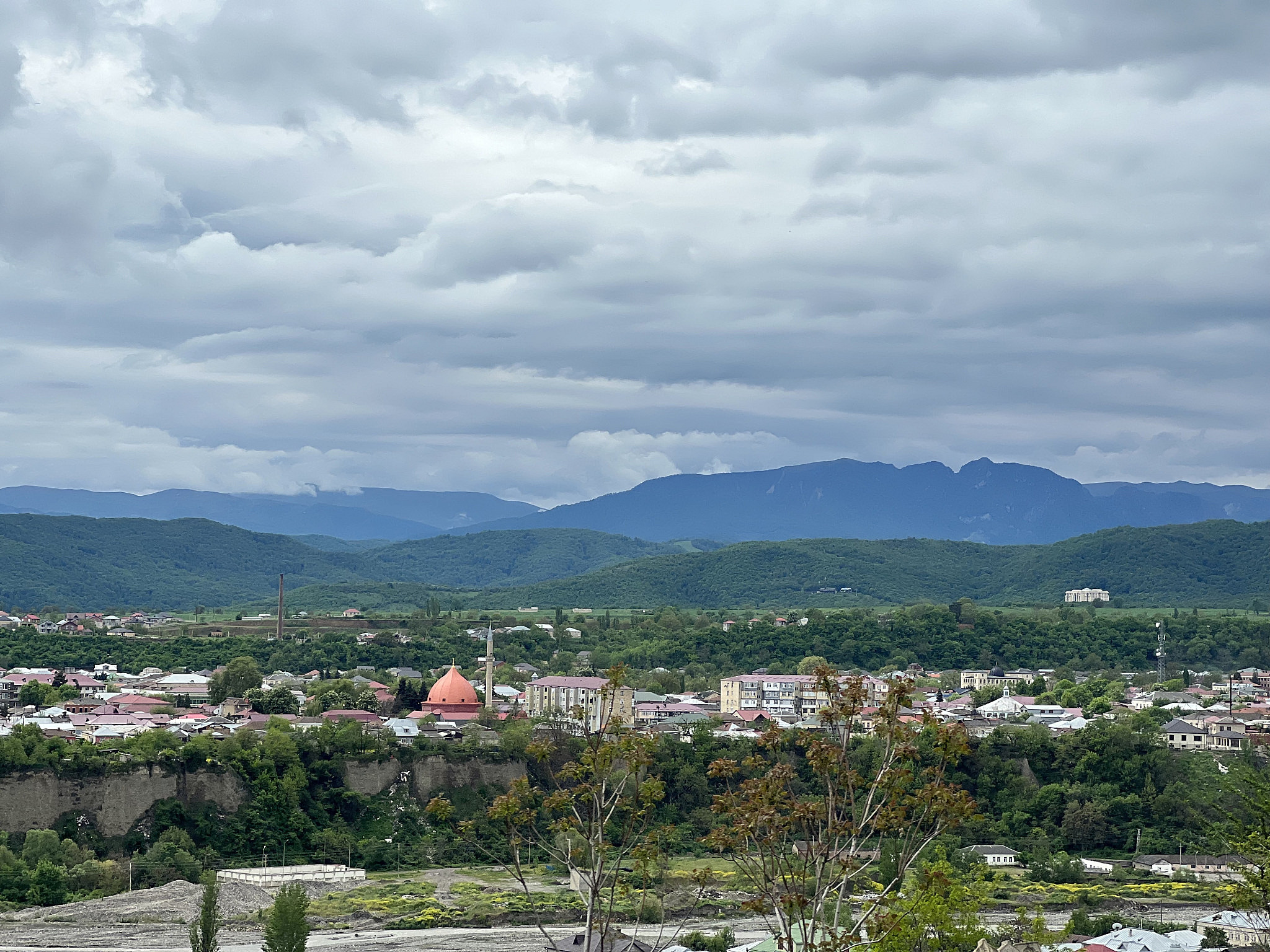
Her story begins far away, in Azerbaijan, in a Jewish village called Jewreskaya Sloboda. A place where Jewish life had existed since the 18th century, until it disappeared – along the familiar paths of history: flight, migration, Aliyah. Shoshana came to Israel as a widow with nine children, via Vienna and with a determination one might today call “survival instinct.”
Netanya was the decision of her life – or perhaps her daughter Sara’s. They never quite agreed on that, and their disagreement became a kind of family tradition.
Today, almost ninety, Shoshana blesses her own memory. It blesses her back – with benevolent gaps.
The present fades; the past remains. And so she prefers to remember Azerbaijani villages rather than Israeli headlines. She still knows how the train to Vienna smelled, but not that Iran is firing rockets. She remembers the bread from Quba, but not October 7. Perhaps that is a kind of grace. Perhaps a quiet protest.
When I visit her, she sits there and says: Netanya is Gan Eden. And she’s right. In Netanya, nothing really happens (at least the last ten years) – at least nothing one can hear. While the world makes noise, Gan Eden stays quiet.
No sirens, no panic, no headlines. Only the sea, the sun, and crows attacking the baker’s baguettes – the only invaders in paradise.
Sometimes I think she got it just right.
While we exhaust ourselves with the work of remembrance – individual, collective, digital – she has gracefully withdrawn from the duty.
She forgets what we all know, and preserves what we’ve long lost: calm. Trust. A peaceful unknowing.
Perhaps that is the true secret of aging – not remembering, but letting go at the right moment.
The art of forgetting before the world overwhelms you.
Shoshana, in any case, has found perfect timing.
Those who remember nothing have nothing left to fear.
And so she stays there, in her concrete paradise, unimpressed by drones, data, and debates.
The sun shines.
The sea murmurs.
Memory falls silent.
And somewhere between terrazzo tiles and the sound of the sea sits an old woman who has forgotten that forgetting was ever a problem.

