

Mathematics Teaching Professor, Author
Remembering the Past, Shaping the Future-Tucson Jewish Museum; Holocaust Center
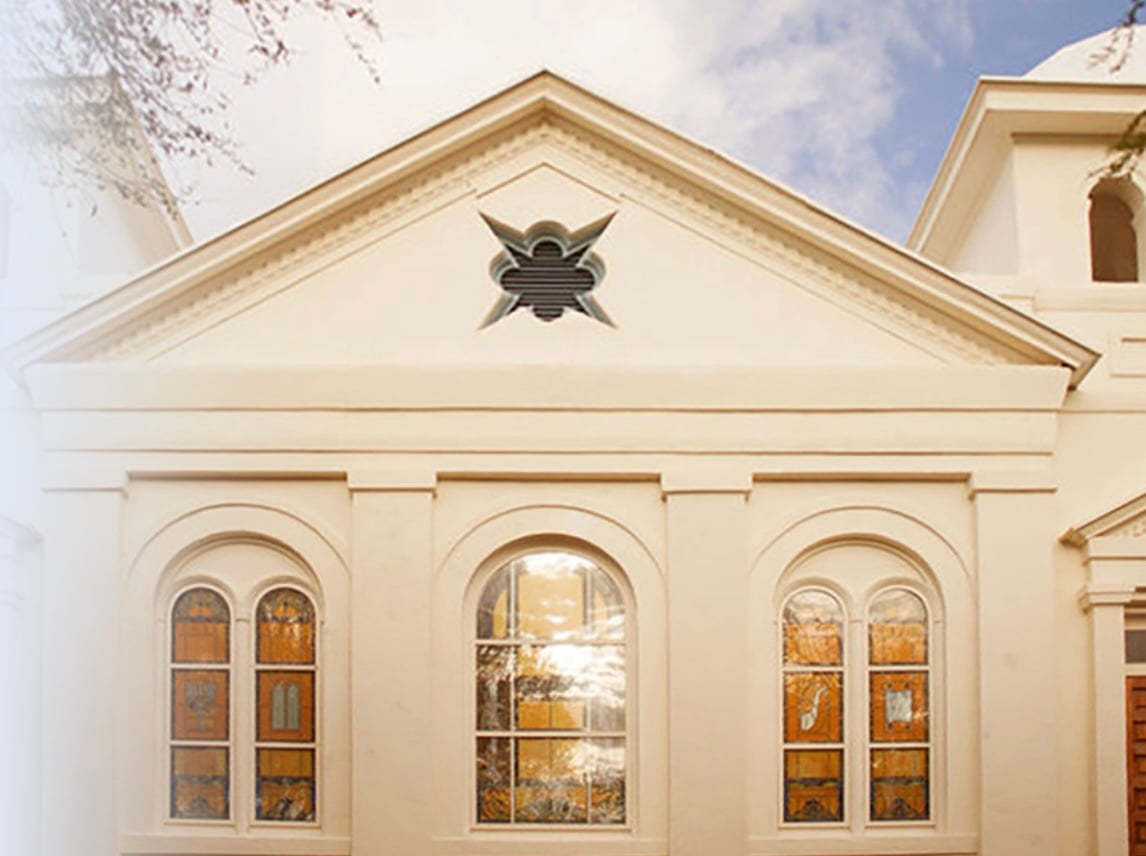
Tucson Jewish Museum & Holocaust Center (Source: Tucson Jewish Museum & Holocaust Center)
Tucson Jewish Museum & Holocaust Center (TJMHC) is a cultural and educational institution dedicated to preserving Jewish history, commemorating the Holocaust, and fostering dialogue around human rights and social justice. Located in Tucson’s historic Temple Emanu-El building on South Stone Avenue, the museum connects local Jewish heritage with broader global and contemporary issues through exhibitions, educational programs, and community engagement. Its work emphasizes remembrance, learning, and civic responsibility as essential tools for building understanding across diverse communities.
Through its exhibitions, lectures, and outreach initiatives, the museum explores themes such as antisemitism, discrimination, media literacy, and interfaith and intercultural understanding. It also highlights the lived experiences of Holocaust survivors and the contributions of Jewish pioneers in Southern Arizona, preserving personal narratives that shape both local and global history. By combining historical memory with present-day dialogue, the museum serves as both a place of reflection and an active center for education and community connection.
I would like to thank Director of Operations Jessica E. Mattix and Interim Executive Director Lynn Davis for their support of this article.
Events
At the Tucson Jewish Museum & Holocaust Center, recent and upcoming events reflect a strong focus on dialogue, memory, and community-building through culture, education, and the arts. Programs such as Sacred Earth: Common Ground emphasize storytelling as a bridge across cultural and political divides, while lectures like Antisemitism and the Lessons of Legacy with Rabbi Dr. Ariel Burger and Antisemitism & the Jews of Color Initiative featuring Ilana Kaufman explore contemporary challenges in Jewish life, leadership, and identity. Together, these events highlight the museum’s commitment to examining antisemitism, resilience, and evolving communal experiences through scholarship and conversation.
The calendar also includes a wide range of cultural and commemorative programming, from the Yom HaShoah Commemoration: The Legacy We Leave Behind honoring Holocaust remembrance, to exhibitions like Media Matters: Cutting Through the Noise, which focuses on media literacy in the digital age. Other events bring in music, storytelling, and cultural exploration, such as klezmer performances by Jordan Wax and Jake Shulman-Ment, folk music discussions like “What’s the Story of Zum Gali Gali?”, and the Mosaicos exhibition highlighting cross-border identity and memory. Even lighter community gatherings, such as wine and corkscrew collections or themed celebrations like the Purim Prom, contribute to a diverse mix of educational, reflective, and cultural engagement.
Resources
In addition, the museum provides Lesson Plans for Middle School and High School Teachers, developed by four Museum Teacher Fellows affiliated with the United States Holocaust Memorial Museum. These educators created structured lessons and activities grounded in themes from the museum’s exhibitions, incorporating resources from the USHMM and Echoes & Reflections. Their work includes both adapted materials and original content, offering teachers practical tools to explore Holocaust history, human rights, and ethical reflection in classroom.
Tucson Jewish Museum & Holocaust Center provides a range of interpretive resources that center on lived experience, historical memory, and civic awareness. Among these are audio recordings featuring local individuals who speak about historical and contemporary discrimination from multiple perspectives, including firsthand experiences, advocacy work, and intergenerational stories passed down within families. These recordings help connect broader themes of prejudice and resilience to the specific voices of Southern Arizona communities.
Exhibits such as Pioneering Jews of Southern Arizona further explore the region’s history by highlighting the contributions of Jewish residents from the late 1800s to the present. The exhibit emphasizes their roles in shaping commerce, government, infrastructure, education, and cultural life, while also offering personal stories of entrepreneurship, service, and compassion. In addition, Media Matters serves as a contemporary human rights exhibit that addresses media reliability, misinformation, and critical thinking, encouraging visitors to distinguish between fact and distortion while reflecting on ongoing issues of discrimination and human rights advocacy.
Gumbiner Project
Tucson Jewish Museum & Holocaust Center highlights the Gumbiner Project as a core expression of its mission to advance human rights through community collaboration and social engagement. Inspired by the activism of Rabbi Joseph H. Gumbiner, who led Tucson’s Temple Emanu-El from 1942 to 1947, the project reflects the museum’s commitment to addressing injustice through education, dialogue, and partnership with diverse groups in Southern Arizona. The museum building itself, located on the historic site of the former synagogue on S. Stone Avenue, is closely tied to Rabbi Gumbiner’s legacy and the broader history of Jewish life in Tucson.
Rabbi Gumbiner was known for his outspoken opposition to racism and his efforts to build bridges between White, Black, Hispanic, Native American, and interfaith communities. He helped establish the Tucson Inter-Racial Council and later participated in civil rights actions, including joining rabbis who supported the 1965 Selma to Montgomery march alongside Dr. Martin Luther King Jr. His work, sometimes controversial in its time, laid a foundation for continued advocacy rooted in justice and solidarity.
Historical Background
In 1854, the United States was a rapidly expanding, largely agrarian nation under President Franklin Pierce, with national politics increasingly consumed by conflicts over westward expansion and the question of slavery. That same year, the region that would become Arizona was still divided between newly acquired southern lands taken from Mexico and the northern frontier of the Territory of New Mexico, reflecting the shifting boundaries of a growing country.
It was also in 1854 that the earliest recorded Jewish settler in Tucson, German-born Nathan Benjamin Appel, is noted to have arrived. In the years that followed, Tucson developed into a center of early Jewish life in the region, with families such as the Drachmans, Zeckendorfs, and Goldwaters playing important roles in local commerce and banking, helping shape the economic and civic foundations of the growing frontier community.
By 1910, the United States was under President William Howard Taft was in the midst of the Progressive Era, a time of rapid industrial growth, expanding cities, and major social and political change. While the nation was becoming an urban-industrial powerhouse, Arizona remained a rugged frontier territory on the verge of statehood, shaped by booming mining, ranching, and copper industries, unpaved streets, and a population of just over 200,000.
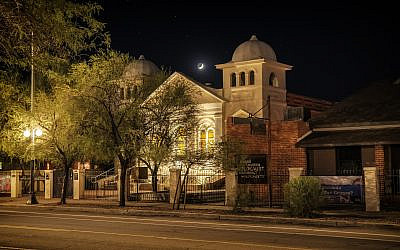
It was in this setting during that year of 1910 that the building now home to the Tucson Jewish Museum & Holocaust Center was constructed. Originally known as Temple Emanu-El or the Stone Avenue Temple, it became Tucson’s first synagogue and the first Jewish house of worship in the Arizona Territory. The congregation used the building from its opening in 1910 until 1949, when it relocated as the Jewish community in Tucson continued to grow, leaving the historic structure as a lasting landmark of the city’s early religious and cultural development.
Then in the early 2000s, after decades of changing uses and periods of decline, the historic structure was restored and repurposed as a museum. The museum officially opened as a cultural and educational institution in 2005. Since then, it has served as a center for Jewish history, Holocaust education, and human rights programming in Southern Arizona
Tucson Jewish Museum & Holocaust Center serves not only as a repository of history, but also as a living space for education, reflection, and community engagement. By preserving the stories of the past while actively addressing the challenges of the present, the museum invites visitors to consider how historical memory can inform more just and compassionate responses to contemporary issues. Its programs and exhibitions encourage ongoing dialogue that strengthens understanding across cultural, religious, and social differences.
Ultimately, the museum stands as a bridge between history and the present day, using remembrance as a foundation for action. Through its commitment to education, human rights, and community collaboration, it empowers individuals to recognize the consequences of hatred and indifference while fostering a more informed and connected society.
Contact Information:
564 S Stone Avenue, Tucson, AZ 85701
Phone: (520) 670-9073
Email: museum@tjmhc.org
Website: https://www.tjmhc.org/