Remembering You’re Not Alone
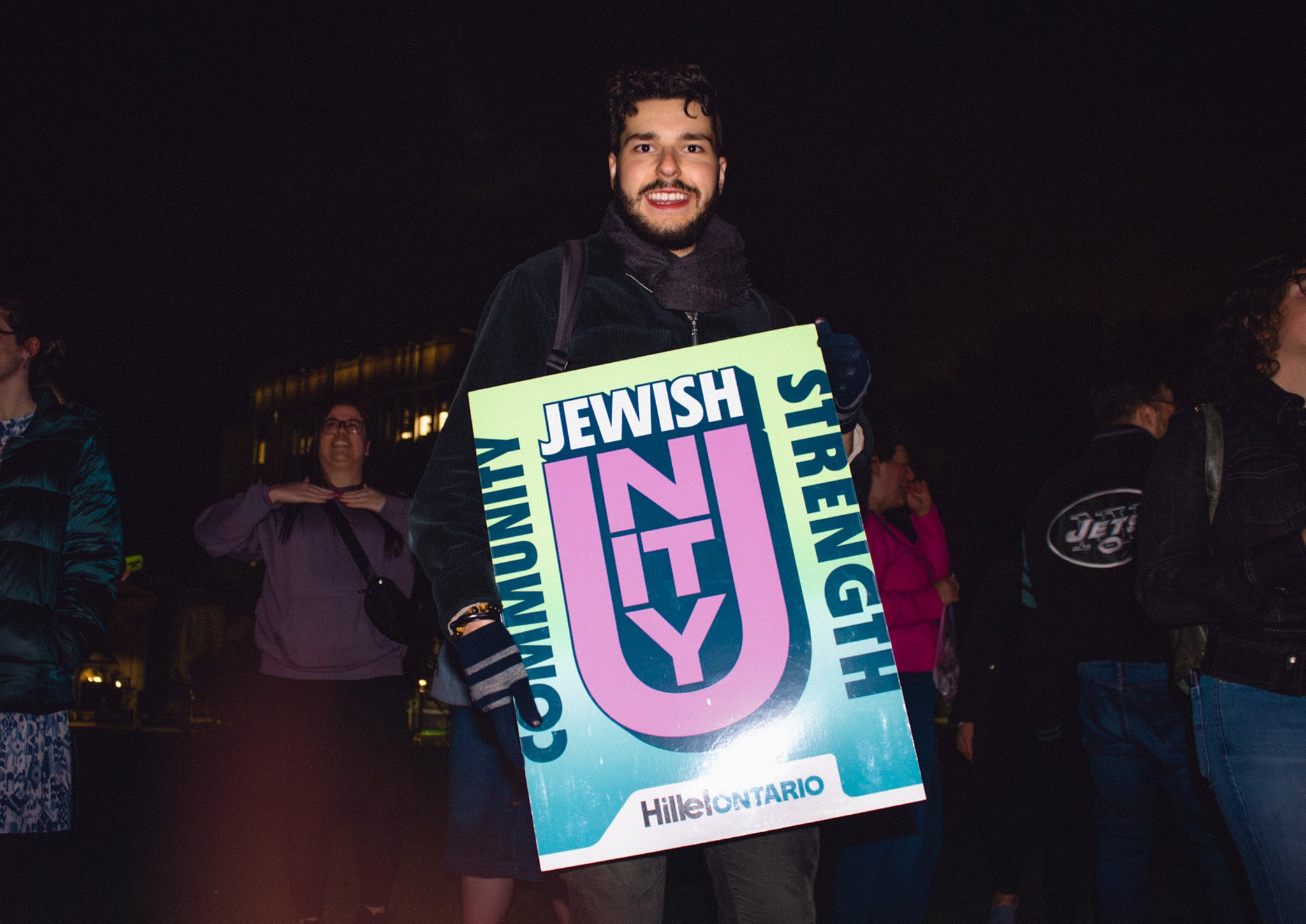
Last Friday, Hillel Ontario partnered with Beth Tzedec Congregation in Toronto to host Shabbat dinner for over 120 Jewish and Iranian students. The following is a reflection of my comments at the event.
Many of us are well aware of the ancient relationship between Jews and the people of Iran, one that dates back millennia. Speaking from a Jewish perspective, in the 6th century BCE, the Babylonians destroyed the Temple in Jerusalem, murdered thousands, and exiled the surviving Jews from the Land of Israel. After the Persian Empire defeated the Babylonians several decades later, the Persian king Cyrus the Great authorized the Jews to return to their homeland and rebuild the Temple.
Mishnah Middot 1:3 tells us that the newly reconsecrated Temple features an image of the palace of Shushan, the Persian Empire’s capital, directly above the East Gate so that everyone entering from that direction would see it. As we read on Menachot 98, there are a number of explanations for this: a representation of the Jews’ historical path that led to the Temple’s construction; an indicator of gratitude for Cyrus’s decree that returned the Jews to their home; a sign of Persian power in order to deter rebellion.
Regardless of the intended purpose, the image from Shushan reminded the Jews that, even in their moments of desperation, they were not alone. In exile, in suffering, and in despair, the Persian king intervened to reinvigorate the Jewish people and to restore much of what they’d lost. Thus, the Babylonian captivity came to an end through a combination of Jewish perseverance and outside allyship and support.
These days, it’s easy to feel alone. Whether as individuals, as Jews, or as human beings, there can be a pervasive sense of isolation, of alienation, of feeling like we don’t matter, that we’re “less than,” that we’re not important, and that no one’s here with us.
Tonight’s dinner proves that that’s not the case. Indeed, we are far more interconnected and are part of a far larger community than we often recall and than we typically see in media and online.
What I’d encourage us to do is to find our own images of the palace of Shushan – photos, mementos, notes, emails, and the like – that push away the loneliness and isolation, memorabilia that remind us of events like tonight, of encounters with others who’ve stood by us and are there for us. When we keep these near us, in our own line of sight and for others to see, we can once again know that exile and oppression aren’t permanent and that partnership between us and others can bring them to an end.