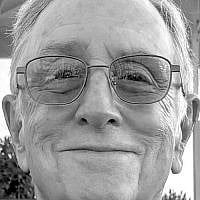
A Leading American Rabbi
Reprise: A Rosh Hashanah Sermon 2001
 September 17, 2001:
Nineteen years ago was my first Rosh Hashanah as a full-fledged rabbi. Newly ordained and serving in my first full-time pulpit, I was excited, and very, very nervous. During dinner, for which I had little appetite, the phone rang. “Is this Rabbi Block?” a woman asked. “Yes,” I replied. “Rabbi, you don’t know me. I don’t belong to your congregation, but I have a very important question. May one drive on Rosh Hashanah?” “Forgive me,” I responded, “You’ve caught us in the middle of dinner. I can only give you a brief answer. Yes, one may drive on Rosh Hashanah, to and from the synagogue.” “Wonderful!” she exclaimed. “Could you give me a ride?” Some high holy days are more memorable than others. For obvious reasons, both good and bad, this is a year none of us will forget.
In its worldly wisdom, the Book of Ecclesiastes observes, “To everything there is a season, and a time to every purpose under heaven…a time to be born and a time to die; a time to plant and a time to uproot what is planted…a time to grieve and a time to dance….” To everything there is a season. Rosh Hashanah is a solemn holiday, yet its primary theme is renewal and its spirit is one of celebration. Some 2500 years ago, Ezra the Scribe said of this occasion, “Go now; eat of the best. Drink sweet wine and send portions to those who have nothing prepared. This day is holy to the Eternal One. Do not be sad, for the joy of the Eternal is your strength.” Like the Jews of Ezra’s era, we often neglect our religious obligations, but on Rosh Hashanah 5762, no commandment feels harder to obey than this: “Do not be sad.”
In the course of my work, I encounter and experience a good deal of sadness and I often meet people for the first time when they are in mourning. I normally tell them, “I am very sorry to meet you under these circumstances.” That is how I feel today. The sermon I had prepared for this service was a personal one, intended to introduce myself to you, to tell you who I am and why I came here. That is something I still hope to do, on Yom Kippur. At this moment, however, my thoughts, like yours, are elsewhere.
They are with the passengers and crews on four doomed flights, whose last words to their dear ones were expressions of heroism and love. They are with the courageous firefighters and police officers who died trying to save others. They are with thousands of victims robbed, in an instant, of their very lives, with the maimed, injured, and traumatized survivors, and the heartbroken families whose lives have been shattered. I am thinking of the brother-in-law of a dear friend who escaped from the 87th floor of Tower Two, and the brother-in-law of another who disappeared into the maelstrom at the top of Tower One. And my thoughts are with you, my new, but beloved congregational family, stricken by our national tragedy. I am very sorry to meet you under these circumstances.
“To everything there is a season.” These well-known words suggest that the universe is a rational, ordered place, that times and seasons alternate in a recurring and eternal pattern, that there is a predictable ebb and flow to human affairs, that birth and death, too, occur in their due season. But in recent days, we have discerned no pattern, no rationality, no predictability, no orderly ebb and flow. We do not know what to do or say, or even what to think.
These horrible events demonstrate anew how little we truly comprehend about the universe, about times and seasons, about our very selves. Any death, especially a tragic and untimely one, brings us face to face with the profound limitations of our understanding. How, then, are we to make sense of these callous and calculated crimes? These savage acts, in the words of Hannah Arendt, “confront us with the perplexity of radical evil.” In the face of such evil, we experience rage, frustration, and deep sadness. We struggle to awaken as from a nightmare. We peer into the darkness and perceive our own fragility and our mortality. Even worse, we wonder if existence is utterly capricious and futile, if anything we do matters, if we can count on anything.
Yet, however devastated and disoriented, we know instinctively that we must not yield to fear or capitulate to confusion. To paraphrase Stephen Biko, martyred hero of the South African struggle for liberation, “the most potent weapon in the hands of the terrorist is the mind of the terrorized.” The forces of darkness have armaments enough. We must not lend them our own. Rather, by attempting to wrest coherence from these awful events, perhaps we can regain a measure of control over our lives and destinies.
What can we say with confidence about these diabolical acts and their perpetrators? First, it is clear from the accumulating evidence that these crimes were carried out by Islamic revolutionaries, and that these deeds are part of a pattern. They are linked to the 1983 bombing of the Marine barracks in Beirut, the bombings of US embassies in Africa, the attack on the USS Cole, and a series of aborted attempts to commit similar atrocities.
Why do they do these things? Is it because the United States supports Israel? Or, to put it another way, if the United States abandoned Israel would these extremists leave America alone? These questions are vitally important, because if the answer is “yes,” the implication would seem to be that Israel is to blame for this calamity. Or worse, perhaps Israel’s American supporters are at fault or, more particularly, the American Jewish community, we, ourselves? We reject such slanderous, errant nonsense, of course, but how do we explain that rejection?
Let us recognize first that there is a connection between the Middle East conflict and this whole ugly business. Bin Laden’s terrorist enterprise makes common cause with Iraq, Iran, Syria, Hamas, Islamic Jihad, Hezbollah, other radical Palestinian groups, and their ilk. They have a similar worldview and common aims. The timing of this assault on American institutions was almost surely not random. I strongly suspect it was timed to coincide with the mid-September anniversaries of the 1978 Camp David Accords, 1993’s Oslo agreements, and the inception of the second Palestinian intifada, which began last Rosh Hashanah. Doubtless, if credit for the attacks is ever claimed, America’s backing of Israel will be the purported reason.
Nonetheless, to ascribe these events to US support for Israel would be to have the whole situation backwards. First, the US does not assist Israel alone. We also support moderate Arab states that have as much to fear from Islamic revolutionaries as the US and Israel, if not more. There are US troops in Saudi Arabia. We continue to isolate Iraq and contain Iran and Afghanistan, which actively support terrorist groups. We have problematic relations with Pakistan, whose government has ties to both the Taliban and Bin Laden, and we have undertaken military operations in Bosnia and Kosovo, where radical Islamic militants also oppose us. We do all these things to promote and protect American interests, not Israeli ones.
The Bin Ladens of the world do not attack the United States because it supports Israel. They attack America because it is America, because we are the quintessential modern Western democracy with an open society, constitutionally guaranteed freedoms, respect for human life, a free enterprise economy, and global responsibilities.
In other words, the United States is the living embodiment of everything that totalitarian, theocratic extremists detest. They seek Israel’s destruction, not just, or perhaps even primarily, because it is a Jewish state, but because it is a Western state, with Western values. To them, Israel is a surrogate of the American “infidels.” Even Israel’s demise, God forbid, though a cherished goal, would not bring this conflict to an end. Only the vanquishing of Western culture and America’s retreat into humiliated isolation would suffice. I trust that we have no intention of accommodating them.
With our geographical distance from past wars, our native optimism, and more than a little national naivete, we may have been surprised that such deadly hatred could erupt in our thriving capitals, but we should not have been. As Albert Camus wrote in his renowned novel, The Plague, “As he listened to the cries of joy rising from the town Rieux remembered that such joy is always imperiled. He knew what those jubilant crowds did not know but could have learned from books: that the plague bacillus never dies or disappears for good; that it can lie dormant for years and years in furniture and linen chests; that it bides its time in bedrooms, cellars, trunks and bookshelves; and that perhaps the day would come when, for the bane and the enlightening of men, it would rouse up its rats again and send them forth to die in a happy city.”
The plague bacillus spewed forth in New York, Washington, and Pennsylvania last week, and streamed into the streets of Nablus, where Palestinians danced when Americans died.
We will never understand what happened or what we need to do unless we recognize one basic fact. This is not a battle over Israel. It is even more than a kulturkampf, a clash of opposing cultures. This is the first worldwide conflict of globalization era, largely financed by private terrorist venture capital. It may even be a profit-making enterprise. According to one report, shortly before the attack a company associated with bin Laden sold short the stock of insurance companies covering the World Trade Center as well as American and United Airlines.
Unlike its predecessors, this world war is not between nations with armies in uniform, defined borders, and readily identifiable targets. It is against an amorphous enemy that abhors modernity, yet employs the modern world’s most advanced technology to wage war upon it. This enemy glorifies martyrdom, disdains human life, and draws no distinction between soldiers and civilians. There is no assurance this conflict will be limited to conventional weapons and it is not happening an ocean or a world away. Now, it has come home to us with a vengeance, undermining our sense of personal security, stripping away our comfortable illusion of invulnerably, and reshaping our assumptions about the defining circumstances of our lives.
What can we do? Our response, it seems to me, has three dimensions: national, Jewish, and personal. On the national level, we must understand the danger we face. The President has vowed that we will “hunt down and punish those responsible” and all who harbor them. I applaud his resolve and pray this will not prove to be an empty threat that undermines America’s credibility. Let us not deceive ourselves. Even if we could eliminate bin Laden today, the threat of Islamic militancy would remain. Rooting it out will be extremely difficult, expensive, time-consuming and dangerous. It will surely cost us lives and will require extraordinary patience, a quality that does not come readily to Americans. Still, let us recall Isaiah’s warning, “Woe unto them that call evil good and good evil, who present darkness as light and light as darkness.” And let us ensure that the determination and bravery of our nation’s deeds match the defiance of its words.
As our leaders assess and do what they must to defend our way of life, there is much America can learn from Israel, which has endured the threat and reality of terrorism for decades. Israel can teach us how to make our airplanes and public places safer. It can offer expertise in locating and identifying terrorist organizations. And it provides the instructive, inspiring example of a democratic society going on with daily life, despite danger and anxiety and, in spite of boundless suffering, keeping the spark of hope alive and refusing to succumb to despair.
While we formulate and implement a strategy for dealing with terror, we must also take care not to exaggerate the danger we face or be goaded into rash reactions, militarily or domestically. It would be a tragic error to turn the US into a police state or to give the impression we are at war with Islam. In this regard, President Bush’s statement that the US is on a “crusade” was a most unfortunate slip of the tongue. It confirms the worst fears about US intentions in the Islamic world. The enemies of freedom can kill horrendous numbers of people and undermine our feeling of safety in our workplaces, streets, and homes, but no power on earth can destroy the United States, our culture, economy, national institutions, or way of life. Our faith in America’s future may be our greatest national resource. If we preserve it, it will preserve us.
A Jewish response to our national calamity has several dimensions. It starts with acts of lovingkindness. We reach out to those whose lives were touched by this disaster. We embrace our children and calm their fears by assuring them of our love and protection. We gather in prayer as congregations, as communities of meaning and interdependence, as an extended Jewish family. In so doing, we recall Jeremiah, who turned to God in a time of catastrophe, and affirmed, “You are my hope in the day of evil.”
A second component of a Jewish response is reaffirmation of our values. Even in the face of blind hatred, we seek to fulfill the commandments, “Love the stranger,” and “Love your neighbor as yourself.” Even in the presence of radical evil, we declare that the power of goodness is far greater and more lasting. Even as we are compelled to meet violence with force, we hold before us a vision of peace. Inspired by Isaiah, we insist that the day will come when “they shall not hurt or destroy in all [God’s] holy mountain, for the earth shall be full of the knowledge of the Eternal as the seabed is covered by water.”
Beyond loving deeds and values reaffirmed, a Jewish response to this tragedy involves standing for tolerance. We are a people too well acquainted with negative stereotypes, scapegoating, and bigotry. We know that verbal violence can lead to physical violence and that innocent people are often its first victims. Despite all that divides us from the Muslim and Arab American communities religiously and politically, as Jews we must insist that the many not be tarred with the sins of the few, nor innocents be punished in place of the guilty. This crisis presents an opportunity to demonstrate our transcendent commitment to tolerance and to build bridges with an American religious community that already outnumbers our own.
The final dimension of a Jewish response is to redouble our commitment to the Jewish State. Never before have our concern for America and our concern for Israel been so closely aligned. Though Israel is not the cause of last week’s attack, nor the only object of the Islamic revolutionaries’ war on the Western world, it stands on the front line. If wisdom prevails, the American people and others will now understand, as never before, why Israel is foremost among those who need and deserve American support. Hopefully, there will now emerge a more sympathetic understanding of the measures Israel takes to protect its citizens, institutions, and way of life from suicide bombers and other terrorists. Those very measures, so often unfairly criticized, are the ones the US has been widely urged and vows to employ. When it does, and when Israel does likewise, let the world take heed and remember!
How should our renewed Jewish commitment to Israel be expressed? First, we need to be critical consumers of the media and respond to unbalanced and biased attacks on Israel. These include the cynical, politically motivated, and anti-Semitic effort to portray a political and territorial dispute as a racial one. We must continually remind the world that while Israel is far from perfect, it, too, is fighting a war, one it did not seek or start, and cannot end unilaterally, and that Israel and the US were rebuffed when they made unprecedented proposals to bring it to an end. Our support for Israel must also find tangible expression. Gifts to Federation in proportion to our means, investment in Israel bonds, and contributions to Reform Jewish institutions in Israel are a small price to pay for the privilege of having a Jewish state and building a bulwark against worldwide terrorism.
Finally, there is no substitute for being there. I can tell you from personal experience that Israelis feel isolated and alone at this painful time. I urge you to visit Israel soon. I am going next month with our Federation mission and I invite you to join us. You will gain and give more than you can possibly imagine, and your presence will testify that no terrorist can rob the Jewish people of its historic homeland.
This, then, is the national response I propose to the horror of recent days: understanding the true nature of the danger we face and responding with courage, patience, and determination. The Jewish response involves loving deeds and prayer, reaffirming our values, insisting on tolerance, and a strengthened commitment to Israel.
And what of a more personal response? Here, the starting place is humility, acknowledging how much we do not know and cannot control. One of our high holy day prayers, u’netaneh tokef, suggests that God decrees how and when we die. If this is so, we can take comfort in believing there is a larger, wiser plan than is apparent to us that gives meaning to grief and loss. Personally, however, though I long to believe that our afflictions serve some higher goal, I cannot and do not believe that God decrees our individual destinies, that God chose who would and would not lose their life last week. To me, the Talmud’s frank admission that we cannot fully explain evil and human suffering, rings true. Jewish tradition moves me most deeply when it says that God is aware of us and loves us, that God grieves with us, and is present with us when we suffer, but that even God cannot create a perfect world.
Perhaps u’netaneh tokef is hinting at this. To say that life and death are in God’s hands is to admit that they are not in ours. Though we face the incomprehensible and uncontrollable, the prayer tells us we can nevertheless “temper judgement’s stern decree” with repentance, prayer, and loving deeds. In other words, though we cannot avoid death or select its time or manner, we can decide how we shall live. Though we cannot escape sadness and pain, we can choose how we’ll respond to them. We can decide to rise above grief and loss, rather than sink beneath its weight. We can squeeze out and savor every drop of life’s pleasure and beauty. We can focus on what we have instead of what we lack, and even when we feel burdened and exhausted, keep the spark of hope alive. Though we do not have answers to all of life’s questions, we have something even more precious. We have each other. Whatever befalls us, we possess deep reservoirs of love and strength that enable us to bind the wounds of others, even when we, ourselves, are broken.
The agony and sorrow of these days remind us how much we assume and take for granted including our bountiful and abiding blessings as Americans and Jews, and even life itself. As a beautiful prayer reminds us, “Days pass and the years vanish and we walk sightless among miracles.” Last summer, I heard a story about Satan. By contrast with Christianity, in Jewish folklore Satan is a minor figure. His main activity is confusing people with half-truths and lies. According to the story, one day Satan gathered his assistants to discuss the best way to destroy the meaning in people’s lives. One of them said, “Tell them there is no God.” Another suggested, “Tell them there is no judgment for sin and they need not worry.” A third proposed, “Tell them their sins are so great they will never be forgiven.” “No,” Satan replied, “Those lies are too blatant. I think we should simply tell them, ‘There is plenty of time.'”
My friends, there is not. If we are wise, this tragedy will teach us, in the words of Psalm 90 to “number our days rightly, that we may obtain a wise heart.” It will inspire us to set aside all that is petty and superficial and focus instead on what is worthy and essential. It will evoke enduring gratitude for our blessings and move us to share them more generously with others. And it will remind us that each day of our lives is a unique and a priceless gift, one that cannot come again and might be our last.
Let us, then, use our days well: to embrace life; to give and receive love; to tell and show others how much they mean to us; to increase humanity’s store of goodness, tenderness, compassion, and hope; to pursue our highest priorities and live in accordance with our deepest values; to make a difference; to be each other’s miracle.
If we do so, Isaiah assures us, our light shall “shine in the darkness” and our “night become bright as noon…[Our] people shall rebuild the…ruins and lay the foundations for ages to come. [We] shall be called ‘Repairer of the breach, Restorer of streets to dwell in.’… This is the promise of the Eternal.” Keyn y’hi ratson. May this be God’s will. Amen.
Related Topics
Related Posts