
Reserve duty. Again
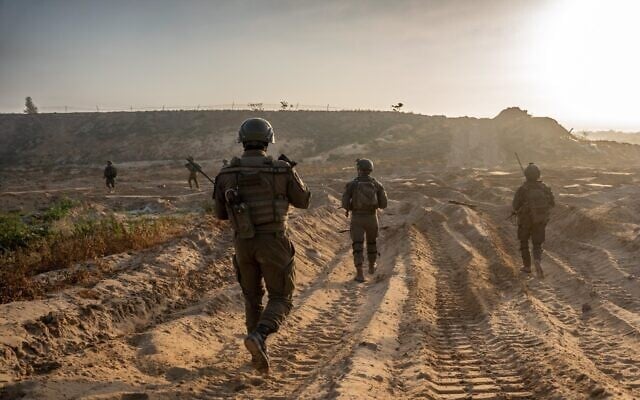
The response to being called up to defend one’s country should be so completely obvious that it would seem to require no discussion. I mean, if your country is under attack, every able-bodied citizen should realize that his life, the lives of his loved ones, and the very life of the nation are at stake. Consequently, there is nothing more imperative than the defense of one’s country. Simple.
Sadly, the strategic and social reality in Israel since October 7 complicates this seemingly simple argument. For starters, the war has no clearly defined beginning and end. There is no “absolute victory” after which everyone goes home and lives happily ever after. Instead, the war “ends” in a ceasefire that sends citizen-soldiers home, as if they can get on with their lives, only to be called up again. And if it is not a ceasefire that is fired up again, it is another front that demands that citizen-soldiers return to the front. Israel now counts seven such fronts: Gaza, Lebanon, Judea/Samaria, Yemen, Syria, Iraq, and Iran.
How many times can one muster the motivation to return to battle? How many times can one go to war – real war, the “war is hell” kind of war? Each time one makes it out, one makes it out changed. One does not simply wake up the next morning and go to work or school, as if nothing happened. Returning to civilian life takes time – lots of time. One must let go of the battlefield mindset. One must re-enter civilian life – wife, family, friends, work, study. So once the process of civilianization has taken place, to go back to war and start over again is not simple. And this process of “war – civil life – war” has occurred, since October 7, not once or twice but multiple times.
To compound matters further, large numbers of able-bodied Israelis do not answer the call to defend the nation. This has two obvious consequences. First, draft-dodgers (mishtamtim) directly increase the amount of time that others must serve. Second, their refusal to share in the war effort gives rise to the question that grates on every miluimnik:
“Why should I turn my life upside down – again – while others go about their lives as if there is no war?!”
The answer is not simple, but it is vital.
To begin, those who do not serve must be removed from our considerations. Of course, their actions are unjust; however, duty is not based on reciprocity but on responsibility. Good people do not do good because everyone else does good, but because that is what good people do. And there is no greater good than defending the nation of Israel. For without such defense, there is no good that can be done.
And this, really, is the key. For 2,000 years the Jewish people lived in exile – defenseless, subject to the whims of antisemites the world over. We were burdened with special taxes, barred from schools and institutions, banned from professions and social clubs, and confined to ghettos. We were butchered and burned in every land in which we took up residence. A Holocaust survivor once took me aside at a Yom HaAtzmaut celebration, looked deep into my eyes, his own welling with tears, and said, “You have no idea what it means to live in a world without the State of Israel.”
Today, thanks to the existence of our own country, we not only study at the first-rate schools in the world; we establish them. We not only work in the professions of our choice; we lead them. We not only live in thriving cities; we build them. But without a strong and resilient defense force, none of this great good is possible. Without the sacrifice of our citizen-soldiers who come to the defense of our holy nation, there is no flourishing nation of Israel, only a downtrodden people chased from one land to another.
As hard as it is – and there is no question that it is hard – it is the most important thing you can do. So yes: Miluim. Again.