CFO | Empower Society for Good I Author
Responsibility, the Good Society, and the Renewed Covenant
Excerpt:
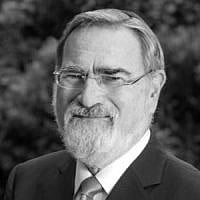
Five years after the passing of Rabbi Lord Jonathan Sacks zt”l, his call for shared responsibility and the building of a “good society” feels more urgent than ever. As world leaders gather at COP30, his moral vision reminds us that global progress depends not on policy alone, but on a renewed covenant of faith, responsibility, and care for creation.
Reflection:
Five years since his passing, Rabbi Lord Jonathan Sacks zt”l continues to guide the moral and spiritual imagination of our age.
His teachings on responsibility, morality, and the “good society” profoundly shape my own journey — from Upgrading ESG: Empowering People, Healing the Planet to my weekly Soul of Israel reflections on Jewish identity and covenantal purpose.
Rabbi Sacks reminded us that while technology and wealth can enhance life, only morality and responsibility can make it meaningful. He warned that the great crisis of our time is not political or economic, but moral — a loss of shared responsibility.
“Morality is born when we move from self-interest to shared responsibility.”
— Rabbi Lord Jonathan Sacks, Morality (2020)
It is fitting that his yahrzeit this year coincides with COP30 in Brazil — a gathering meant to inspire global cooperation on climate and sustainability.
As the COP President recently wrote, the summit must achieve three things:
- Send a clear signal — that nations are fully committed to climate cooperation.
- Speed up implementation — across all sectors and economies.
- Connect climate action to people’s real lives — ensuring it improves health, jobs, and energy security.
These goals echo Rabbi Sacks’ timeless message: true progress is impossible without moral purpose. Climate, economy, and technology can only heal our world if guided by responsibility — by a renewed covenant between humanity, creation, and God.
Responsibility — The Moral Core of a Free Society
For Rabbi Sacks, responsibility was not merely an ethical virtue; it was the foundation of freedom itself.
He taught that when freedom becomes “the right to do whatever I want,” we eventually lose it. True freedom is the freedom to do what is right — to take responsibility for others and for the world.
“Freedom without responsibility is self-destruction.
Responsibility without freedom is slavery.
The good society depends on both.”
— Rabbi Lord Jonathan Sacks
In a culture that glorifies rights and minimizes duties, Sacks restored the moral language of covenant — the idea that life is not about “me,” but about “we.”
This sits at the heart of Upgrading ESG: businesses, governments, and individuals alike must rediscover their moral purpose — seeing profit not as an end in itself, but as a means to sustain a just and ethical world.
The Good Society — A Community of Covenant and Care
In The Home We Build Together, Rabbi Sacks described a good society not as one built on power or wealth, but on trust, mutual respect, and shared responsibility.
“A good society is one where we build together, not merely live side by side.”
He contrasted contracts — which protect individual interests — with covenants, which bind people through shared moral purpose.
The Good Society, therefore, is covenantal: it exists where people see one another not as competitors or strangers, but as partners in a shared destiny.
This is also the essence of Empowering People — recognizing that real empowerment is not about giving rights or benefits, but about entrusting others with responsibility. That is how individuals become partners in creating a moral community.
Healing the Planet — Responsibility for Creation
Long before “climate” became a global buzzword, Rabbi Sacks saw the environmental crisis as a moral and spiritual one.
“The world belongs to God. We are its guardians, on trust, for the sake of future generations.”
— Rabbi Lord Jonathan Sacks
He reminded us that shmita (the sabbatical year) and bal tashchit (do not destroy) are not ancient rituals, but timeless principles of sustainability and humility — the recognition that the earth is not ours to exploit, but God’s to protect.
To pollute or destroy is to betray that trust. To conserve, restore, and renew is to honor the covenant of creation.
Healing the Planet, therefore, is not just environmental stewardship — it is an act of faithfulness to God.
The Soul of Israel — Responsibility as Jewish Identity
In my Soul of Israel reflections, Rabbi Sacks’ influence resonates weekly through the Parsha.
He taught that Judaism is not merely a faith of belief, but a faith of responsibility.
From Avraham Avinu, who argued with God for justice, to Moshe Rabbeinu, who defended his people, our story is defined by the courage to take responsibility — for truth, for freedom, and for the moral destiny of humankind.
“God calls on us not to accept the world as it is,
but to take responsibility for making it as it ought to be.”
— Rabbi Lord Jonathan Sacks
Each book of the Torah renews that call:
- Bereishit — Responsibility for creation.
- Noach — Responsibility for righteousness.
- Shemot — Responsibility for freedom.
- Vayikra — Responsibility for holiness.
- Devarim — Responsibility for memory and moral continuity.
Through this covenantal lens, Jewish identity becomes not static heritage but a living mission — to embody and extend the moral will of God in every generation.
The Renewed and Ancient Covenant with God
Rabbi Sacks often spoke of the Covenant as both ancient and ever-renewing — the timeless partnership between God and humanity.
“Covenant is what transforms love into loyalty, and faith into responsibility.”
— Rabbi Lord Jonathan Sacks
To live covenantally is to see life as a shared trust — between God and humankind, between humanity and the earth, and between individuals and society.
It means understanding that history is not random, but a moral journey guided by Divine purpose.
As I write about Upgrading ESG, Empowering People, and Healing the Planet, and as I reflect weekly on The Soul of Israel, I hear in Sacks’ teachings this call renewed:
to live responsibly,
to act covenantally,
and to join in the sacred work of healing creation.
Closing Reflection
The covenant of Sinai was never meant to remain ancient. It is meant to be renewed — in every generation that chooses responsibility over apathy, morality over comfort, and faith over fear.
Rabbi Sacks believed that hope is the Jewish response to despair, and responsibility is its active expression.
We honour his memory not by quoting him, but by continuing his work — building the good society, healing the earth, and walking with God in covenantal partnership.
“The good society is built by those who see in every human being the image of God,
and in the world around us, the work of His hands.”
— Rabbi Lord Jonathan Sacks
May his teachings continue to guide us —
to upgrade our moral vision,
to empower people with purpose,
to heal our planet with humility,
and to renew the ancient covenant between God and humankind —
A covenant of faith, responsibility, and hope.
About the Author:
Jeffrey Levine is CFO of Insperanto, author of Upgrading ESG – How Business Can Thrive in the Age of Sustainability, and writer of The Soul of Israel blogs on the Times of Israel, Substack and more. He lives in Jerusalem and writes about Jewish identity, ethics, and the intersection of faith, responsibility, and sustainability.
Related Topics
Related Posts