Restoring Glory: Prince Reza’s Mission for Iran
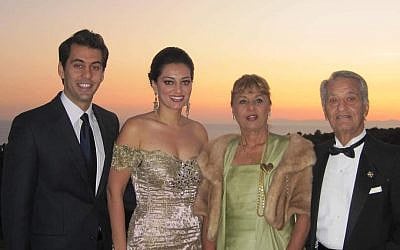
In the annals of modern history, few tales are as poignant and complex as that of Iran’s recent past. Parmis Khatibi is an exceptional young woman from Iran—brilliant, elegant and captivating—with a mind teeming with visionary ideas for a liberated Iran. She possesses a fascinating intellect and a distinguished demeanor, hallmarks of her heritage, born into a family rich in culture and tradition. Her mind, a crucible of grand visions for a liberated Iran, is matched only by the distinction of her character, which has been shaped and refined within a family deeply immersed in cultural authenticity and historical awareness.
Her illustrious family, deeply passionate and enchanted by the history of Iran’s monarchy, has been close to me for years, particularly through her uncle in Houston. I have witnessed their extraordinary and elegant aspirations to restore Iran’s past splendor and greatness. Indeed, her brother Nikan possesses these same attributes, and together, the siblings are poised to significantly influence American politics and the future of U.S.-Iran relations.
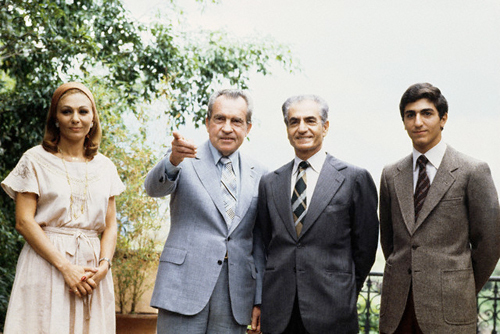
In the harsh winter of 1979, Iran succumbed and fell prey to Islamic and communist terrorists. These convoluted networks of Islamic Terrorism and tangled webs of Khomeinist thugs, instigated by the KGB, threw Iran into turmoil, rallying behind Khomeini—a mullah who was murderous, obtuse, and savage, a stark antithesis to the patriotic, kind-hearted, intellectually astute Shah who was a friend to both America and Israel. This ferocious old man sought to hurl Iran back 1400 years, intertwining Iran’s identity irrevocably with Islamic terrorism, a stigma that might persist long after the Islamic Republic’s demise. However, thanks to the relentless endeavors of the Crown Prince Reza Pahlavi over these past 45 years, a clear delineation has emerged between the Iranian people and their oppressive rulers. The global community now recognizes that a civilized and cultured Iran has been hijacked by barbaric, uncultured mullahs, and that the current governance has no connection to Iran’s illustrious past or its rich civilization.
Perhaps, given that no figure like the late Shah has ever existed in American culture and history, the depth of understanding of the Shah or the King, the imperial tradition, and the monarchical civilization might not be as profound or conceivable. Yet, before 1979, Iran’s national pride and grandeur during the Pahlavi era were celebrated globally. The bonds between Iran and America were deeply profound, and a friendship still exists between the two nations, though currently marred by the bloodshed of Americans and Israelis at the hands of Iran’s regime, which has fomented Islamic terrorist groups against modernism, civilization, the West, development, and peace.
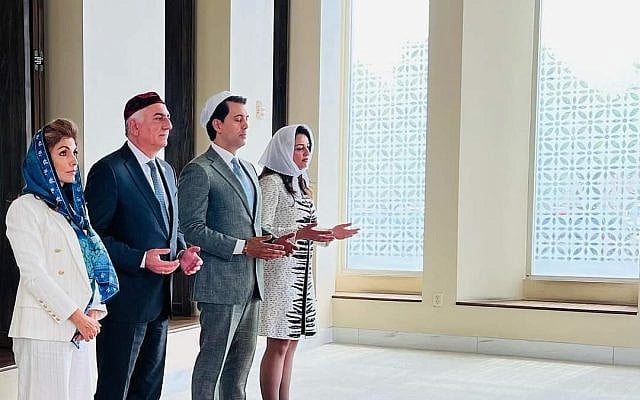
As we approach the centenary of the Pahlavi dynasty, founded by Shah Reza Pahlavi in the Iranian parliament on December 15, 1925, this 100-year-old brand symbolizes a century of Iran’s history, now carried in the heart of Prince Reza Pahlavi. The people regard him as the custodian of this radiant and majestic historical legacy. Despite facing political isolation, intellectual stagnation, religious bigotry, and the machinations of the Iranian opposition, the Crown Prince has remained composed, hopeful, and courteous, continually focused on Iran’s betterment.
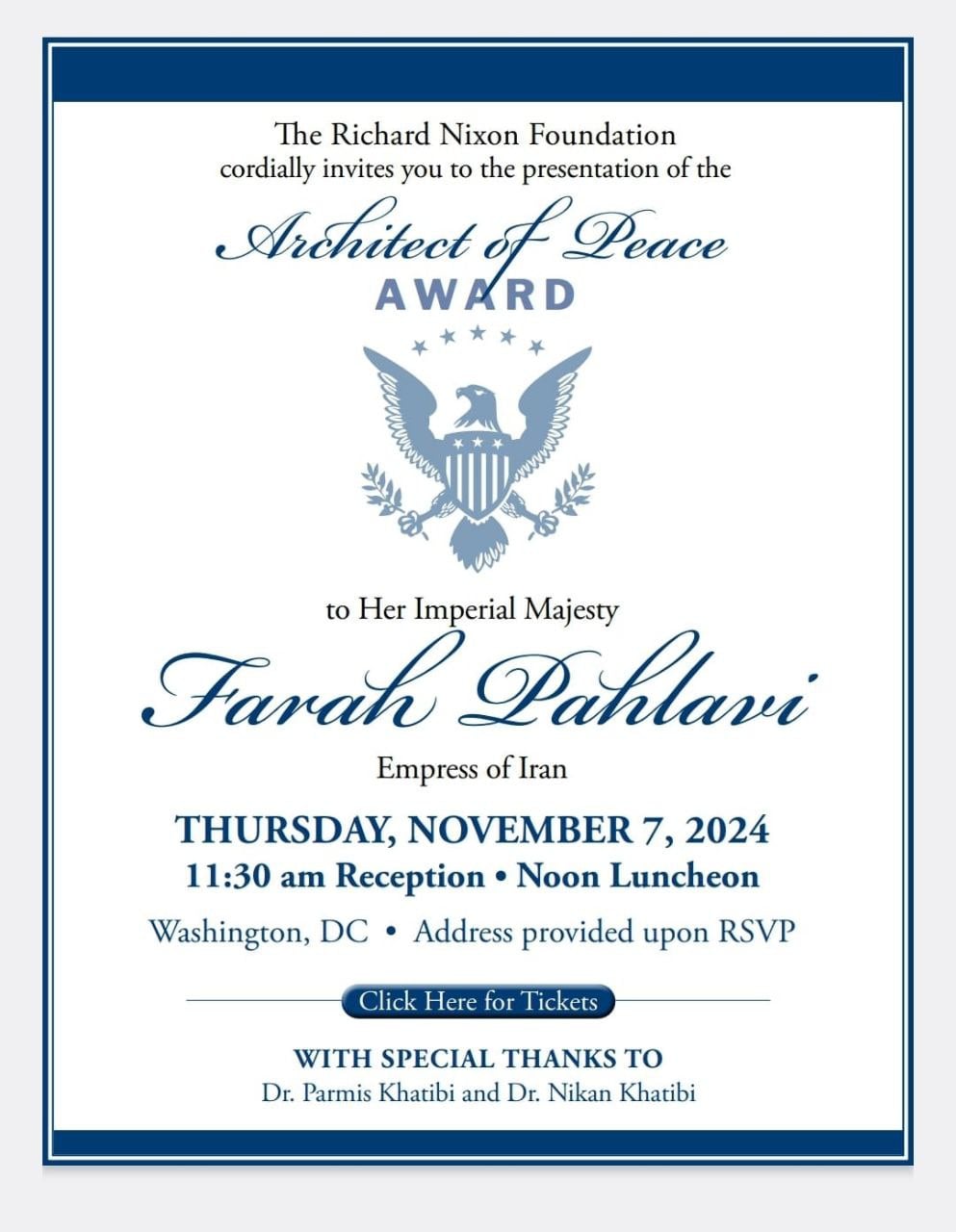
On October 22 at the Richard Nixon Foundation, a celebration will honor the golden era of Iran-US relations and present the Architect of Peace Award to Prince Reza Pahlavi. The historical connections between Nixon and Mohammad Reza Shah Pahlavi, the Shah of Shahs of Iran, are well-documented. Nixon was always profoundly moved by the Shah’s persona, his intellect, his decorum, and the significance of his stature.
Yet, without a regime change in Iran, the prospects for democracy, human rights, freedom, and humanity remain dim. HRH Crown Prince Reza Pahlavi’s historical role is crucial in guiding Iranians through this transformative period. With the U.S. elections on the horizon, it is uncertain whether Democratic candidate Kamala Harris or Republican Donald Trump will next lead the nation. However, it is fervently hoped that the incoming administration will distance itself from engaging with representatives of the terrorist Islamic Republic of criminal ayatollahs in Tehran and instead heed the counsel of the most prominent, reputable, and influential figure of the Iranian opposition. By championing regime change, they can relegate Islamic terrorism to the annals of history, alongside the likes of communism and apartheid.
As Americans once celebrated the demise of Bin Laden, as Lebanese exulted at the fall of Nasrallah, and as Israelis breathed a sigh of relief upon Sinwar’s death, one can only imagine the surge of liberation that will sweep across Iran at the end of Khamenei’s tyrannical reign. The current regime in Iran, a regime devoid of any semblance of logic, culture, or civility, stands as an obdurate barrier against the flow of intellectual discourse, an oppressive monolith silencing the voices of its people. This regime, a dark tapestry woven with threads of tyranny, has indulged in every conceivable atrocity to maintain its iron grip on power, turning a blind eye to the nation’s dignity and the sanctity of its borders.
Engagement with the regime’s mullahs in Tehran is as futile as dialoguing with shadows in a plague-ridden house, for these figures are more insidious than vermin, entrenched in their medieval savagery. They haunt the corridors of power, perpetrating acts of murder, rape, and terror—architects of a reign of terror that seeks to crush all dissent. From a standpoint of rationality and security, it is evident that Khamenei, a figure both bellicose and benighted, stands at the heart of regional instability.
The forthcoming chapter, whether penned by Trump or Harris, or by the leaders of the Middle East, must advocate for a decisive turn of the page: the support of regime change in Iran. Without this resolute action, the noxious blight of this regime will continue to fester, threatening to extend its dark shadow across the landscape, much like a relentless and creeping vine that strangles all in its path.
I cannot foresee whether I will once again sit alongside my friends within the welcoming embrace of the illustrious and patriotic Khatibi family, witnessing the visage of Iran’s Prince. Regrettably, since my journey from Washington to California two years ago, I have found myself ensnared in the petty machinations of a group marked by envy and narrow-mindedness. These pretentious individuals, more concerned with the theatrics of snapshot moments than the gravitas of such gatherings, have sought to barricade my presence at the prince’s ceremonies. This exclusion is emblematic of the intellectual and political immaturity that afflicts certain deluded figures within the counterfeit opposition—a faction more invested in the pageantry of appearances than in the true welfare of Iran. Moreover, a clandestine ‘mafia’ encircles the prince, deliberately preventing intellectuals, historians, and the educated elite from drawing close to him—a bitter narrative that underscores the ongoing struggles among the prominent leadership figures in the Middle East. Undoubtedly, the prince himself is unaware of these cunning censorious rings that surround him.
Yet, deep within my heart, fervent wishes for HRH Crown Prince success take root. History seldom bestows upon us a figure so regal, at a juncture so pivotal, offering a serene passage through tumultuous times. This may indeed be our final historical opportunity to steer clear of bloodshed and embrace peace. The savage mullah, entrenched in his labyrinth of nuclear machinations and terrorist cells, threatens to ensnare Iran in perpetual chaos. Only the guiding hand of the prince promises a beacon of hope for a peaceful transition post-regime change. Without him, the mullahs and their cohorts would persist in their relentless pursuit of power, wealth, and oppression, cloaked in propaganda. But after 45 years, the world may finally be ripe with intellectual maturity and awakened consciousness. Perhaps, just perhaps, the dawn of understanding is upon us.