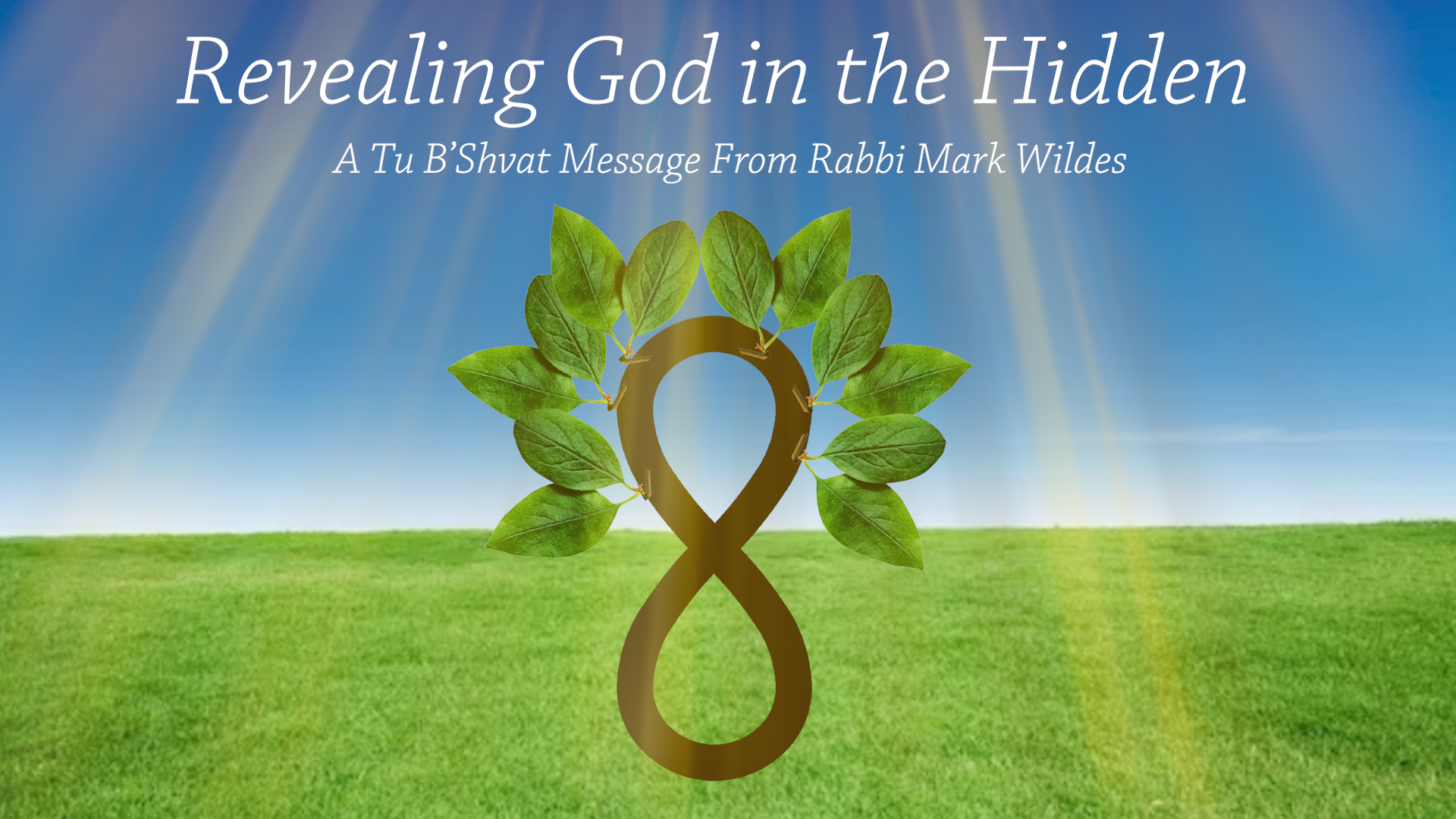
Revealing God in the Hidden: A Tu B’Shvat Message
One of the most common questions I have gotten as a rabbi is: “Where are all the miracles? Rabbi, if I was just able to see even one real miracle in my life, then I too would believe and maybe I’d start taking the Torah more seriously”.
This past Shabbat we read Parshat B’shalach – the parsha of miracles. There are more supernatural events which take place in this one parsha than in any other in the Torah: the splitting of the Red Sea, God’s cloud of glory and His pillar of fire appear for the first time, quail and manna fall from the heavens and water sprouts forth from a rock! As impressive as these miracles are though, we are taught not to rely on them. The Talmud famously teaches ain somchin al haneis – we must not depend upon a miracle. These miracles may have been necessary to convince our ancestors that there was a God, but overt miracles are not the ideal way to find God.
God wants us to find Him when He is Hidden, to see Hashem – not only in the supernatural, not only when the sea splits and He is obvious, but in our regular everyday lives, in the little miracles that take place – if we choose to see them. This is where Tu B’shvat – the minor holiday we celebrate today – comes into play. Tu B’shvat is the day the Jewish people celebrate the natural world and praise God for providing us with all the fruit bearing trees. The Mishna (oral tradition) refers to Tu B’shvat as the “new year for trees” because it was on this day that the tithing of the first fruits began – when every Jew would bring their crop to the Temple to be eaten by the Kohanim, the Leviim and by the poor. When the Temple was destroyed, Tu B’shvat remained as a day to celebrate trees and the fruits they bear. It’s our day to see God in the natural, not supernatural world. Nature remains the greatest witness to a Creator, and we so often overlook it. We forget that behind every apple and pear there is a Supreme Being responsible for everything that happens in our world.
We tend to look for God in overt miracles – in supernatural events, and when they don’t happen, we ask where is God? Why doesn’t Hashem just perform a miracle already? The answer is He does, but He doesn’t want it to be too obvious. That way we get to choose to bring Hashem into our lives and not be forced by an overwhelming and obvious Divine presence.
It is therefore no coincidence that Parshat B’shalach always falls out right before or after Tu B’shvat because as we read about sea’s splitting and food falling from the sky, Tu B’shvat comes along as says: “yea, those miracles are pretty cool, but so are the ones found in the natural world”. As another cotemporary rabbi remarked: “an orange is no less miraculous than the manna”.
God provided us with nature, with fruits and trees, not only to provide us with sustenance, but to give us the opportunity to reveal His presence in our world, and we do this by reciting Brachot (blessings). The word bracha is related to the term “briacha” or spring because just as a spring serves as the source for all water, when we make a bracha we reveal God as the source behind whatever it is we are about to enjoy. That is why every bracha begins with the words: Baruch Ata Hashem, “Blessed are You Hashem”. We articulate that God is the source of this piece of bread, a cookie or a pear. Reciting brachot before we eat may seem like a very simple or even trivial activity, but it goes to the very purpose of our mission as Jews – to reveal Hashem where He is Hidden. To demonstrate to the world, that although we can’t see God, He is there, watching over us and guiding our lives.
Miracles still exist and it is our task to reveal them. This Tu B’shvat challenge yourself to use brachot to reveal those miracles and seeing God when He is hidden.