


Mathematics Teaching Professor, Author
Rise Of Antisemitism Since October 7: An Exclusive Interview with Eitan Chitayat
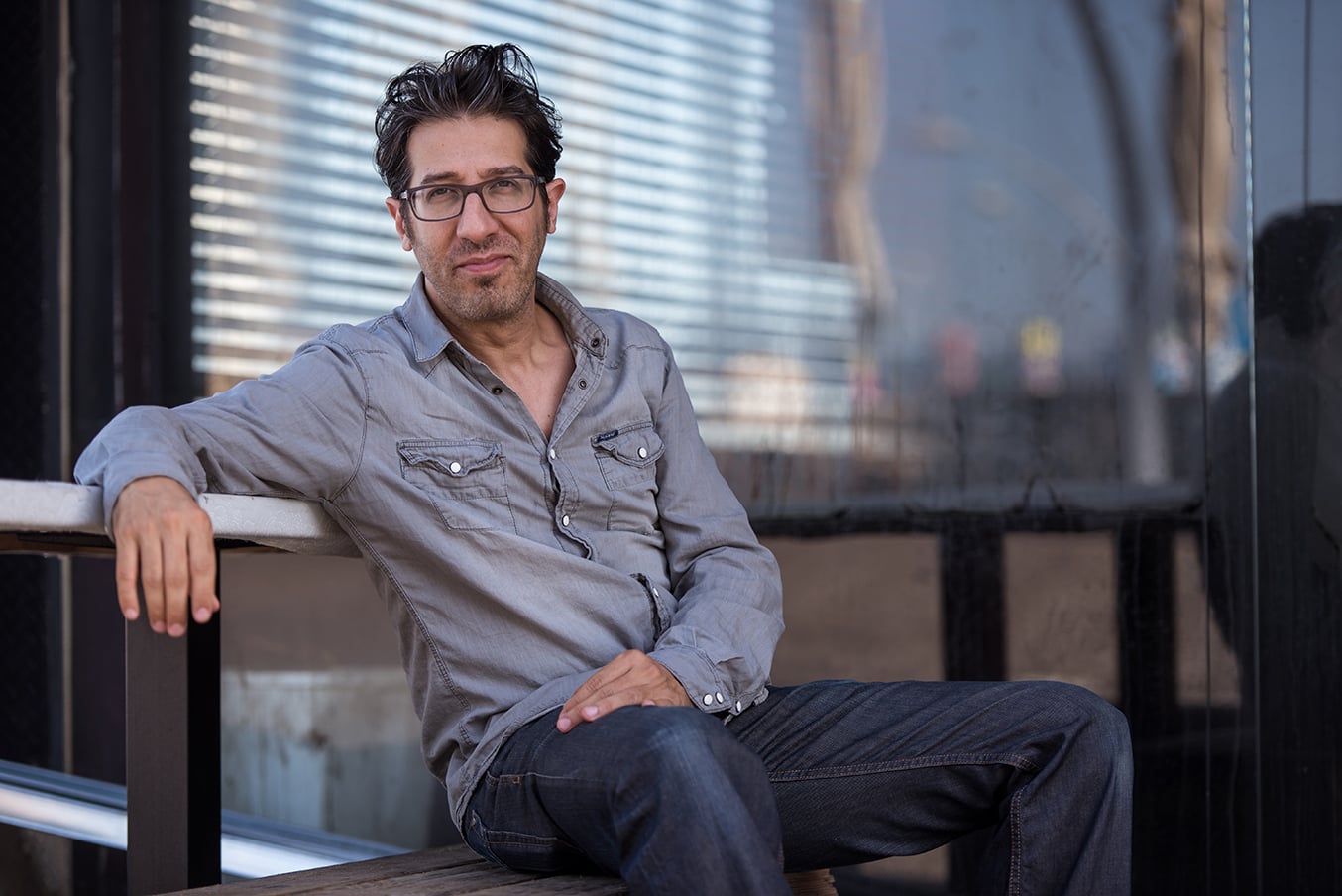
Eitan Chitayat (Source: Eitan Chitayat)
Eitan Chitayat is the founder of the international Natie Branding Agency, a branding and storytelling agency based in Tel Aviv. With nearly three decades of experience, he has worked with leading global brands, nonprofits, and cultural organizations, including Google, Apple, Facebook, and YouTube. He is also the creator of I’m That Jew, a Jewish storytelling and advocacy project whose content on Jewish identity, Israel, and antisemitism has reached around 400 million views across social media since October 7.
What motivated you to create I’m That Jew, and what did you hope to achieve through the project?
I’ve told the story before, but it’s particularly timely because of what’s going on in France right now. Back in the day, if you remember the terrorist attack on Charlie Hebdo, Islamists and jihadi terrorists stormed the satirical magazine. They murdered French satirical journalists and staff. They also killed a few Jewish shoppers at a kosher supermarket in Paris. For people who remember, it was very, very shocking. It was a massacre.
Immediately afterwards, I reached out to a good friend of mine to see how she was doing. She’s Jewish; she was living in Paris, France. And she told me her now father-in-law and brother-in-law had visited that kosher supermarket just that morning. The conversation evolved into how scared she was of saying that she was Jewish. In fact, at the time, and this is not the case anymore, she hadn’t told anyone she was Jewish or that she had been to Israel.
So, as I expressed in my TEDx talk a few years later, that night I sat down and I wrote I’m That Jew. It started off being kind of like a letter to her. But it wasn’t specifically to her, I realized; rather, it was a response to what she had told me. It then very quickly became something that I was saying to myself, and then something I was saying to all of the Jewish people, reminding us who we are.
A lot of people have said the message of I’m That Jew is about antisemitism, or fighting antisemitism. And I think one of the best ways to fight antisemitism, which is foundational, is to not just be proud to be Jewish, but to be openly proud.
The message is that we need to be who we are, and being who we are means literally being who we are ‘openly’. Which is not easy, I know. But that was the inspiration. It was actually a letter to strengthen our identity and to remind us that we know who we are. We’re misunderstood, so we need to just keep being who we are and showing ourselves and the world who we actually are.
It’s so many different individual traits that make up the collective. We’re not a stereotype of one, two, or three things; we’re billions of things. And that’s what I wanted to say. We certainly don’t need to be afraid because the world’s messed up. I’m That Jew.
That was tremendously moving. How would you describe the landscape of antisemitism in America since October 7, 2023?
It’s allowed. I think that’s the big change.
People who have been following me know I’ve been a public Jewish advocate for around 20 years; I have my own small business, but I advocate for myself and my family and us all because I think it’s really important. I’ve been in this space observing what’s being written and said for a very long time. When I wrote I’m That Jew, for example, it was in response to a world event that affected the personal.
But there were other things that I’d expressed beforehand. Before October 7th, antisemitism wasn’t exactly underground, but it wasn’t as common, because there were some guardrails. And what we’ve seen since October 7th is that the guardrails have completely come off, and it’s allowed. You can’t say anything racist about Black people, and rightly so. You shouldn’t be misogynist. You shouldn’t be hating on gay people, or trans people, or Asian people.
But there’s an exception with the Jews, and there always has been.
Look, it was kept in check for the golden era, for the last 20 or 30 years. But it’s become fashionable. It’s antisemitism en masse. It’s hatred disguised as peace. It’s miseducation disguised as virtue. It’s all of those things, and it’s because of a coordinated campaign for decades, and this is not a conspiracy theory, by the Islamist enemies of the Jewish people, who might sit in Qatar, or who, back in the day, were in cahoots with literal Nazis in the 1940s. Add the extreme right wing and Russian propaganda to the mix, and all sorts of things have come together in a perfect storm to allow it to be acceptable. So, it’s exploded and you’ve got the war too and all the lies being spread about it. People are fooled into thinking things, and our enemies have the numbers, and they’ve got the money. With social media, bad stuff travels very quickly these days.
College campuses have seen a significant increase in antisemitic incidents. What do you believe is driving this trend?
I think it’s the susceptibility of young people. I’m young enough to remember an awful, awful tragedy, which was 9/11, of course. And the moments, the days, the weeks, the months after that are burned into my mind.
Today, you have young people who are 18 years old, a bit younger or older. They don’t have that first-hand experience or knowledge. They weren’t around. I think that young people have certain luxuries that you and I, who are a little bit older, and certainly people who are older than us, don’t take for granted: the freedoms that we have.
And I think that young people today are very gullible. Because of social media, because of coordinated movements that are not for bringing people together, but for pushing people apart, they succumb to lies very easily. We are living in a generation that doesn’t know fact from fiction because there’s no one truth anymore. And it’s felt nowhere more than with younger people who hear something and think that it’s true. They watch a 30-second video and it’s some influencer, and these are the people that they follow. This is where they get their knowledge from.
I mean, I’m not saying that young people don’t read books. I’m not saying that young people aren’t educated. Or that they’re stupid. They’re not. I’m not knocking young people, but we had it different in our day. It was harder for our brains to be hijacked. That’s not saying that people’s brains weren’t hijacked. Look at Nazi Germany. But this is so global that it’s actually quite scary. And they’re influenced by it. They’re influenced by their peers. Academic institutions have been hijacked by extreme left-wing progressives (not left wing, extreme left wing), and there’s been a coordinated effort to demonize Jews and Israel. There’s no one more qualified to talk about this than my colleague and friend and brother, Shai Davidai, who I’m sure you know.
He went through that firsthand, and he’s written an incredible book about why the younger generations are so susceptible to what is going on these days. I think it’s compulsory reading, and it’s called American Intellectual Antisemitism.
Jewish people need to read this book. Non-Jewish people need to understand and see past the lies. They need to understand the people who are at the top of the elite universities, and what their ideologies are, and who they are teaching. They are literally teaching our children. That’s where it’s coming from, along with these crazy movements like Students for Justice in Palestine and supporters, whether open or hidden, of the Muslim Brotherhood. These are not people with morals that we want our younger generations to emulate. The younger generation is thinking that they are actually supporting a good thing. They’re not.
What role does the mainstream media play in shaping public perceptions of Israel and Jewish communities?
I think we need to define what the mainstream media is. Again, back in the day, I remember when I was living in Hong Kong, or in London, or when I would come to visit Israel as a young boy, there would be a few TV channels. You know, media companies have an agenda, and they always have. But I remember the days when, many times, you literally heard what the news was that day, and maybe there’d be a little bit of spin, or a lot of spin, but it wasn’t wide open for everyone.
In media today, in order to survive, you have to get a heck of a lot more eyeballs. And even though it was the same for many news outlets back in the day, there’s much more competition now. And so, a lot of entities are competing for eyeballs, and how do you get people to watch? You throw things at them that raise their ire a little bit. Drama.
I’m not an influencer. Of course, I have a social media presence, but my purpose is to advocate for the Jewish voice. There are influencers, however, who stir up controversy to get eyeballs on them, generate engagement, and gain popularity. It is in every country. It’s on every social media platform and in so many news outlets as well. If you look at the BBC, or the New York Times, just to name a few, there are many international news organizations that are simply not giving the entire truth. They’re hiding the entire truth.
And that’s not to mention those people who quite literally have an agenda against Israel, or maybe don’t like the Jewish people, or who have succumbed to negative stereotypes themselves.
You look at Kanye West. You look at people who say that they are not antisemitic, who are celebrities, like, for example, Mark Ruffalo; he might not hate Jews, and I believe that he doesn’t, but he adheres to double standards when it comes to the one and only Jewish nation. He excuses hate. Doesn’t see the whole picture. Refuses to. He’s in media. When you tweet something, that’s media. When you’re a news outlet, that’s media.
So it’s very challenging, which is why it’s so important that we keep trying to express the truth and show facts with empathy, because we can’t rely anymore on the media. I don’t want to say the media is corrupt, because it makes it sound like they’re bad people, and of course there are bad people, but there are also people who are very naive and just believe everything, and that goes for people in the media, too. The untruths that are being fed are so widespread that I don’t know what the source of truth is for people anymore, but it’s certainly not mass media.
There are people like Bari Weiss at The Free Press, who I think is trying to bring back what journalism should be. You know, check the facts.
Zohran Mamdani has become one of the most prominent Democratic politicians. The Democratic Socialists of America have adopted an explicitly anti-Zionist position. What concerns do you have?
He’s the mayor of New York City. He’s a good-looking, charismatic, well-spoken, very intelligent guy who doesn’t believe that Israel should exist. That’s bad enough. But the message that it sends to the rest of the world, I think, is worse. If you can have this type of man in the seat that he has in probably the most well-known city in the world, what message does that send around the world?
Remember what I said before about the guardrails? The guardrails have been removed, and anything goes, and you have people like him who are Social Democrats, Communists, telling people what they want to hear. And I don’t see the blood and the sweat from him. I just see an entertainer who’s got a mouth, and who believes in some pretty vile things, and is disguising his animosity and rejection of my country, of the fact that people can live here as Jews openly while accepting others, and of it simply being a Jewish country. The only one in the world.
He opposes that, and that says a lot. He’s legitimized, in many ways, this new antisemitism, which is the rejection of the belief that the Jewish nation is Israel. And that doesn’t mean that other people can’t live here. That’s never been the case. But he doesn’t talk about that. He talks about repression, he talks about genocide, he talks about all these things that are simply not true. He’s passing that on to a lot of his followers. He’s legitimizing intolerance. He’s making something untrue true, and they believe him. That said, I’m hopeful because I just feel that we need more people to speak, and we must continue to speak. We must continue to look at the facts and what people like Mamdani are saying and what they’re doing. And voice it. I see a lot of people doing that. Not enough, but a lot of people.
As a final thought, what do you most want readers to take away from this conversation?
A lot of people think, “What can I do?” I can tell you that now, you can do what we, as Jewish people, have not done for so long.
You can get uncomfortable again, because it used to be uncomfortable. And you can voice your identity. In your own world, everywhere that you can.
This means don’t hide the fact that you’re Jewish. It doesn’t mean walking around, for example, like I do oftentimes with an I’m That Jew shirt, to make a point. And it doesn’t mean walking into a room and saying, “Hey, everyone, I’m Jewish.”
But it does mean not hiding your Jewish identity, so when you would naturally want to say that you’re Jewish, say it. When you would want to say that you’re leaving college class a little bit earlier because it’s Shabbat, then say it. If you are going to Israel because you’re Jewish, say it. If someone asks you or notices a mezuzah on your door, say it. If someone talks about genocide and you want to voice your opinion as a Jew, having the knowledge of what your own people went through, through a real Holocaust, then say it. At every opportunity, normalize your Jewish identity and DO NOT be bullied into silence about it because that silence is one of the most dangerous things of all.
There are many ways that the individual can show their Jewish identity openly that can have a profound effect on the collective. It’s not going to come from the top. It’s going to come from people like you, the reader, and people like me and our friends, to inspire other Jewish people to show their identity, and not let the bullying scare us. And not just now. Always. Even when things one day, G-d willing, become somewhat normal again.
This will also encourage very good people who are truly out there who know us on an individual level. Like you: people know Jay is a good person. Jay does not condone apartheid, so why would he defend Israel and say that apartheid is not going on? He wouldn’t condone a genocide. It comes from the individual. Not the politician. The more personal we can make it by letting people know who we really are, and how our Jewish identity is core in terms of our values as well, the better it is for the collective.
And that’s what I’d like people to take away: that there are so many people that can make a difference. It requires sweat and tears, work, and determination to not cave to the pressure.
I would also like to add one other thing: don’t try and convert the haters. The haters have their own hate virus. Rather, own your identity yourself, and get to know what being Jewish actually is: it’s not just a religion, it’s a culture, it’s a heritage, it’s a set of values, it’s a history, it’s all of those things. Talk to your friends who are not haters about who it is that you are and where it is that you come from, without hate toward anyone else either.
I hope that when they read this, those are the two practical things they take away from it.
I must say, I’ve been a professor for 43 years. I’ve been around public speakers my whole life. You, sir, are very well spoken. You’re articulate. You choose your words deliberately. The words resonate with the listener. It’s very impressive, and I greatly appreciate you, sir.
That means a lot. Thank you. Thank you very much.
You can support and follow Eitan Chitayat on Substack. Follow his Jewish advocacy on imthatjew.com and his agency at natie.com.