

Rooted in the Land: An 18-Year-Old Shepherd Building Israel’s Future
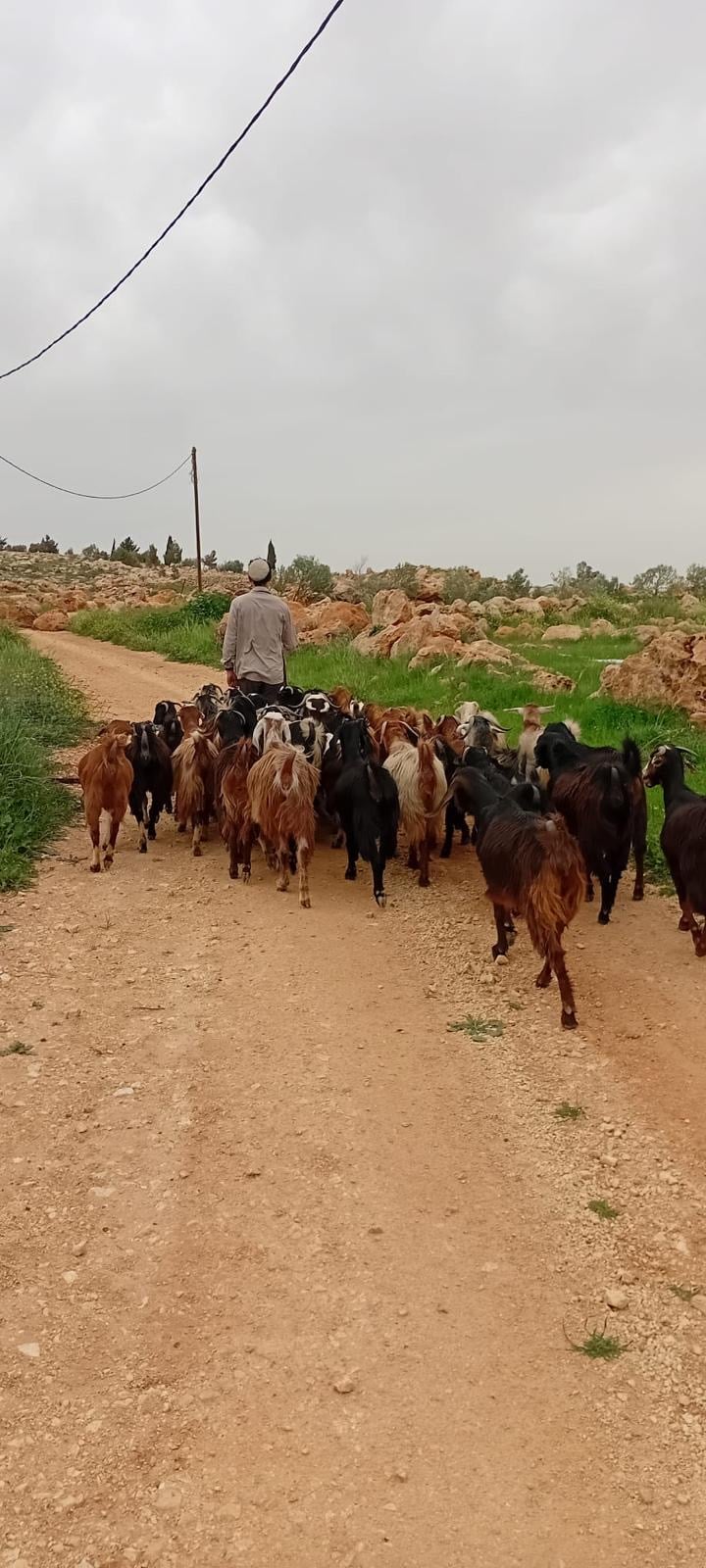
In the mountains of the Shomron, a young Jewish shepherd is dedicating his life to something far greater than himself.
For the Jewish people, the Land of Israel has never been merely a geographical location. It is woven into our prayers, our history, and our identity. For thousands of years, even when scattered across the world, Jews continued to dream of returning to the land of their ancestors. The land carries the memories of generations, the sacrifices of those who came before us, and the dreams of those who have yet to be born.
Today, while many of us express that connection through prayer, education, charity, and visits to Israel, there are young people who have chosen to express it through the daily challenges of living on the land itself.
One of them is Yoshua, an eighteen-year-old shepherd who lives on a remote farm in the mountains of the Shomron.
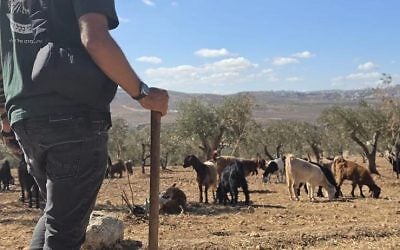
Most teenagers his age are thinking about college, careers, friendships, and the next chapter of their lives. Yoshua spends his days shepherding goats and cattle across rocky mountains, often carrying nothing more than a wooden stick for protection.
His nights are equally demanding. While others sleep, he sometimes stands guard with a flashlight, watching the surrounding hills for signs of danger.
There are no comfortable roads leading to his home, electricity is limited, and even something as ordinary as charging a cellphone requires planning. Yet when Yoshua speaks about his life, he does not seem to consider these sacrifices extraordinary. For him, this is simply what it means to help build the future of Israel. I recently had the opportunity to hear Yoshua share his remarkable story during an intimate gathering hosted by a local Jewish family. As he described his experiences, showing photographs and videos from the farm, I found myself looking at someone who was barely an adult yet already carried responsibilities that many people never encounter in a lifetime. His story offers a glimpse into a reality that rarely makes international headlines.
A Farm Built in Memory of a Fallen Israeli
The farm where Yoshua lives is called Giv’ot David, named in memory of David Libby, an Israeli civilian contractor who was killed while operating heavy machinery for the Israeli military in Gaza.
According to Yoshua, Libby was killed when an explosive device detonated beneath his bulldozer during a military operation.
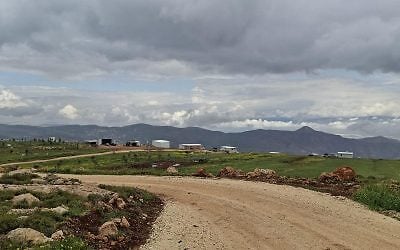
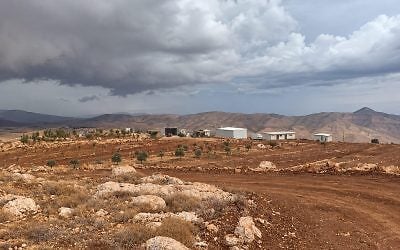
Today, several farms in the region bear his name, continuing what their founders see as his commitment to the land and people of Israel. Yoshua’s farm was established approximately sixteen months ago on a remote mountainside, about twenty minutes from Shiloh and an hour from Jerusalem. Before anyone could live there, they needed a road. The volunteers spent approximately six weeks carving a mile-and-a-half pathway through the rocky mountain, working as many as ten hours a day.
The alternative route passed through a nearby Palestinian village, which the residents considered unsafe. When the first group finally reached the site, they had almost nothing.
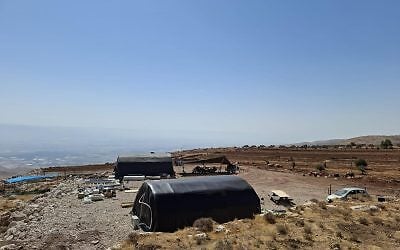
There was no running water, no electricity, and no permanent housing. For the first several weeks, the young volunteers slept in a makeshift shelter constructed from simple poles and fabric. A young couple with two small children eventually joined them, taking responsibility for overseeing the farm.
The teenagers worked late into the night, building enclosures for the goats and preparing the land. Their first home was hardly a home at all. They assembled a wooden platform, bent water pipes into a frame, and covered the structure with materials intended to keep out the rain. It would be months before more permanent accommodations became available. Yet Yoshua described these beginnings without complaint.
Life Without the Comforts We Take for Granted
Listening to Yoshua, I began to appreciate how many ordinary conveniences shape our daily lives.
For the first month and a half, the residents had to transport water to the farm every day, not only for themselves but also for approximately 140 cattle and 35 goats. Eventually, they installed a water pipeline stretching approximately four miles. Even that achievement brought new challenges.
Yoshua described repeated incidents in which the pipeline was damaged. During the dry summer months, a leak can be spotted relatively easily. In winter, locating a broken section may require walking the entire length of the pipeline.
Electricity comes primarily from solar panels. On cloudy winter days, the power may disappear around midnight, leaving the residents dependent on flashlights. Several consecutive rainy days can mean living without electricity altogether. Even charging a telephone becomes a calculation. While most of us plug in our phones before going to sleep, Yoshua explained that he often waits until morning, when the solar panels begin producing electricity again. The road presents another challenge. During winter, the mud can reach nearly half a meter deep. Yoshua recalled that twenty-one vehicles suffered serious damage during the previous winter.
Sometimes he receives calls at four in the morning asking him to help rescue a vehicle stuck along the mountain road. He happens to be one of the few young volunteers with a driver’s license. And so, at an age when many young people are still learning to navigate adulthood, Yoshua is navigating mountain roads, transporting supplies, caring for animals, and helping maintain an entire community.
When Every Day Brings Uncertainty
The physical hardships are only part of the story. According to Yoshua, the farm’s residents have experienced repeated confrontations with people from nearby Palestinian communities.
He described an attack during the farm’s earliest days, when a large group approached the volunteers carrying rocks and sticks. Several people were injured, including an armed adult who, Yoshua said, required dozens of staples after being assaulted. Yoshua also described incidents involving rocks thrown at shepherds, roads blocked with boulders, damaged vehicles, and attacks on farm equipment.
On the morning he departed for America, he discovered that all four tires of his vehicle had been punctured by metal spikes placed along the dirt road.
He also described a natural spring that the farm’s residents had developed into a small recreational area. According to his account, the site was subsequently vandalized, cement was poured into the water, and a suspicious explosive device was discovered nearby.
The spring had also served as a water source for wildlife. Yoshua explained that the residents hope to restore it. These incidents are Yoshua’s firsthand account of life in a deeply contested region. The broader questions surrounding land ownership, settlement legality, and Israeli-Palestinian relations remain subjects of significant political and legal dispute. For Yoshua, however, the immediate concern is much more personal. How does he keep himself and the people around him safe?
He explained that he is not licensed to carry a firearm and generally takes only a wooden stick when shepherding the animals. When danger arises, the volunteers are instructed to retreat and contact the army. But the difficult terrain can delay assistance.
Sometimes, he said, soldiers need twenty minutes or longer to reach the farm. At night, the residents take turns standing guard. There are evenings when only a handful of people are present to watch over the property. When someone asked whether they had considered installing fencing, Yoshua explained that fencing such a vast, mountainous area would be difficult and expensive.
He also expressed a conviction that revealed much about his outlook. “We’re not afraid,” he said. “We’re in our land.” Whether one agrees with his political perspective or not, it is difficult to overlook the personal risks and responsibilities he described.
From a Farm to a Future Community
One of the most surprising things I learned was that the farm is not intended to remain a farm forever. Yoshua explained that the long-term goal is to establish a permanent residential community.
The animals are part of the initial stage, allowing the residents to graze across the surrounding land while developing the infrastructure necessary for families to move there.
Eventually, the organizers hope to welcome ten, fifteen, or twenty families.
Once the community becomes established and capable of functioning independently, Yoshua hopes to move on and help develop another farm. He spoke about this plan with remarkable simplicity. “My plan is, after there’s enough families here, to keep it surviving without me, I’ll move out and build another farm.”
Imagine dedicating months or years of your life to building something, only to leave when it finally becomes comfortable. For Yoshua, the accomplishment is not measured by what he personally gains, but by what remains after he moves on.
The financial challenges are considerable. A bulldozer can cost tens of thousands of dollars. Building roads, leveling rocky terrain, transporting prefabricated homes, and providing water and electricity all require substantial resources. Much of the work depends on volunteers and private donations.
One supporter helps pay for groceries. Another contributes toward water expenses. Others have financed equipment or road construction. Yoshua described a community in which people contribute whatever they can, whether money, machinery, labor, or time.
A Connection That Goes Beyond Words
Throughout Jewish history, the connection between our people and the Land of Israel has been sustained by generations who refused to let distance, hardship, or uncertainty weaken their sense of belonging.
Some expressed that devotion through prayer, others through scholarship, and still others through the extraordinary courage of leaving everything familiar behind to begin a new life in the land of their ancestors. Today, Yoshua represents another expression of that same enduring connection. His daily life reminds us that dedication is not measured by how passionately we speak about our beliefs, but by what we are willing to sacrifice for them.
He does not have the comfort of a permanent home, reliable electricity, or the security that most of us take for granted. Yet he wakes up each morning knowing exactly why he is there.
His dream is not to acquire a beautiful property or establish a comfortable life for himself. It is to help create a place where other Jewish families can eventually raise their children, build homes, and establish a community. And when that happens, he plans to leave and begin again somewhere else.
What an Eighteen-Year-Old Taught Me About Purpose
Toward the end of the evening, someone asked Yoshua how old he was.
“Not even nineteen yet,” he replied. For a moment, the significance of those words seemed to settle over the room. We had spent the evening asking him questions about security, infrastructure, politics, agriculture, construction, and the future of an entire community.
And the person answering us was eighteen years old. I have traveled to many countries and encountered people living under extraordinary circumstances, but I continue to be moved by individuals whose sense of purpose is greater than their desire for personal comfort.
What impressed me most about Yoshua was not simply his willingness to endure hardship. It was his understanding that the work he is doing may ultimately benefit people he has never met. He is planting roots in a place where he may never personally enjoy the shade of the trees. There is something profoundly Jewish about that idea. Our ancestors preserved their connection to the Land of Israel for thousands of years, often knowing that they themselves would never witness the fulfillment of their dreams. They prayed for a future they might never see, preserving an inheritance for generations yet to come. Yoshua’s circumstances are different, but his dedication reflects that same willingness to invest in something beyond one’s own lifetime.
Perhaps the deepest connection to the land is not simply the desire to live upon it, but the willingness to build something lasting for those who will come after us. 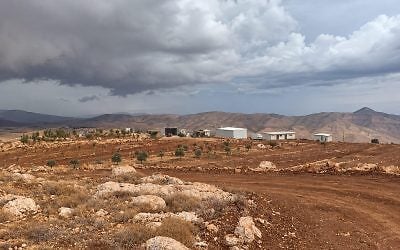
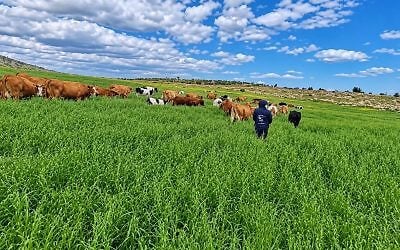
 And somewhere in the mountains of the Shomron, an eighteen-year-old shepherd is doing exactly that, one difficult day at a time.