
Director of Oxford Interfaith Forum
Rustaveli in Jewish Land: Shared Material Culture
Rustaveli in Jerusalem
65 years ago, three Georgian scholars landed in the divided Jerusalem. Nikita Khrushchev, the most eccentric leader of the USSR, had personally approved their mission to restore historical justice, and recover the greatest cultural artefact of Georgian literature. This successful operation stands as a beautiful example of interfaith collaboration. It encapsulates the spirit of the Georgian-Jewish phenomenon and shared material culture.
***
The Georgian Jewish community, the world’s oldest continuous diaspora, is a remarkable witness to the most ingenious adaptations of religious, ethnic, linguistic, and cultural traditions of ancient Israelites in exile. The Chronicle of Kartli records the first documentary evidence of Jews seeking a home in Georgia. [1] The historian confirms that the Jews arrived in present-day Georgia twenty-six centuries ago, after the conquest of Jerusalem by the Neo-Babylonian King Nebuchadnezzar II. The record is attributed to Leonti Mroveli, the eleventh-century Georgian, presumably, an ecclesiastical figure. [2] This ancient historical document reads:[3]
და გამოხდეს ამას შინა ჟამნი მრავალნი. მაშინ ნაბუქუდონოსორ მეფემან წარმოსტყუენა იერუსალემი, და მუნით ოტებულნი ურიანი მოვიდეს ქართლს, და მოითხოვეს მცხეთელთა მამასახლისისაგან ქუეყანა ხარკითა. მისცა და დასხნა არაგუსა ზედა, წყაროსა, რომელსა ჰქვან ზანავი. და რომელი ქვეყანა აქუნდა მათ ხარკითა, აწ ჰქვან ხერკ ხარკისა მისთვს.
After the passing of much time, King Nabuqodonosor [4] seized Jerusalem. The Hebrews who fled came to Kartli. They requested land from the ruler [5] of Mtskheta for payment of the levy. The local ruler gave them land and settled them near the river Aragvi by the spring at the place called Zanavi. And the land given to them now is called Kherki after kharki. [6]
By the Middle Ages, the Jewish settlements had spread to almost every region of Georgia. Unlike other ethnic minorities, Jews adopted the Georgian Language as their mother tongue but continued using the Hebrew language for religious and liturgical purposes.
***
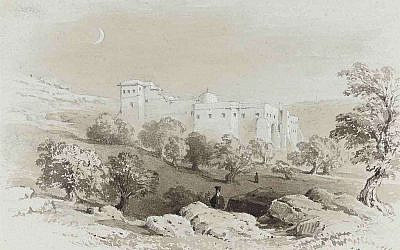
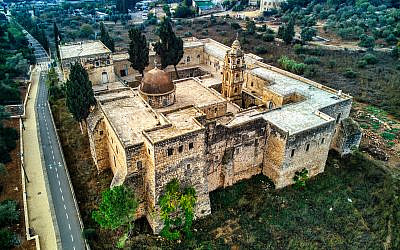
The Monastery of the Cross is the most valuable Georgian sanctuary outside Georgia. A piece of land, a royal gift from Constantine the Great to the Georgian King Mirian (265–342 CE), throughout history became a battlefield. At the end of the twelfth century, it was converted to masjid. According to the chronicles, King Tamar bought it back from him for 200 thousand dinars. In 1685, the Monastery was sold to the Greek Patriarchate due to heavy debts.
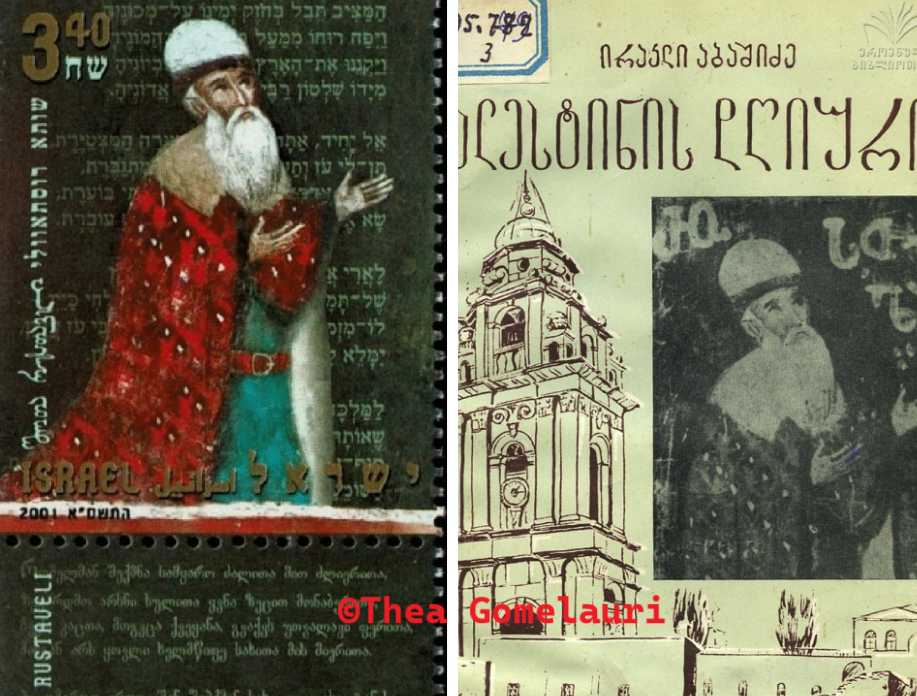
It is impossible to exaggerate the significance of Shota Rustaveli in the formation of Georgian national identity, culture, and political history. Despite his mammoth role in Georgian history, very little is known about his inconspicuos life. Allegedly, he was a patron of the Georgian-built Monastery of the Cross in Jerusalem, and retired there at an advance age. Depicted in a praying posture, between St John of Damascus and St Maximus the Confessor, he pleads:
ამისა დამხატავსა შოთა(ს) შეუნდვნეს ღმერთმან. ამინ. რუსთველი.
May God have mercy upon Shota, the painter of this [image]. Amen. Rustveli.
The Monastery acquired the highest level of sanctity not only because it is connected with the place where the tree that the Romans used to crucify Christ once grew, but because it houses the greatest national treasure of Georgian national-the fresco of Shota Rustaveli, the author of the epic poem, Dressed in a Tiger’s Skin. According to medieval pilgrims, his colorful image, with the ancient Georgian Asomtavruli inscription, was visible on a wall in the Georgian Monastery of the Cross in Jerusalem.
However, since the ownership of the Monastery passed to the Greek Patriarchate in the 17th century, Rustaveli’s image with the inscription, believed to have been made by his own hand, was defaced along with other multiple artefacts to conceal the Monastery’s Georgian ecclesiastical history. The above-mentioned delegation managed to recover the fresco and capture it on a camera on 6 November 1960. Since that moment, Rustaveli became accessible to the world.
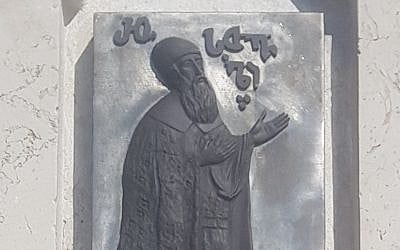
6 November, 2025, marks the 65th anniversary of the recovery of medieval interculturalist Shota Rustaveli’s only known image from obscurity. To celebrate this important milestone, Oxford Interfaith forum will organise educational events focused on Rustaveli’s poetry, and Georgian Jewish shared material culture.
***
The conference titled ‘Rustaveli’s Gift to Humanity: Dressed in a Tiger’s Fur in World Languages‘ brought together representatives of twelve linguistic communities to recite Rustaveli’s words in Arabic, Bengali, Chinese, English, French, Georgian, Hebrew, Hindi, Japanese, Persian, Russian and Spanish languages. They also discussed the adaptation of illustrations, and images of the people to reflect local cultural themes.
The conference gallery is available here.
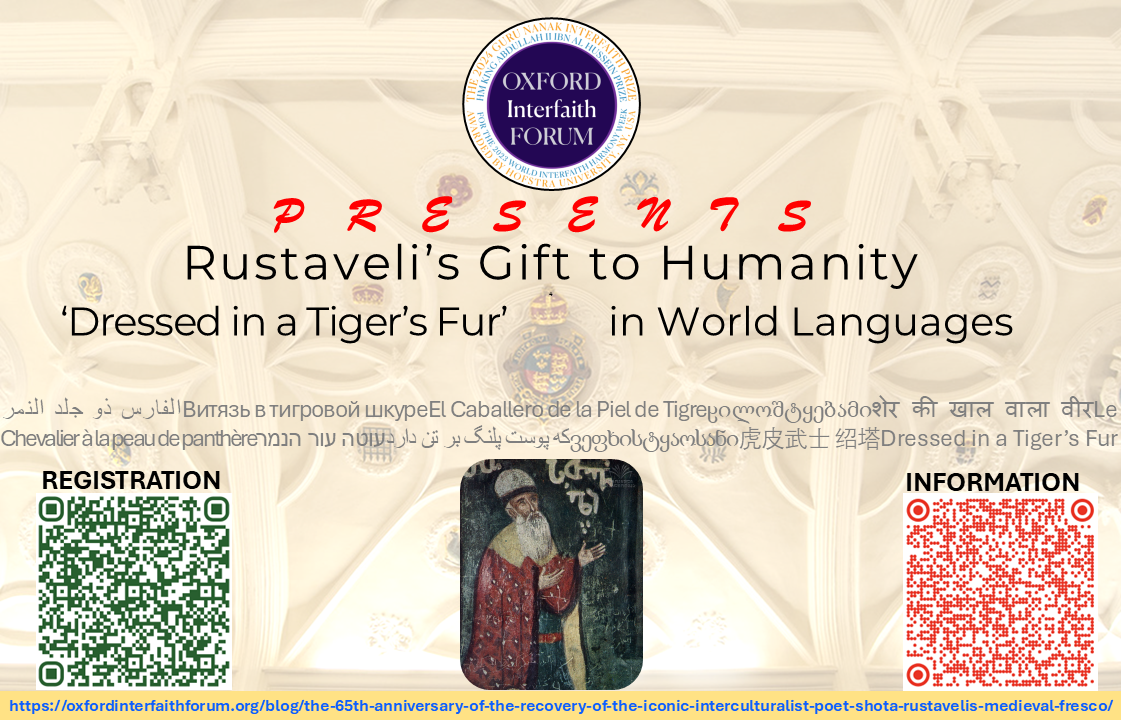
Recording of the conference ‘Rustaveli’s Gift to Humanity’
_______________________________________________________________________
[1] Kartli (Georgian: ქართლი), also known as Iberia in Greco-Roman geography, is a historical region in central to eastern Georgia with its original capital in Mtskheta.
Kartlis Tskhovreba, literally ‘Life of Kartli’ is a collection of historical texts beginning with Leonti Mroveli’ narrative about the History of the Georgian Kings and Patriarchs. The importance of this work underscores the fact that the scribal colophons in Queen Anna and Queen Mariam’s versions describe the work as the Holy Book. This is a rare case of ascribing sacredness to a non-religious writing. See: Metreveli and Jones, eds, Kartlis; Rayfield, Edge of Empires.
[2] Rayfield, The Literature, pp.59,63; Rapp, Studies, 2003; Thomson, Leonti; Tourmanoff, Medieval.
[3] All translations are by Thea Gomelauri unless stated otherwise. Qaukhchishvili, Chronicle, pp. 15-16.
[4] Nabuqodosor, the variant spelling in other versions.
[5] Mamasakhlisi (Georgian: მამასახლისი): Lit. Father of the House.
[6] Gvasalia, Encyclophedia. p. 471. Khark (Georgian: ხარკი) from the Arabic word Kharj, meaning taxes. See Chantladze, From the History, pp.195-197; Abuladze, Lexicon, p. 560.
Related Topics
Related Posts