


Samuel Fitoussi Interview | Alexandre Gilbert #277
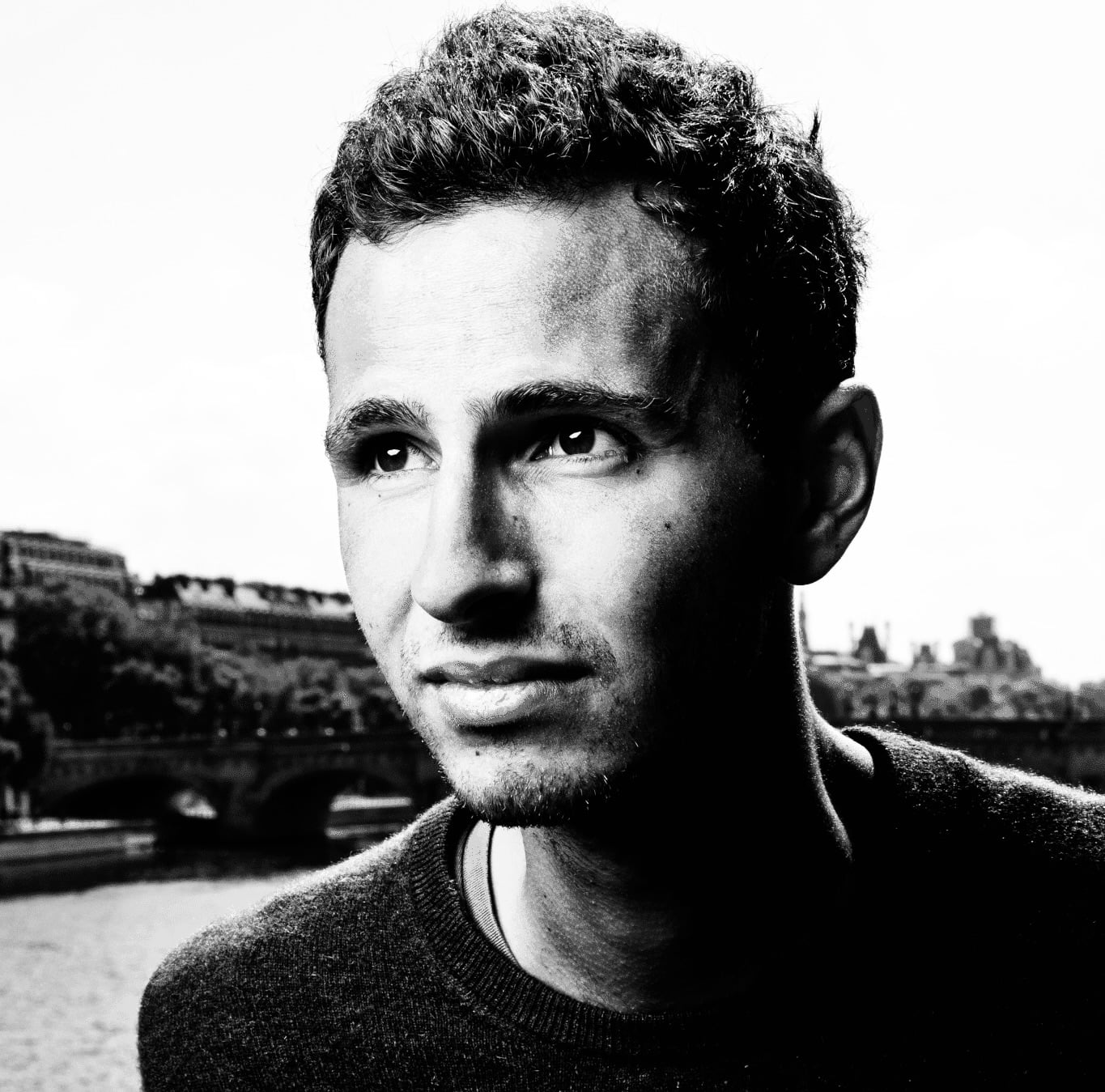
Samuel Fitoussi, french Columnist at Le Figaro, essayist, and investor at Frst, published Pourquoi les intellectuels se trompent (L’Observatoire) in 2025.
Following Michel Onfray’s L’autre collaboration, your book also addresses the responsibility of intellectuals. You seem to position yourself within a tradition critical of the so-called School of Strasbourg—a postmodern current linked to Levinas, Derrida, and deconstructionism, reminiscent of critiques by Jean-François Revel or Noam Chomsky in the 1970s. This current stands apart from the Frankfurt School (Adorno, Horkheimer, Habermas) and aligns more closely with what some call Pensée 68, French Theory, or Continental philosophy, often shaped by a theological-political worldview influenced by Heidegger or Carl Schmitt, and today controversially associated with so-called “wokeism.” Was this the intellectual backdrop you had in mind when writing your book?
Samuel Fitoussi: Not really. My book isn’t analysis of any particular ideology or school of thought, it is a study of the more general mechanisms that can lead brilliant thinkers to support absurd or destructive ideas. Of course, Carl Schmitt and Heidegger serve as interesting case studies because of their Nazi sympathies. But I mention them only because they exemplify a deeper question: the complicity of intelligence in the service of error and fanaticism. To stay with Nazi Germany, the historian Paul Johnson remarks that Hitler’s popularity was particularly strong on the most prestigious university campuses in the 1930s. At the Wannsee Conference—where the logistics of the Final Solution were discussed—half the participants held doctoral degrees. Why doesn’t intelligence protect against the most damning mistakes ? This is the question my book sets out to answer.
A sociology of thought, but not thought itself, right?
Samuel Fitoussi: I try to explain the cognitive mechanisms that lead to ideological blindness. Thinkers like Raymond Aron or Jean-François Revel have extensively described intellectual deviations in the 20th century. However, the point of my book is to ground this analysis in scientific literature—specifically the psychological processes that cause the human brain to deny the obvious even when it’s right in front of us. In fact, I show that in certain circumstances, the more intelligent we are, the more we are able to rationalize absurdities and to hold to mistaken beliefs. Ultimately, my book is a demonstration of Orwell’s famous statement: “Some ideas are so absurd that only intellectuals can believe them.”
Are you aligned with Steven Pinker’s approach to evolutionary psychology?
Samuel Fitoussi: Yes, absolutely. Steven Pinker’s evolutionary psychology is a school of thought I greatly appreciate and frequently draw upon. But my work is also shaped by other influences: the liberal sociology of Raymond Boudon and Raymond Aron, the incisive critiques of Jean-François Revel, and American thinkers like Thomas Sowell. Naturally, George Orwell—who so brilliantly captured the fascination many intellectuals of his time had for Stalin—occupies a special place in my pantheon.
I also lean on several researchers who have recently written extensively on beliefs, such as Keith Stanovich, Jonathan Haidt, or the scholars Hugo Mercier and Dan Sperber. These researchers have studied reasoning—how and why we reason—and one of the central themes of my book is that we don’t reason solely to discover truth. Often, we reason to make a good impression, maintain our reputation, and align ourselves with the consensual ideas of our social groups.
Imagine two men: one, obsessively devoted to truth, reasons rigorously, even when it means defying the consensus in his social circle; the other allows his brain to post-rationalize errors that help him fit in. Across our evolutionary history, which of these two would have had a selective advantage—who would have reproduced more, secured protection from his tribe, enjoyed cooperation, and gained social support for his offspring ? Of course, it’s the second man. In this sense, we descend not from Copernicus or Galileo, but from the crowds that condemned them. This explains why we can reason brilliantly yet fail to see what’s right in front of us. Our brains often block acceptance of truths that carry social costs.
In the 20th century, for example, it was socially safer to be wrong with Sartre than to reason with Aron. Many intellectuals— not cynically but unconsciously – took shelter in the fashionable errors of their time, using their intelligence not to question, but to justify: Stalinism, Maoism, support for the Red Army Faction.
Philosophers like Slavoj Žižek, Mark Jongen, Peter Sloterdijk, Aleksandr Dugin, and Curtis Yarvin all draw from Heideggerian thought, much like the authors you mention. They are also known for their irrationalism and anti-modern stance, particularly their denial of technology—a central theme in Heidegger’s work. This thread doesn’t seem very present in your book: was it a deliberate choice to omit these thinkers, many of whom are associated with right-wing or far-right ideologies?
Samuel Fitoussi: It’s not that I haven’t considered them. Rather, my book focuses primarily on the intellectual life of the Western intelligentsia from the end of World War II to the fall of the Berlin Wall—a period during which left-wing thinkers largely dominated the cultural and academic landscape. They also committed the most visible intellectual errors, far more frequently than their liberal-conservative counterparts. That’s why my analysis concentrates on their mistakes. That said, I do address the rejection of modernity by both left-wing and right-wing intellectuals. I argue that this rejection stems in part from a deep impulse among intellectuals to critique the existing order. Abraham Lincoln once remarked:
Exceptional men will continue to appear among us. Will their ego be satisfied by simply revering and defending the constructions of the past? Absolutely not.
This explains why brilliant intellectuals feel compelled to justify overturning what exists. Exceptional minds are rarely content with preserving the status quo. They see the present as a failure of past generations and themselves as the architects of a better future. This tendency unites anti-modern thinkers across the political spectrum. They share a conviction that liberal democracies have failed, and often exhibit ingratitude toward the extraordinary achievements of modernity. This results in a disproportionate emphasis on critique—frequently blind to the material, scientific, and moral progress made in recent centuries, as Steven Pinker shows in his masterpiece Enlightenment Now.
Jean-François Revel once observed that:
Utopia allows us to condemn what exists in the name of what doesn’t.
That captures it well. Reactionary thinkers often idealize a mythical past, one supposedly untouched by modern alienation—but they tend to gloss over the realities of that past: poor hygiene, low life expectancy, widespread infant mortality. Left-wing intellectuals, meanwhile, project their utopias into the future. By dismantling the current order and rebuilding from scratch, they believe a more just and harmonious society will emerge.
In both cases, intelligence is employed not to understand reality, but to escape it.
We could also mention Pierre Boutang, Jean-Marie Domenach, La Revue Esprit, or Paul Ricoeur—thinkers influenced by Martin Heidegger—who might be linked to the postmodern theology associated with the new Pope, Leo XIV. Does this idea resonate with you, or do you find it inconceivable?
Samuel Fitoussi: It’s conceivable. I think it reveals a broader tendency among certain right-wing intellectuals to regard the material achievements of liberal-capitalist societies not as triumphs, but as signs of spiritual decline. Many conservative intellectuals express a kind of metaphysical dissatisfaction with modern prosperity. They see the comforts made possible by capitalism not as blessings, but as sources of alienation—morally costly and spiritually impoverishing. In this view, economic growth dulls our sense of transcendence, diverts us from values like piety, honor, and meaning, and disconnects us from the sacred.
Romantically inclined conservatives often locate greatness and virtue not in rising life expectancy or declining infant mortality, but in cathedrals, epic poems, military heroism, and aesthetic grandeur. What they tend to overlook is the quiet nobility of modern progress: the mobilization of resources and collective intelligence to improve human life in very real, measurable ways—through science, engineering, medicine, and education. This selective blindness feeds a kind of ingratitude toward the heroes of modernity—engineers, researchers, entrepreneurs—who have transformed human existence as profoundly as Homer, Michelangelo, or Napoleon did in their own times.
Erykah Badu, the soul singer from the ’80s, is said to have coined the term “wokism,” which originally referred specifically to the struggle and emancipation of Black people. Over time, as Jean-Pierre Faye described, it has become a circulating concept—a kind of catch-all term or rhetorical trick. So, in your view, what is the true origin of wokism? Who started it, and when?
Samuel Fitoussi: Wokism is originally a self-appellation. The term resurfaced in the early 2010s, especially with the rise of the Black Lives Matter movement. Its first use, as you mentioned, referred to the struggle for Black emancipation.
To be “woke” meant to be awake—to have perceived the invisible structures of domination and exclusion that, according to this worldview, shape Western societies. These structures are seen as systemic: they silently privilege certain groups while marginalizing others. Those who identify as “woke” consider themselves conscious of these dynamics, and often take on a quasi-missionary role, seeking to awaken the rest of society—the “asleep”—to the realities of oppression.
So yes, the term began as a self-description. Today, in public discourse, it is more often used by critics of the movement (like me). You might argue that the term is imperfectly defined, but when someone refers to “wokism,” most people understand what is being pointed to—even if they disagree about its value. Some see it as a noble struggle for justice; others, as a regressive ideology rooted in a paranoid vision of western societies.
Moreover, this semantic fluidity doesn’t render the term meaningless. After all, we still use labels like “conservatism,” “progressivism,” or “centrism,” even though their boundaries are blurry. We might endlessly debate whether a politician belongs to the left or the center, but these categories remain useful for describing clusters of beliefs