


Saudi Arabia’s Energy Crisis – The Eilat Option
In 2019, I made the case that Saudi Arabia had no choice but to consider Israel as a key partner in its energy export strategy in my article Why Saudi Arabia Needs Israel.
My argument at the time was simple logistics. Saudi Arabia has two principal maritime pathways to get its product to market: the Strait of Hormuz and the Red Sea, through the Bab el-Mandeb Strait.
Given the potential for disruption on those two trade routes, Saudi Arabia, still heavily dependent on oil for its GDP, would have a sovereign interest in securing additonal, more secure paths to market.
Today, seven years later, the matter has moved from hypothesis, strategy and prediction to something approaching necessity.
Iran has spent much of this year disrupting shipping in the Strait of Hormuz, while conducting tit-for-tat strikes with the United States over control of the waterway. This particular problem has no obvious end in sight. An increasingly weary United States is looking for a way out of the conflict, while the regional players have been unable to come up with a durable solution. Any eventual deal is likely to involve some form of limitation, tolls or other restrictions to be negotiated between Oman and Iran.
Saudi Arabia has, for the most part, avoided having its oil revenues simply switched off by rerouting exports to the Red Sea port of Yanbu through the Kingdom’s East-West Pipeline. And this worked — for a period.
However, that has now changed with the recent advances of the Houthi rebels along the coast of Yemen and their capture of Perim Island in the Bab el-Mandeb Strait. Their deepening presence gives them a much greater ability to threaten shipping through the Red Sea and impose a siege on Saudi exports.
The Kingdom could now find itself in a nightmare situation where two principal export routes are exposed to hostile actors and its ability to move oil to market is severly constrained.
There is still an option that the Kingdom is exercising – which is to send tankers north through the Suez Canal to the Meditteranean, or by using the SUMED pipeline in Egypt located at Ain Sokhna in the north of the Red Sea.
But, as I argued in 2019, there is another option, one that could be secured by a country known for its highly capable multi-layered air defense systems, as well as strong offensive posture – Israel.
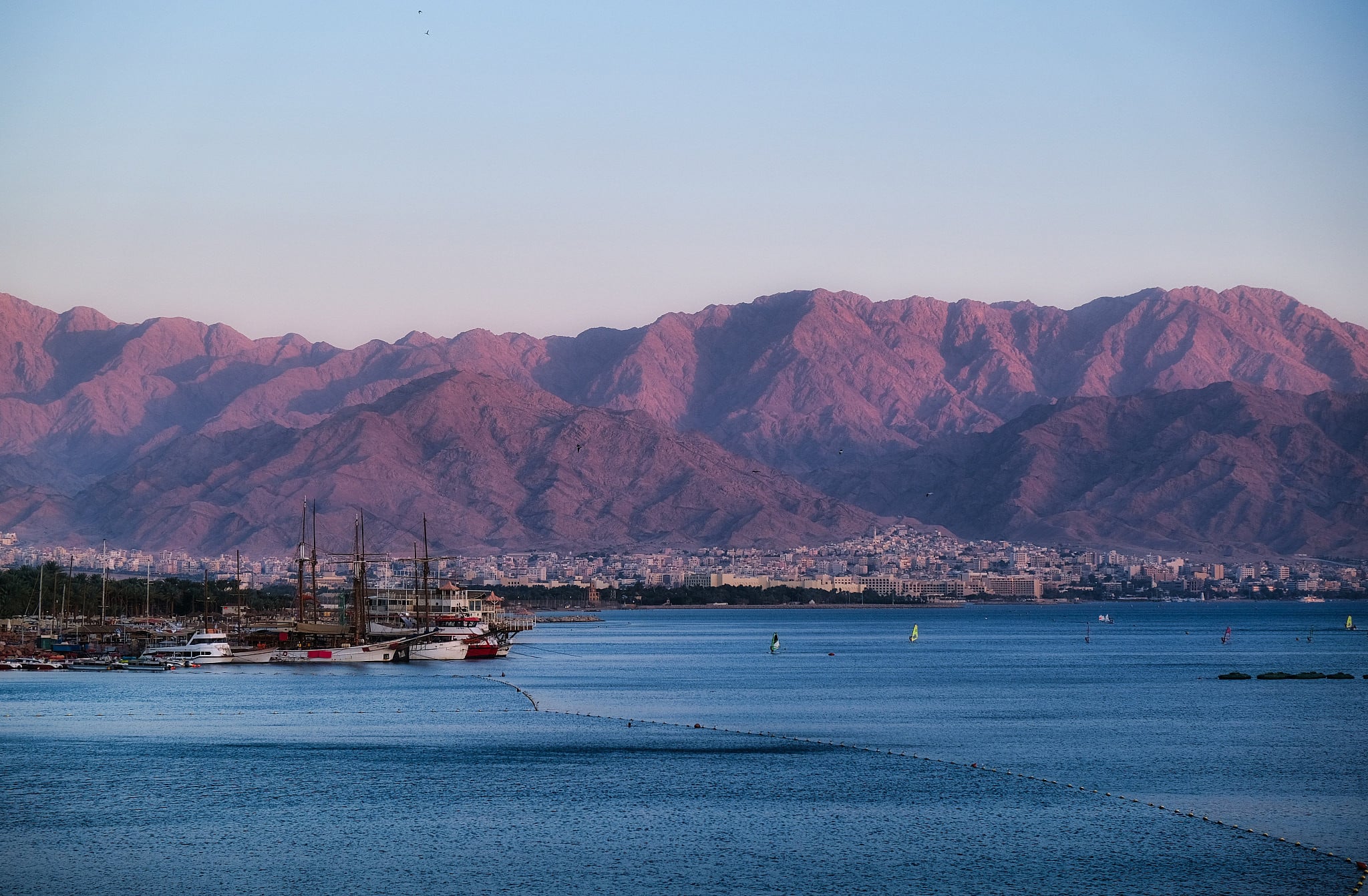
Saudi Arabia almost shares a border with Israel. There is a mere 40 kilometres between the Kingdom’s northernmost point and the Israeli desert city of Eilat.
There is existing infrastructure in the form of the Eilat-Ashkelon pipeline, providing a potential path to the Mediterranean ports of Ashkelon and, potentially, Haifa. A connection from Saudi Arabia’s northern territory, through a subsea crossing of the Gulf of Aqaba into Eilat, could give Saudi energy another genuinely independent route to world markets.
This would mean that even during a major regional conflict, Saudi Arabia would retain multipe routes to market. However, this capability is more than simply a wartime redundancy – it fundamentally changes Saudi Arabia’s proposition to the energy market at all times.
Even if the current fighting subsides, agreements are reached, or the Houthis and Iran ultimately yield their ability to disrupt the various straits, this logistical arrangement would remain a key sovereign redundancy that the Kingdom cannot afford not to have.
Why?
Because the mere threat and capability of disruption to Saudi supply routes is toxic for customers. Buyers will diversify their supplies if they believe Saudi export capacity can be significantly threatened.
Furthermore, the existence of genuine alternative routes changes the strategic calculation of Saudi Arabia’s enemies. If they know that closing Hormuz or the Bab el-Mandeb will not actually cut Saudi Arabia off from global markets, the incentive to attempt it is reduced.
While you can argue that the Saudi side of the route would still be vulnerable to drone and missile attacks, as has recently happened, the route to market remains. Perhaps even, similar to deployment in the UAE in the recent conflict, Israel could provide air-defence capabilities to protect critical Saudi installations as part of an integrated energy partnership.
October 7 was, among other things, an attempt to derail Israel’s integration into the Middle East, particularly the prospect of normalisation with Saudi Arabia. Perhaps the wars that it ignited have actually made what was once just a prospect, a necessity.