Scouts of Hope: What a Women’s Delegation Brought Back from Abu Dhabi
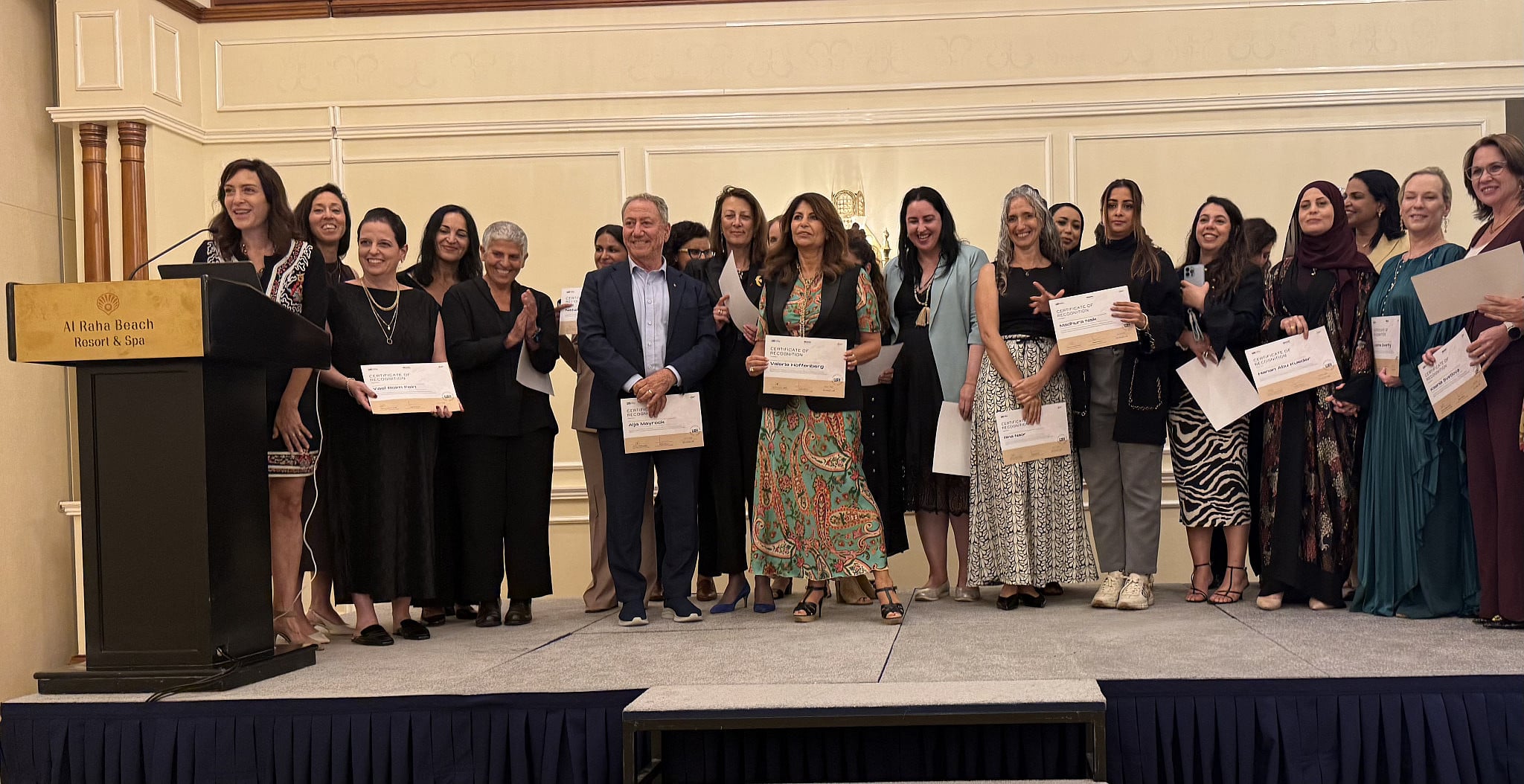
In a region exhausted by fear, our Women Champions for Change (WCC) delegation returned from Abu Dhabi with a different report: the dangers are real, but so are the partners, the possibilities, and the women determined to keep walking toward hope.
Last week’s parashah reading, Sh’lach, tells the story of twelve leaders sent by Moshe to scout the land. They return with a mixed report: the land is fruitful, but the cities are fortified and the people are powerful. Ten scouts say: we cannot do this. Only Yehoshua and Calev see the same danger and say: it will be difficult, but we can.
The men spend the night crying, asking why God brought them out of Egypt only to be killed by their enemies. But the women did not cry in despair. They did not ask to go back. They remained determined to keep walking toward the promised land.
This week, as our Women Champions for Change (WCC) delegation returned from Abu Dhabi, I could not stop thinking about those women of the desert.
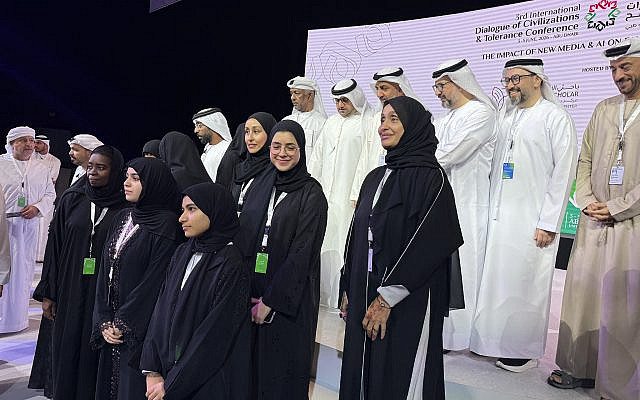
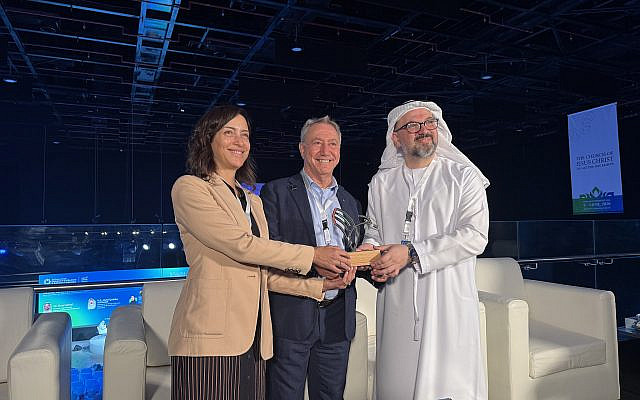
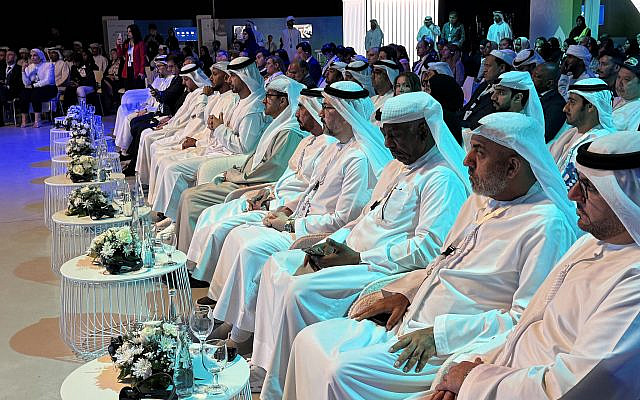
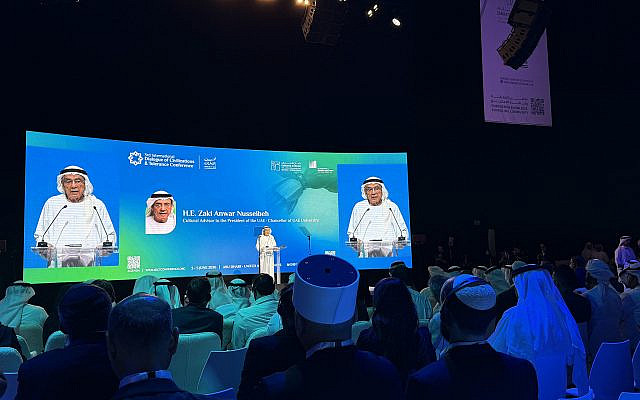
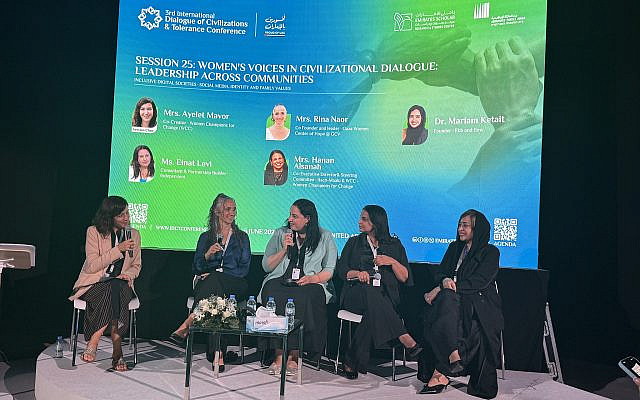
The WCC delegation from Israel, the UAE, Lebanon, Iran and Bahrain participated in the 3rd International Dialogue of Civilizations and Tolerance Conference in Abu Dhabi, held under the theme “The Impact of New Media and AI on Family and Community.” The conference sponsored by the Emiratis Scholar Center for Research and Studies and the Abrahamic Family House brought together more than 4,500 participants, with more than 100 speakers and representation from over 120 countries — a rare global platform for discussing how technology, media, identity, family, faith, and community are reshaping our world.
For WCC, this was not just another conference. It was an opportunity to show that women’s leadership must be central to the future of our region.
We did not go to Abu Dhabi with illusions. We did not pretend that our region is simple, safe, or healed. We went at a time of war, mistrust, pain, and uncertainty. We went knowing that dialogue is fragile, that peace work can be misunderstood, and that building bridges in this region can feel like walking toward fortified cities.
But we went anyway.
Because leadership is not the absence of fear. Leadership is the decision not to let fear decide the future.
Women Champions for Change exists to connect and support women social-impact leaders across the MENA region, helping them build regional collaboration and take tangible, joint action on shared social challenges.
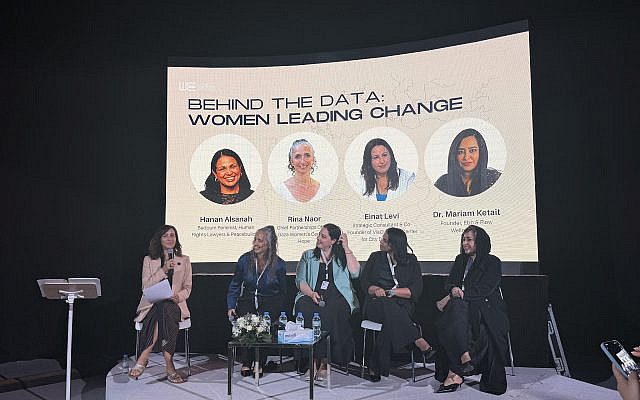
At the conference, WCC presented one of its most important pieces of work: a first-of-its-kind mapping of more than 130 women-led organizations shaping social change across the Middle East and North Africa.
The scouts in the Torah were sent to look ahead. In our own way, WCC also went to look ahead — not toward a promised land defined by borders, but toward a deeper promised land: a region where our children can live with dignity, safety, cooperation, and hope.
That is the promised land we are still trying to reach.
A promised land where Israelis and Arabs, Jews and Muslims, Christians and Druze, women and men, can imagine a future not only shaped by trauma. A promised land where difference does not automatically mean danger. A promised land where civil society, women’s leadership, education, sport, entrepreneurship, and social action help rebuild trust from the ground up.
This is not naïve. It is necessary.
The women who traveled with WCC to Abu Dhabi were not dreamers detached from reality. They come from communities that have experienced conflict, grief, exclusion, displacement, and fear. They work every day with people carrying wounds, visible and invisible.
They know the dangers.
They see the giants.
But like Yehoshua and Calev, they refuse to let the giants become the whole story.
That is the heart of creative realism.
Creative realism does not deny danger. It sees danger clearly. It does not minimize pain. It honors pain. But it refuses to make pain the only story. It asks: even here, even now, what can we still build?
For too long, our region has been given reports of fear: the walls are too high, the wounds too deep, the mistrust too strong, the enemies too dangerous.
Some of that report is true.
But it is not the whole truth.
Across the Middle East and North Africa, women are already building something different. They are creating safe spaces for children, advancing education, leading social enterprises, using sport to connect divided communities, supporting trauma recovery, promoting disability inclusion, and opening doors for young people who have been told they do not belong.
Although research has shown that peace agreements are 35% more likely to last at least 15 years when women are involved, women remain excluded from many peacebuilding efforts. This week’s gathering in Abu Dhabi painted a different picture: women were not on the margins of the conversation. They were leading it, shaping it, and showing what regional cooperation can look like when trust is built from the ground up.
These women are not waiting for perfect conditions. They are doing the work now.
The WCC delegation to Abu Dhabi was one step. Every movement needs people willing to go ahead, look honestly at the landscape, return with truth, and still say: we can move forward.
One of the most haunting lines in Sh’lach is when the scouts say: “We were like grasshoppers in our own eyes.”
Their deepest problem was not the strength of the people they feared. It was the smallness with which they saw themselves.
That line should shake us.
If we see ourselves only as victims of history, we will remain trapped by history. If we see our neighbors only as enemies, we will remain surrounded by enemies. If we see this region only as a desert of conflict, we will continue wandering in that desert.
But if we see ourselves as builders, partners, and moral actors, then a different future becomes possible.
Not guaranteed.
Not easy.
But possible.
That is what the WCC delegation brought back from Abu Dhabi: not a fantasy, not a peace agreement, not a solution to all the pain of this region. They brought back something more modest and more powerful: proof that there are partners, openings, relationships, and women of courage ready to build.
The promised land our region needs today is not only a place. It is safety. It is dignity. It is trust. It is the possibility that our children will inherit more than fear — that they will grow up knowing cooperation as naturally as they have known conflict.
To reach that promised land, we will need more scouts of hope. We will need women and men who can see the dangers clearly and still choose courage. We will need the spirit of the women of the desert: the women who did not cry in despair, who did not ask to go back, who kept walking because they believed the future was still worth entering.