
TV Host, and war correspondent at the Channel 9
Sde Teiman: The Leak That Shocked Israel
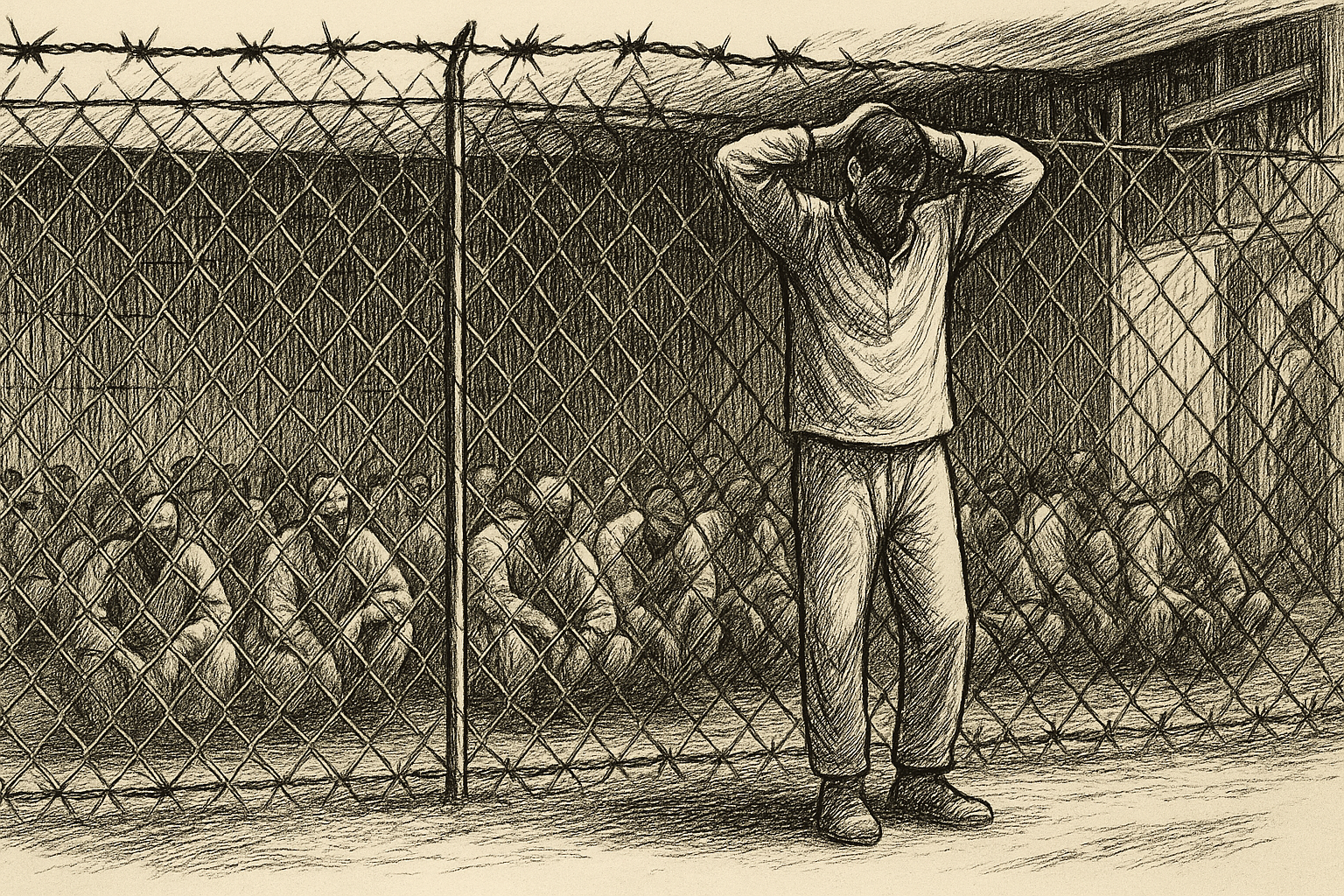
Sde Teiman detention camp illustration
A video that shook the system
What began as an internal investigation into the conduct of Israeli soldiers at the Sde Teiman base has spiraled into one of the most damaging controversies in Israel’s military justice history.
The case revealed how a manipulated video — and a single explosive word — turned an internal disciplinary review into an international scandal that undermined trust in the IDF, the military prosecution, and Israel’s global image.
What happened at Sde Teiman
On July 5, 2024, during the Gaza war, the Sde Teiman base served as a temporary detention site for captured Hamas operatives.
That day, guards from Koach-100, a security unit, were ordered to search one of the detainees believed to be a member of Hamas’s elite Nukhba force.
According to the investigation, the search escalated into a violent beating: the detainee was pushed against a wall, his bound hands raised above his head, and he was kicked, beaten with batons, and shocked with a taser — including on the head.
He was later hospitalized with seven broken ribs, a damaged lung, and multiple injuries.
Two surveillance cameras recorded the incident. The footage, taken on different days, later appeared as a single video allegedly showing “IDF soldiers raping a Gazan detainee.”
How the “rape video” emerged
In August 2024, Channel 12 journalist Guy Peleg received a copy of the footage from within the military prosecution. On air, he stated that the video “documented an act of rape.”
The phrase went viral. Within hours, international outlets — Reuters, BBC, The New York Times, Al Jazeera — picked up the story.
The term “Sde Teiman concentration camp” appeared more than 88,000 times in a single week, amassing over 92 million views across social media.
Almost overnight, Israel’s global image shifted — from a nation fighting terror to one accused of torture.
But subsequent reviews confirmed:
-
The video contained no sexual act.
-
No rape occurred.
-
The footage was edited from different days and contexts.
In short, the manipulation — not the violence itself — created the scandal.
Who authorized the leak
The investigation later revealed that the footage was released on the direct orders of Major-General Ifat Tomer-Yerushalmi, head of the military prosecution.
Facing political pressure after coalition ministers accused her office of “defending terrorists,” she reportedly sought to prove that the soldiers’ indictment was legitimate.
After a meeting with eight senior officers, she instructed subordinates to provide Channel 12 with two videos:
-
A routine search, and
-
A case showing excessive force.
However, the video that reached the newsroom — a composite video from different days. The broadcast ignited accusations of falsification.
Tomer-Yerushalmi later explained:
“I authorized publication to defend the military prosecution and counter the campaign against our personnel. I take full responsibility.
Further revelations
Following the uproar, Channel KAN-11’s investigative show Zman Emet aired the full, unedited video. It showed that violence indeed occurred, but in separate incidents, not as shown by Channel 12.
Key findings:
-
The videos were real but edited together by unknown parties.
-
The rape claim was false.
-
The use of force remains under judicial review.
Legal and political fallout
After publication, ministers Israel Katz and Bezalel Smotrich called the broadcast a “fake” and a “blood libel.”
The victims’ group “Choosing Life Forum” petitioned the High Court of Justice (Bagatz), demanding an investigation into the leak’s origins.
Both the military prosecution and the Attorney General’s office told the court it was
impossible to determine the source.
If later proven false, such statements could constitute:
-
Obstruction of justice (up to 3 years’ imprisonment)
-
Abuse of public trust (up to 3 years)
-
False statement under oath (up to 5 years)
A criminal inquiry into the leak began a year later, reportedly only after new Shabak chief David Zini gathered data and transferred it to the Chief of Staff Eyal Zamir.
Shortly afterward, Tomer-Yerushalmi resigned, facing suspicions of:
-
Interfering in the investigation
-
False statements to the court
-
Abuse of public trust
Why it matters
The Sde Teiman affair has become a litmus test for trust in Israel’s legal and military institutions.
For some, it exemplifies “left-wing sabotage” against the IDF.
For others, it exposes how efforts to protect individual reputations can drive state systems toward self-destruction.
The facts remain:
-
Violence occurred — its legality is still under judicial review.
-
No rape took place.
-
The publication was misleading.
-
The leak inflicted severe damage on Israel’s reputation.
-
The prosecutor’s resignation laid bare systemic flaws in both military and civil justice.
Related Topics
Related Posts