
A Jew from Texas, who knew?
Search for Closure: Nobody Wants My Broken Ketubah
What to do with this signifier of a life event?
What do you do with a ketubah, or Jewish wedding contract, after a divorce? That question took on urgency after my partner Naomi and I moved from her home in Westchester County, NY to a condo north of Boston. Storage space available for my movie poster-sized ketubah shrank from an overflowing basement to walk-in closet and a wire cage in our building’s parking garage.
Before our wedding, my ex-wife and I bought the ketubah at a Manhattan Judaica retailer, then placed it in an ornate frame that made it even grander. Beyond its significance as a religious pre-nuptial agreement, the ketubah symbolized our commitment and became a bold Jewish art statement for our apartment in Brooklyn.
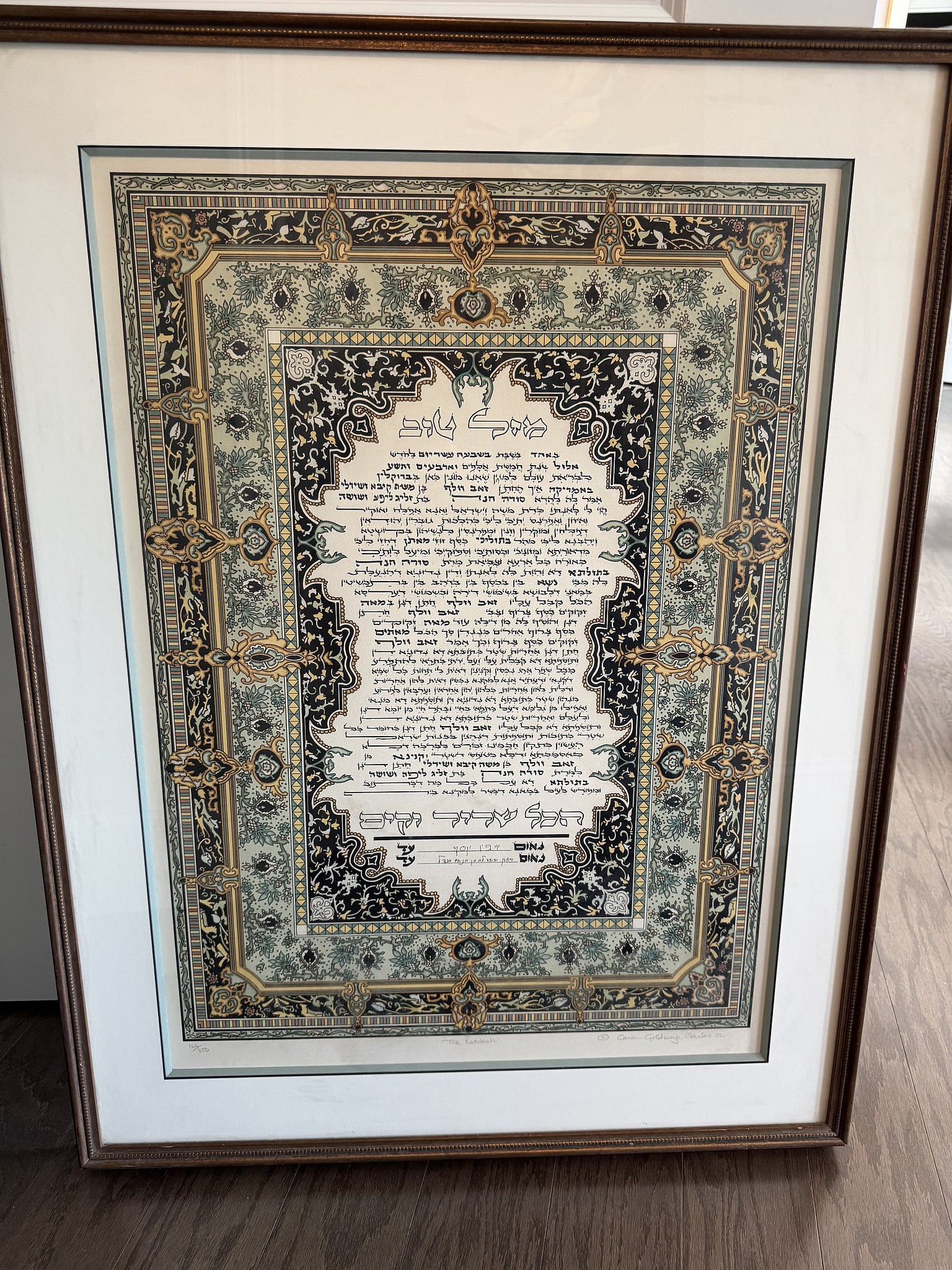
Written in Aramaic, the ketubah stayed with me after our divorce 13 years later, a visual distillation of every emotion connected with hope, love, faith, conflict and alienation. I’ve always obsessively collected mementos of life events, so of course I held fast to it. “Letting go” has never been a psychological strong point of mine (this must be an inherited trait. My parents were also divorced and my mother kept their ketubah, and I have that one, too). The ketubah occupied a mental space somewhere between a sacred relic and Edgar Allan Poe’s Raven, forever croaking “Nevermore!” whenever I dared to ponder its associations on a midnight dreary.
The ketubah decorated my bachelor pads in Fairfield County, Connecticut for 15 years, until I moved in with Naomi. Art covered the walls of her home and she understandably wasn’t keen for me to hang the ketubah anywhere, so I stored it in a home-office closet. It was invisible behind a dry-mounted poster for the 1983 March for Soviet Jewry.
With space at a premium in our new condo, I decided to finally deal with what I called the broken ketubah. I checked with rabbis, artists and synagogue administrators about storage or repurposing programs, but came up snake eyes. I hoped to find a service similar to the Cairo Genizah, which held 400,000 fragments of documents in an Egyptian synagogue’s storage room. I envisioned an entrepreneurial group marketing a Genizah for Broken Ketubot, warehousing heartbreak for a modest fee. No dice. I was left with a dispiriting online consensus: let your kids do art projects on it, burn it, bury it, whatever.
I finally realized I was framing my question in a way bound to produce disappointment. I wanted other people to take the ketubah, to rid me of this troublesome document. That led nowhere. The more useful question: what could I do with it, given my ambivalence about keeping, hiding or disposing of the ketubah?
An ancient shopping list from the Cairo Genizah gave me an idea. As described by the National Library of Israel,
This particular list included ordinary ingredients like sumac and tahini, as well as olive and sesame oil. When researchers turned the list over however, it became far less commonplace when they realized the list was written on the back of a fragment from a torn-up Get (Jewish divorce contract).
This repurposing of a Jewish document felt right. What if I reworked the ketubah into journal illustrations or covers? I’d be proactive, for a change.
I hoisted the ketubah from the back of our condo’s main closet. It looked as fresh as it did on the rainy night at Brooklyn’s Kane Street Synagogue when the radiant bride and confident groom signed it. Naomi, an artist who creates her own sketchbooks, suggested using pieces of the ketubah to create a book where I could write on the blank back pages. Buoyed by her enthusiasm, I was all-in.
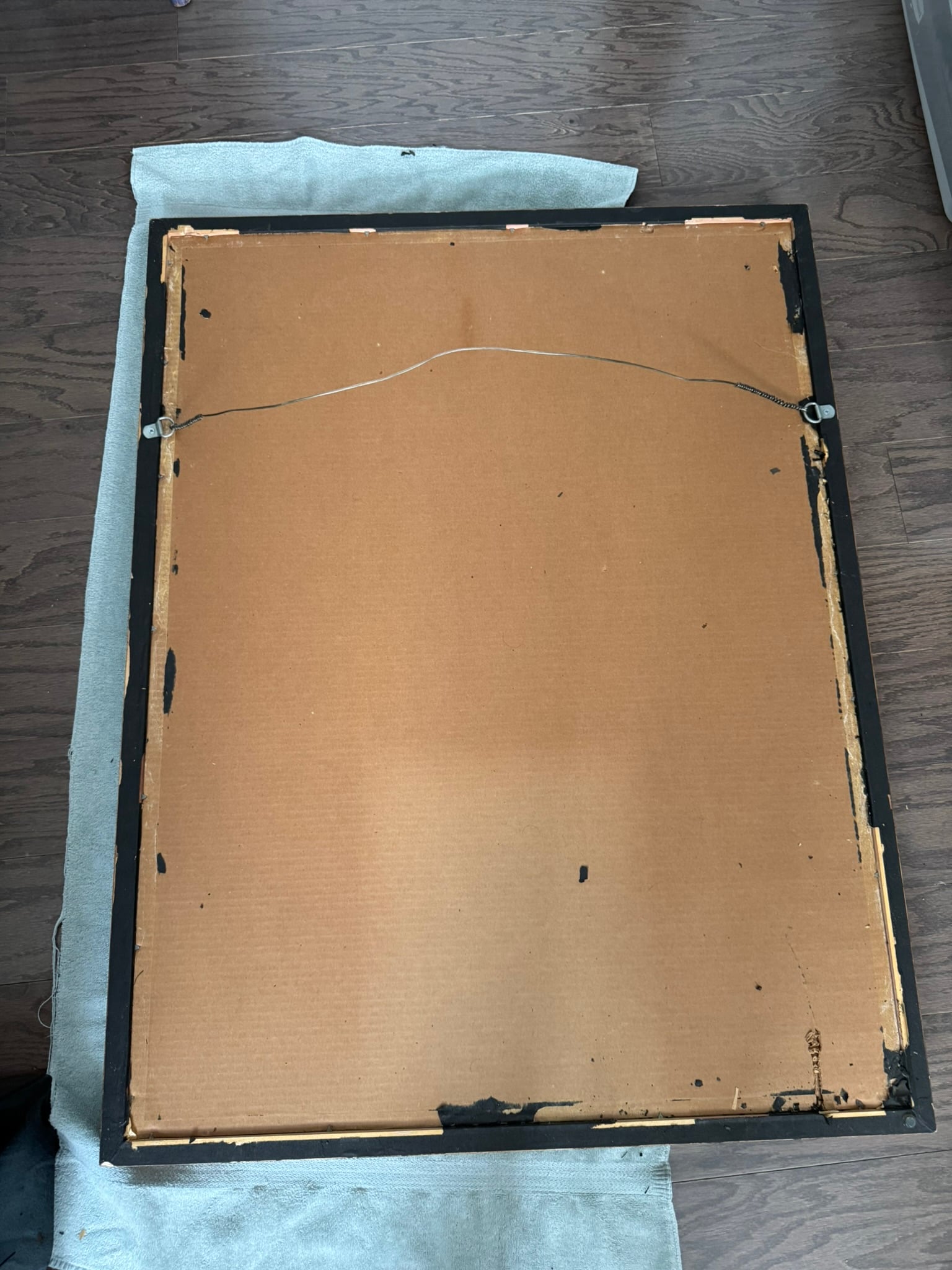
With a flat-head screwdriver and pliers, I pried up the sharp metal staples that held two cardboard backings in place. Naomi and I slipped them out, careful to avoid snagging my finger on the staples and physically bleeding over the marital artifact. With the cardboard gone, surely the ketubah would be ready for our attention. I’d roll it up for safekeeping until the next phase.
But, as the Yiddish phrase says, Der mentsh trakht un Got lakht: Man plans and God laughs.
We discovered the ketubah had been laminated to a foam core backing, where it had been firmly attached for 36 years. Removing a poster from foam core is possible but most likely I would destroy the ketubah. I had images of it bursting into flames if I tried to melt the glue with a hairdryer. Naomi observed, “There’s no way you’re getting that off.”
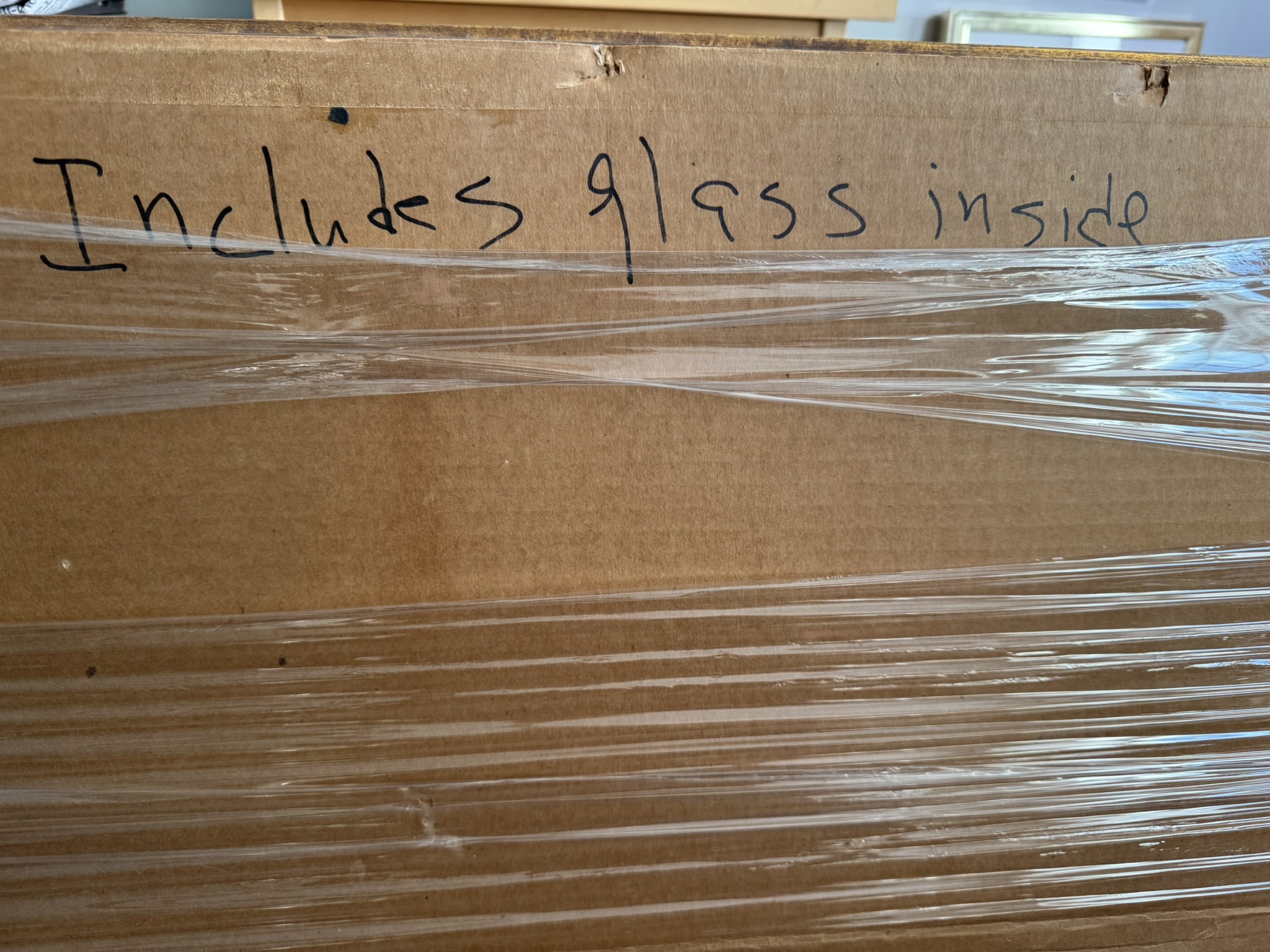
The broken ketubah is back in the closet. After tossing the frame and glass, it is smaller and much lighter, less emotionally looming. Taking action gave me a sense of relief and closure. Once we get a large cutting board, we’ll start slicing it into pieces. Maybe I’ll make a ketubah-themed notebook, bookmarks or coffee table coasters—or a puzzle where the pieces never quite fit together no matter how hard I try.
Related Topics
Related Posts