
Second Chance Day
You know that feeling when you realize you missed something important?
Not something small. Not a text you forgot to answer or an errand you pushed off one more day. I mean the kind of thing that makes your stomach drop a little. A birthday you should have remembered. A moment with your child that you were too distracted to notice. A relationship that should have been handled differently. A chance to show up for someone, and somehow, you did not.
And now that it’s gone, it feels gone forever.
Some things can be rescheduled. Some things can be fixed or replaced. But other things feel like they only come once, and once you missed it, it’s over. You lost your chance. You can move on, but you can never really go back.
Today is a unique day on the Jewish calendar, called Pesach Sheni, the “Second Passover.”
In Temple times, the central mitzvah of Passover was not only eating matzah and telling the story of the Exodus. Every Jew had to join in bringing the Passover offering on the afternoon before Passover, which would be eaten with the entire family that night together with matzah and bitter herbs.
The Torah tells us that on the first anniversary of the Exodus from Egypt, when G-d commanded the Jewish people to bring the Passover offering, there were some Jews who had become ritually impure and therefore were unable to participate.
They could have accepted their situation. After all, they had a legitimate reason. They had not been careless or lazy. They had been transporting the bones of Joseph, and because of their contact with a dead body, they were ritually unable to celebrate Passover properly.
But they did not accept the situation.
They came to Moses and Aaron with a powerful plea: “Why should we lose out?” Why should we be deprived of the opportunity to bring G-d’s offering together with the rest of the Jewish people?
And G-d agreed with them.
He gave them Pesach Sheni, the Second Passover, exactly one month later, on the 14th day of Iyar. Anyone who had missed the first Passover offering, whether because they were ritually impure or because they were far away, would now have a second chance one month later.
That itself is beautiful. Everyone loves second chances.
But it also raises a much deeper question. Why is Passover the only holiday to get a do-over?
Every holiday has its special mitzvahs and its sacred moments. If someone misses the shofar on Rosh Hashanah, there is no second Rosh Hashanah one month later. There is no second chance for sitting in the sukkah, nor for lighting the Menorah, or for fasting on Yom Kippur.
The general rule in Judaism is that once a day passes, the opportunity for the specific offering or mitzvah of that day has also passed with it. As the halachic expression teaches, “Once its time has passed, its offering is canceled.”
The one and only exception to this rule is Pesach Sheni. Passover alone receives a second chance.
And even within Passover, the second chance is very specific. Pesach Sheni is not a make-up day for someone who missed reading the Haggadah, singing the songs, or drinking the 4 cups.
It is specifically the Korban Pesach, the Passover offering, that gets a second holiday, and a second opportunity.
Why?
The Rebbe explains that Pesach is different from any other Jewish holiday. Passover is the birth of the Jewish people. When we left Egypt, we did not just become free individuals. We became G-d’s nation.
The pivotal moment in the birth of our Jewish identity was when we took the lamb, which was worshipped by the Egyptians, and prepared it as an offering to our own G-d. In that moment, we declared that we no longer belonged to Egypt. We no longer bowed to Egyptian power, Egyptian fear, or Egyptian values.
That Passover lamb was the moment we went from being servants of Pharaoh to being servants of G-d.
So yes, every holiday and every mitzvah is holy. But the Korban Pesach touched the very foundation of who we are.
Which is why there is a second chance.
Because while opportunities may sometimes indeed pass, the foundation of a Jew can always be rebuilt.
This is not to minimize the importance of doing the right thing at the right time, and doing all you can to not miss a moment of connection. Indeed, if you miss the chance to do a Mitzvah or help someone in need, you missed it. And those missed details matter. Judaism does not pretend they do not.
But there is something deeper than the details.
There is the foundation of who you are.
And that foundation is never beyond repair.
That is the message of Pesach Sheni. Not that every missed moment can be perfectly recreated. Not that time can be rewound. Not that our choices do not have consequences.
But that even when pieces of our life have slipped away, the root of our soul, and the core of who we are, can still turn back to G-d.
Can you miss being born?
That’s impossible. Birth is the very beginning of who you are!
And that is exactly why G-d gives us Pesach Sheni. Because in Judaism, we can always start over. The core of who we are can be rebuilt. Even those parts of our life that feel too broken, too old, too damaged, can still be repaired by our Teshuvah, our desire to return.
That is why the Chassidic masters saw Pesach Sheni as much more than a technical make-up day for a missed offering. They saw it as the day when “it is never too late” to put things right. Even someone who was impure, even someone who was far away, and even someone who placed himself in the wrong place on purpose, can still be reborn and start again.
I think this is one of the much needed messages of our time.
So many people carry quiet regrets of a past they think they can no longer change. They do not always say it out loud, but they carry it inside. Parents who wish they had been more present for their kids. Children who wish they had not been so difficult. Friends who let distance grow.
How many people look at their Jewish life and think, “If only I would have started sooner.” “If only I was younger.” “If only I would have made Judaism a bigger focus in our home before our family drifted so far.”
And then the inner voice that holds us back begins to whisper: “It’s too late to change now.”
We tell ourselves it’s too late to fix what was damaged. Too late to become the kind of Jew, parent, spouse, friend, or person you once hoped you would be. Too much time has passed. Too many chances were missed. Too much distance has grown.
Pesach Sheni says no. Not as a slogan, and not as a feel-good line. It says it as a law in the Torah. As long as the soul still cares, as long as a person can still say, “Why should I be deprived?” then the story is not over.
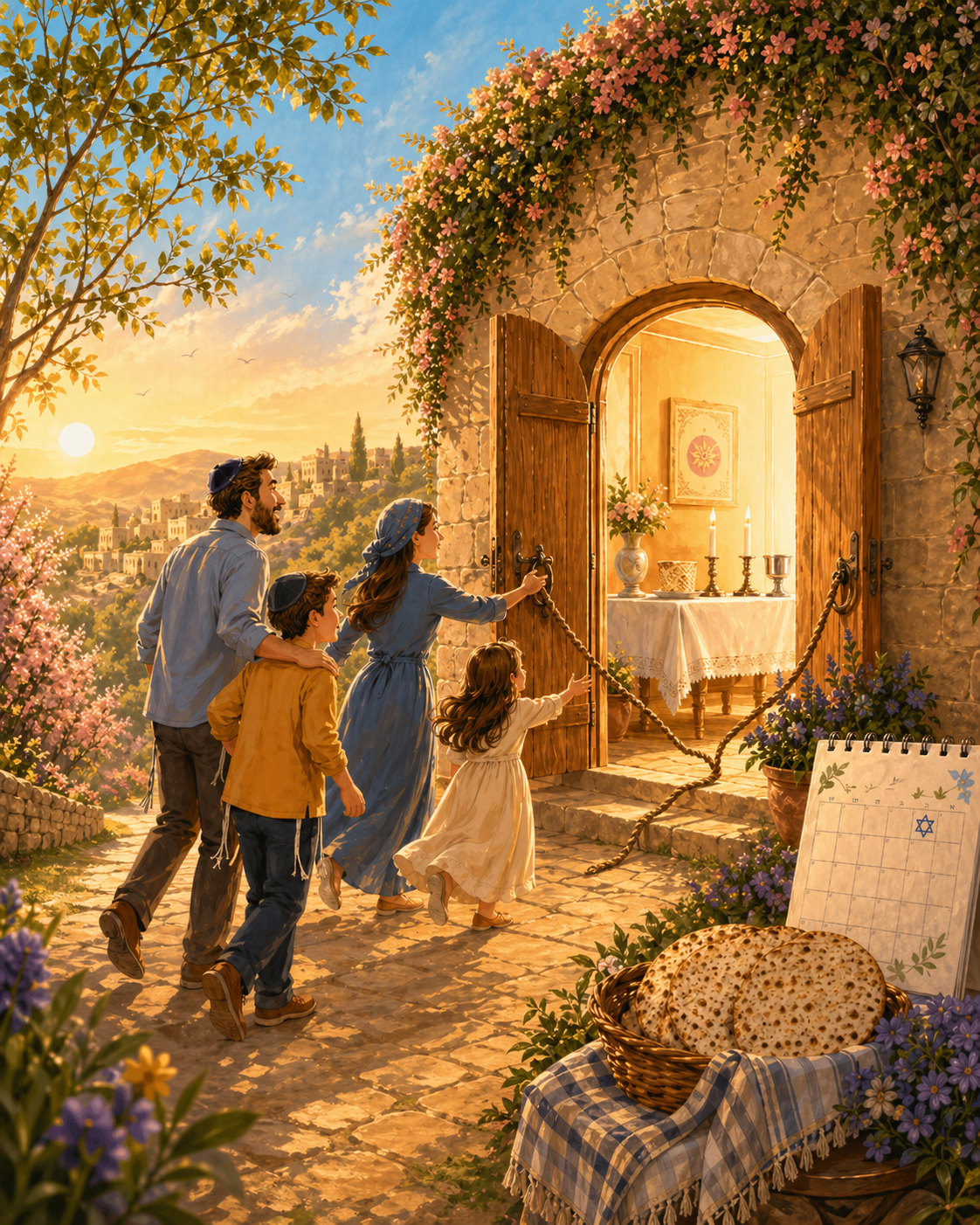
You can start again. The door is not locked.
The soul is deeper than time.
Today, as we mark Pesach Sheni, we must each ask ourselves one simple question: Where have I been telling myself that it is too late?
Maybe it is time to make that phone call. Maybe it is time to forgive and start over. Maybe it is time to apologize and begin anew. Maybe it is time to start a mitzvah you never thought was for you.
Maybe it is time to stop making peace with our distance and start asking, “Why should I be deprived?”
Because today is “Second Chance Day”!
Not because the first chance did not matter. It mattered very much.
But because G-d believes in the Jewish soul so deeply that even when we miss the first chance, He gives us a way back in.
Second Chance Day tells us it is time to stop defining yourself by what you missed and to start defining yourself by what you are still willing to become.
Good Shabbos,
Rabbi Yankie & Chana Denburg