
Executive Director, Listen First: Building Relationships Across Divides
Security Guards Can’t Change Hearts
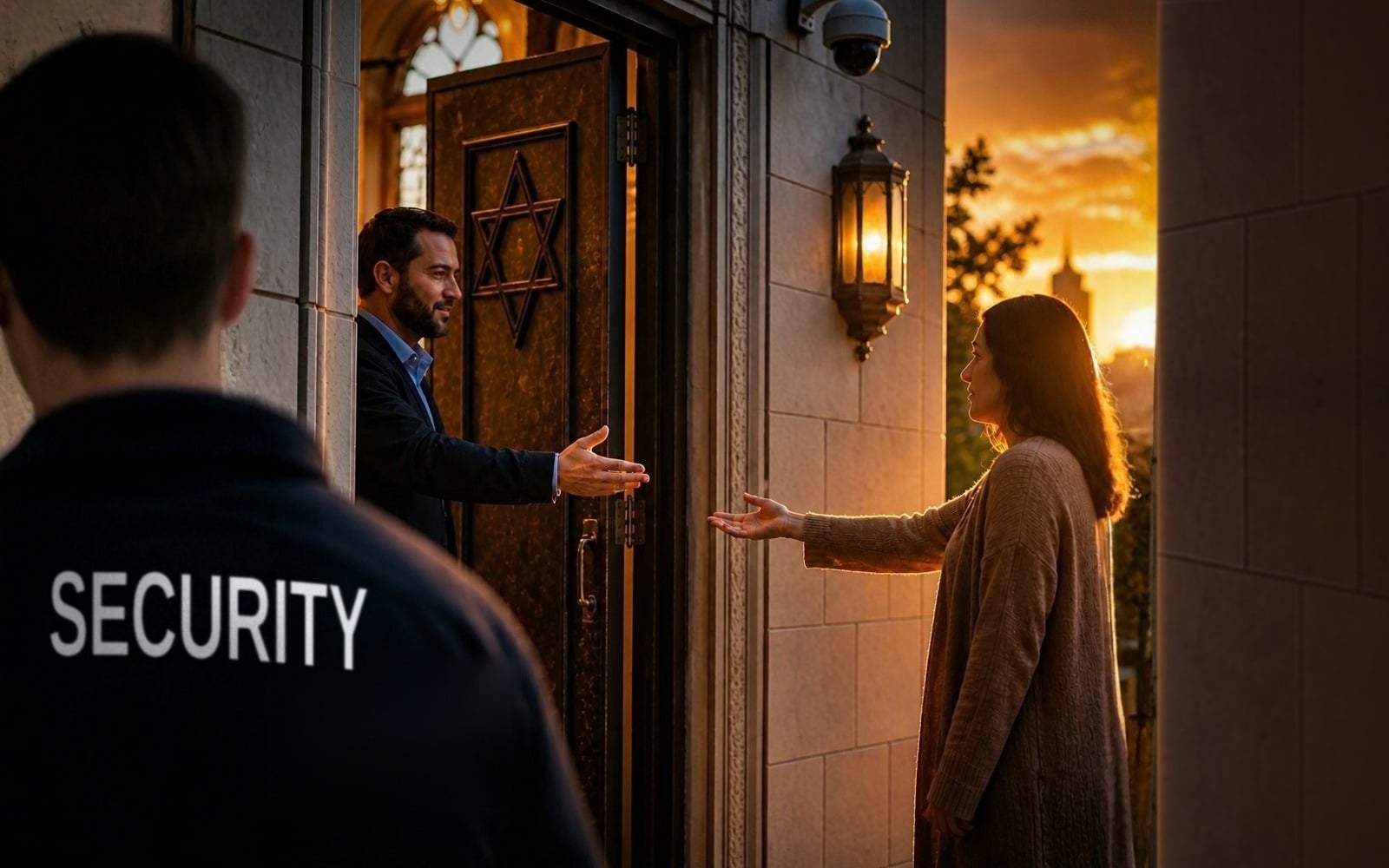
Security Guards Can't Change Hearts
A guard can stop someone at the door. A guard can’t change what they believe about Jews. We need guards more than ever. But if guards are all we have, we’re only surviving.
Every time I enter or leave a synagogue, I say thank you as I walk past the security guards. I think about how lucky my community is to have funding for security.
You can’t change a single heart if you’re not alive to do it.
Security isn’t optional. But survival isn’t enough.
What comes after survival?
Security can help us endure. It can’t help us be understood.
Relationships can.
They shrink the number of people vulnerable to antisemitism.
A lawsuit can force a university to act. It can’t help a nineteen-year-old who doesn’t know a single Jew recognize antisemitism when they hear it. Neither a lawsuit nor a guard can change the neighbor who scrolls past antisemitic posts and shrugs, because they don’t know anyone the posts are about.
That student and that neighbor are the movable middle: people who aren’t extremists, but who have no real Jewish relationship to push back against what they’re hearing. Research going back to Gordon Allport’s 1954 book The Nature of Prejudice, and confirmed by Thomas Pettigrew and Linda Tropp’s 2006 review of more than 500 studies, shows that contact between groups reliably reduces prejudice when the conditions are right: equal footing, shared goals, cooperation, and backing from community leaders. That doesn’t happen by accident. It has to be built.
So when is the time to build relationships?
This is a question I struggle to answer. When you’re under attack, talking about coffee with neighbors can sound naive.
I don’t have a perfect answer, but here’s where I’ve landed. Relationship-building doesn’t replace security, and it doesn’t wait for the crisis to end. It starts once the basics are in place. Three honest checks:
- Your building has a security plan, trained volunteers and a working relationship with local police. If not, start there.
- Your leaders are no longer spending every week in emergency mode. If they are, they need support, not another program.
- You can answer this question: If something happened to us tomorrow, which five non-Jewish leaders in our town would call us first? If you can’t name them, it’s time.
That last question is the one many communities find hardest. Security has national standards and training manuals. Relationship-building doesn’t yet. The worst time to meet your neighbors is the day after an attack. Relationships work like security: you build them before you need them. And this crisis isn’t going to end on our schedule. If we wait for calm to begin, we may be waiting a very long time.
Communities are doing this work, often alone
Here’s what encourages me: this work is already happening all over the country. Spill the Honey, the Institute for Black Solidarity with Israel, JewBelong’s Christian Allies Collective, Eagles’ Wings, my own organization, Listen First in Columbus Ohio (full disclosure: I founded it), and Rekindle, with more than 20 chapters across the country, are building real relationships between Jews and the people around us.
Here’s what worries me: almost all of it is happening in isolation.
On security, we’ve learned to act as one national community. The Secure Community Network shares threat information and training standards from city to city. On relationships and alliances, we’re much further behind. We don’t yet have a unified national strategy. A congregation in Ohio runs an interfaith program that changes minds, and a federation in Arizona may not hear about it. One campus finds the right way to bring Black and Jewish students together, and the campus two states over starts from zero. Too many communities reinvent the wheel, and too many wins stay local.
Imagine if we treated relationship-building the way we treat security:
- A shared national library of programs that work, with the materials, the costs and the lessons learned, free for any community to use.
- A regular gathering, in person or online, where the people doing this work compare what’s succeeding and what isn’t.
- Simple common measures, so we can tell the difference between a nice event and one that changes how people see Jews.
- National organizations and funders who treat alliance-building as a strategy, not a side project.
None of this takes a single dollar away from security. It takes the effort communities are already making and multiplies it.
Keep the guard. Build the bridge.
I’ll keep thanking the guards at our door. They’re the reason we’re still in the room.
But I want to see the day when fewer people walk toward that door with hate in their hearts. That won’t happen because of a lawsuit or a security camera. It will happen because someone who might have believed the lies already knows a Jew, and knows better.
Security keeps us alive. Relationships give us a future. We need both, and we need to start sharing what works.
If your community is doing this work, I want to hear about it. Let’s stop building alone.
Related Topics
Related Posts