
Who’s laughing now?

When Norway’s sovereign wealth fund, the world’s largest, worth nearly $2 trillion, announced it was divesting from 11 Israeli companies, including Bet Shemesh Engines, some thought it was a harbinger of trouble. “Ethical concerns,” they said. “The humanitarian situation,” they insisted. As if moral virtue could be measured by dumping shares in a nation fighting for its survival.
But here we are, just months later – and guess who’s having the last laugh?
Bet Shemesh Engines (BSEL) is.
As I recently read in The Times of Israel, the Israeli aerospace company, founded in 1968 in the shadow of the French arms embargo, has just signed a $1.2 billion contract, the largest in its history, to supply critical jet engine components to one of the world’s leading aviation manufacturers. A 15-year deal, with an option to extend for another five years and $400 million more. That is what success looks like. That is what resilience and renewal look like.
When France cut off arms sales to Israel in the late 1960s, it forced Israel to do what Israel does best – innovate under pressure. Out of that adversity was born Bet Shemesh Engines. The goal was simple but urgent: build an indigenous capability to produce and maintain jet engines so the Jewish state would never again depend on others for its survival.
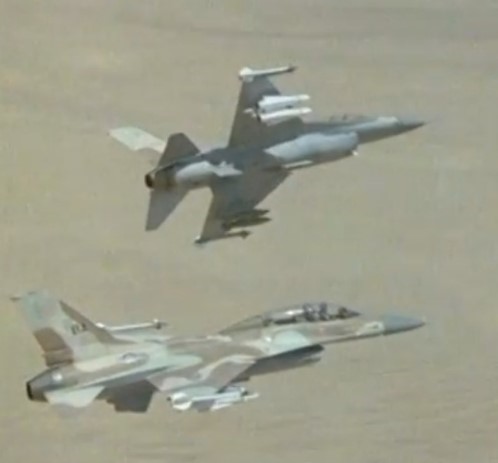
Fast-forward half a century, and the company has become a quiet powerhouse of Israeli ingenuity. While not as flashy as Iron Dome or as headline-grabbing as the F-35, Bet Shemesh forms the beating heart of Israel’s air power. It manufactures and maintains the jet engine parts that keep the Israeli Air Force’s F-15s, F-16s, and F-35s flying, the very aircraft that secure Israel’s skies and deter its enemies.
It also builds small turbojet engines for unmanned aerial vehicles (UAVs), supports global aerospace giants like Pratt & Whitney, Siemens, GE Aviation, and Mitsubishi, and now supplies critical components for Boeing and Airbus fleets.
When you see the precision of an F-35 in action or the endurance of a CH-53K helicopter on a rescue mission, chances are Bet Shemesh had a hand in it.
Norway’s $2 trillion oil fund sold its 2% stake in Bet Shemesh over “ethical concerns” tied to the Gaza war. The irony is breathtaking. The same Israel they sought to punish for defending itself has just landed a $1.2 billion deal that will create jobs, expand production, and fuel global aviation safety.
In doing so, Bet Shemesh did not just shrug off the boycott, it turned it into a badge of honor.
Because while Norway was divesting, Bet Shemesh was investing – in people, in precision, and in performance. Its stock on the Tel Aviv exchange has soared 212% over the past year, pushing its valuation near NIS 3.2 billion. Sales are up, profits have doubled, and the company is expanding in the United States market with its recent acquisition of Turbine Standard, an Ohio-based firm.
And perhaps most tellingly, its gross profit margin jumped from 17% to over 26% in just one year, evidence that excellence, not ideology, drives lasting success.
Bet Shemesh does not make headlines every day, but make no mistake, it is one of Israel’s industrial jewels. It operates at the intersection of defense, aerospace, and deep tech, a field where innovation is not a buzzword but a lifeline.
In today’s world, where precision manufacturing and metallurgical science meet AI-driven design, Israel’s engineers are proving that small nations can do big things. Bet Shemesh’s forging, casting, and machining capabilities rival global leaders. Its small jet engines for drones and missiles embody the kind of dual-use innovation that makes Israel’s defense industry world-class.
And while the company’s operations stretch across Israel, Serbia, and the United States, its beating heart remains Israeli – driven by the same ethos that built this nation: independence, self-reliance, and sheer determination.
This is why I cannot help but smile when I read the headlines. Norway divested to make a political statement. Bet Shemesh delivered to make a technological one.
There is something profoundly moral about building, especially when others choose to destroy. Bet Shemesh Engines has shown that the true measure of ethics lies not in boycotts, but in breakthroughs.
Its success reminds us that innovation is not only an economic tool; it is a moral one. Every new part forged in Beit Shemesh strengthens Israel’s ability to defend its citizens and contribute to global safety. Every contract signed is a vote of confidence in Israeli craftsmanship, precision, and reliability.
And every investor who stays or returns knows this: Israel’s industries may bend under pressure, but they never break.
When I look at Bet Shemesh, I see a living metaphor for Israel itself – forged in adversity, tested in fire, and shining brighter each time. This $1.2 billion deal is a business success; it is also a story of resilience and renewal – the same spirit that rebuilt kibbutzim after October 7, that keeps startups innovating under rocket fire, that fuels Israeli scientists and soldiers alike.
And it is another reminder that to innovate the future of Israel is not only to code or to design, but also to persist, to refine, to perfect.
The world’s aviation industry is booming again. Civil air travel has rebounded, defense budgets are surging, and geopolitical uncertainty has underscored one fact: nations need reliable partners for critical technologies.
With this deal, Bet Shemesh joins that global conversation as a trusted supplier to giants, as a producer of precision under pressure, and as a partner in powering the skies of tomorrow.
As the global aviation engine market nears $1 trillion, Israel’s role is only growing. And with companies like Bet Shemesh leading the way, Israel is not merely participating in that future; it is shaping it.
To the Norwegian fund managers who thought divestment was virtue, take another look. The company you abandoned is now setting records and creating hundreds of high-tech jobs. Your “ethical” gesture hurt no one but your own portfolio.
To Israelis watching from the sidelines, wondering whether innovation still pays – here is your answer: it does. It always has.
And to the world, this is one more reminder that Israel’s best response to boycotts and bias will always be brilliance.
When I think of Bet Shemesh’s journey, from the French embargo of the 1960s to today’s billion-dollar contracts, I see a company, and a country, that refused to bow.
That is the story I love most about Israel. The world doubts Israel, underestimates Israel, isolates Israel, but it responds with ingenuity. Not with noise, but with results.
So yes, when it comes to Bet Shemesh and Norway’s divestment drama, the last laugh belongs squarely to Israel, the small nation that keeps proving that resilience and renewal are not just survival traits. They are a strategy for thriving.