


The peace-seekers who see each other’s humanity – even now
Ten years ago, in July of 2015, I finished my assignment as the US Consul General in Jerusalem. For decades, until its closure in 2019, the consul general was the equivalent of ambassador to the Palestinians of the West Bank, Gaza Strip and Jerusalem. Jerusalem was always a tough assignment for any diplomat, and sure enough my three years there were the most emotionally challenging of my career. We saw the collapse of a US-led negotiating process; a terrifying war between Israel and Hamas in Gaza that turned out to be a tame foreshadowing of the horrific conflict now ongoing; and the evaporation of virtually any optimism for a more peaceful future.
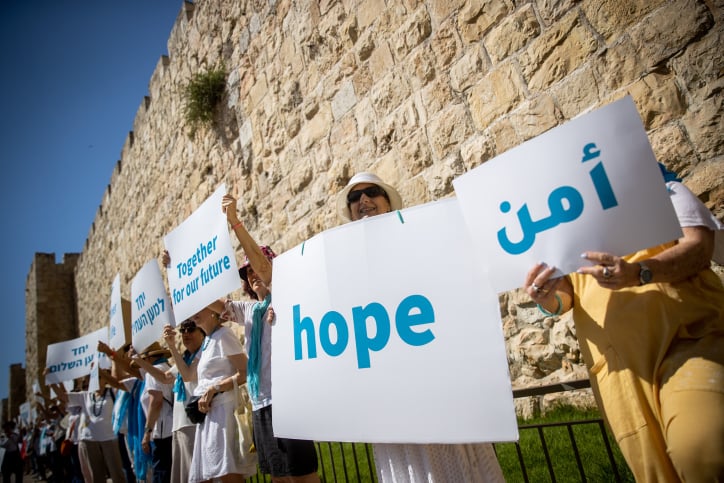
I spent a career in the Middle East, from Casablanca to Beirut to Riyadh. But Jerusalem was easily the most complex, the most impassioned place I ever lived. It’s at the center of a land that fuels the strongest emotions, driving some literally to the brink of insanity, even to violence, and motivating others simply to leave. But it has also inspired a great many to stay, tenaciously, peacefully, to make their lives there. And it has inspired some – even today – to work relentlessly for coexistence because they know their common destiny and shared humanity demand nothing less.
The late Palestinian poet Taha Muhammad Ali captured beautifully a sentiment that I still think about often. In a poem called “Revenge,” he imagines meeting the man who killed his father and fantasizes about challenging that man to a duel and finally settling the score. “But if it came to light,” he wrote, “when my rival appeared, that he had a mother waiting for him, then I wouldn’t kill him even if I could. If it were made clear that he had a brother or sisters…or if he had a wife to greet him and children who couldn’t bear his absence…”
When hatred is indulged
Reading those lines still brings to mind what happens when we fail to regard each other as humans, when we forget about the mothers and the children, the brothers and sisters. Every day, before October 7 and after, we see what happens when the other is dehumanized, and when hatred and revenge are indulged.
I saw it many times for myself – what that hatred, that rejection of humanity, can spawn. I visited a mosque in the West Bank village of Jabaa and a Christian seminary on Mt. Zion – two places of holy worship that were torched by vandals, by morally bankrupt cowards in the dead of night. I visited the ancient Jewish cemetery on the Mount of Olives where graves were desecrated, as though in some sick sport – nihilism masquerading as political protest. I sat shiva with the families of four rabbis murdered as they prayed in their synagogue in Har Nof. I visited the wake tent in Shuafat for Mohammad Abu Khdeir, a young boy who was kidnapped and burned alive by soulless criminals in the Jerusalem Forest.
For the monsters, the terrorists, who committed those attacks, politics and religion intersected in a very dark place, in the lowest depths of hate and ignorance and inhumanity. These perpetrators were so filled with hate, so devoid of wisdom, so morally vacant, so unable or unwilling to see the humanity of the other, that they become in every sense empty of humanity themselves.
But I took comfort in knowing that they were the minority. And even today, I derive optimism from those who not only recognize the humanity of their neighbor, of the stranger, but embrace it, celebrate it, and protect it.
I still think of the young Palestinians and Israelis I met with Kids 4 Peace, who even in the darkest, most heartbreakingly violent days of the Gaza conflict of 2014, insisted on talking. “We are the kids of Jerusalem,” they told me, “and the violence stops with us.”
I think of the young and ambitious entrepreneurs I met from Jerusalem, from Ramallah, from Nablus and from Gaza who thought and talked just like young entrepreneurs in San Francisco or London – or Tel Aviv. They saw their future in innovation, in the self-respect and mutual respect that innovation and participation as equals in the global economy can yield.
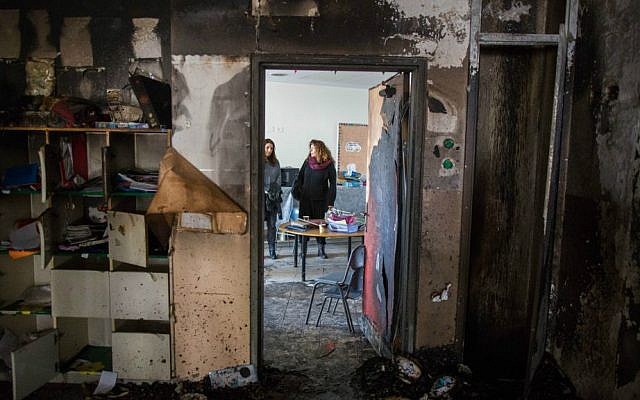
I think of the Hand in Hand School in Jerusalem, which I visited days after it was vandalized by racist hoodlums. I went there out of solidarity, and expected to leave deeply dejected. But to my surprise, I left more optimistic. Far more optimistic in fact, than I had felt in a very long time, thanks to a community insistent on finding a way to live together, understand one another, speak the language of the other, or walk in the other’s shoes.
Do people like these represent the majorities of their societies? Probably not – not in 2015, and certainly not today. But nor are they naïve. It’s true that Israelis and Palestinians committed to coexistence and celebrating a shared humanity may sometimes feel like naked idealists swimming in a vast ocean of cynicism and violence and distrust. But these men and women, boys and girls, mothers and fathers all know that no future of genuine peace and prosperity and mutual respect will ever be forged by cynics.
Fortunately, even today, there are still plenty of Palestinians and Israelis who rise above cynicism and know that extremists don’t represent their communities. Remember Seeds of Peace? They were founded over 30 years ago in the swell of optimism surrounding the Oslo Accords, and they are still around, still developing the courageous young leaders Israel and Palestine need now – and will always need. EcoPeace Middle East was likewise formed over 30 years ago, built on the premise that the people of the Middle East will forever share the same environment, and thus the same fate. They are still going strong today, now leveraging the vast opportunities that collaboration on climate, water and renewable energy present.
Part of any plan
The truth is there are many other groups, and many more ordinary citizens, who share their determination, and deserve our support. What they are doing may not constitute a peace plan and won’t stop the war in Gaza, but that’s not the point. We have seen many plans, and we are destined to see more. Even now, the Saudi and French governments are championing an effort to advance a two-state solution. And the Trump Administration is reported to have presented a new plan as well, at least for Gaza. I don’t know if any of them will succeed, but I do know this: no plan will succeed until Israelis and Palestinians – and all those who support them – recognize and embrace their common humanity. The Palestinians and Israelis brave enough to embrace coexistence should be a part of any process, and the organizations that champion dialogue and cooperation deserve the full support of every government that aspires to play a positive role in the region’s future.
In the end, success will mean Palestinians and Israelis accepting that they both share an attachment to their land, one that sometimes transcends reason, that cuts to the heart of what makes them human – their faith, identity and history. Despite the hardened views since October 7, that now seems even more relevant, as dehumanization risks utterly consuming Palestinians and Israelis alike, and poisoning the prospects for peace between them for all time.
Ten years after I left Jerusalem, and two years after the horror of October 7 and the ongoing catastrophe of its aftermath, I am grateful that there are still Palestinians and Israelis who respect the faith, identity and history of the other. Perhaps – just perhaps – they can lead their communities out of the dark reality they are living today. They represent values that we have long supported, and their voices should be heard, not just after the negotiations are over, but whenever the fate of their communities is being discussed.