
Leadership With Heart
Seeing Morality Beyond the Hamas Propaganda
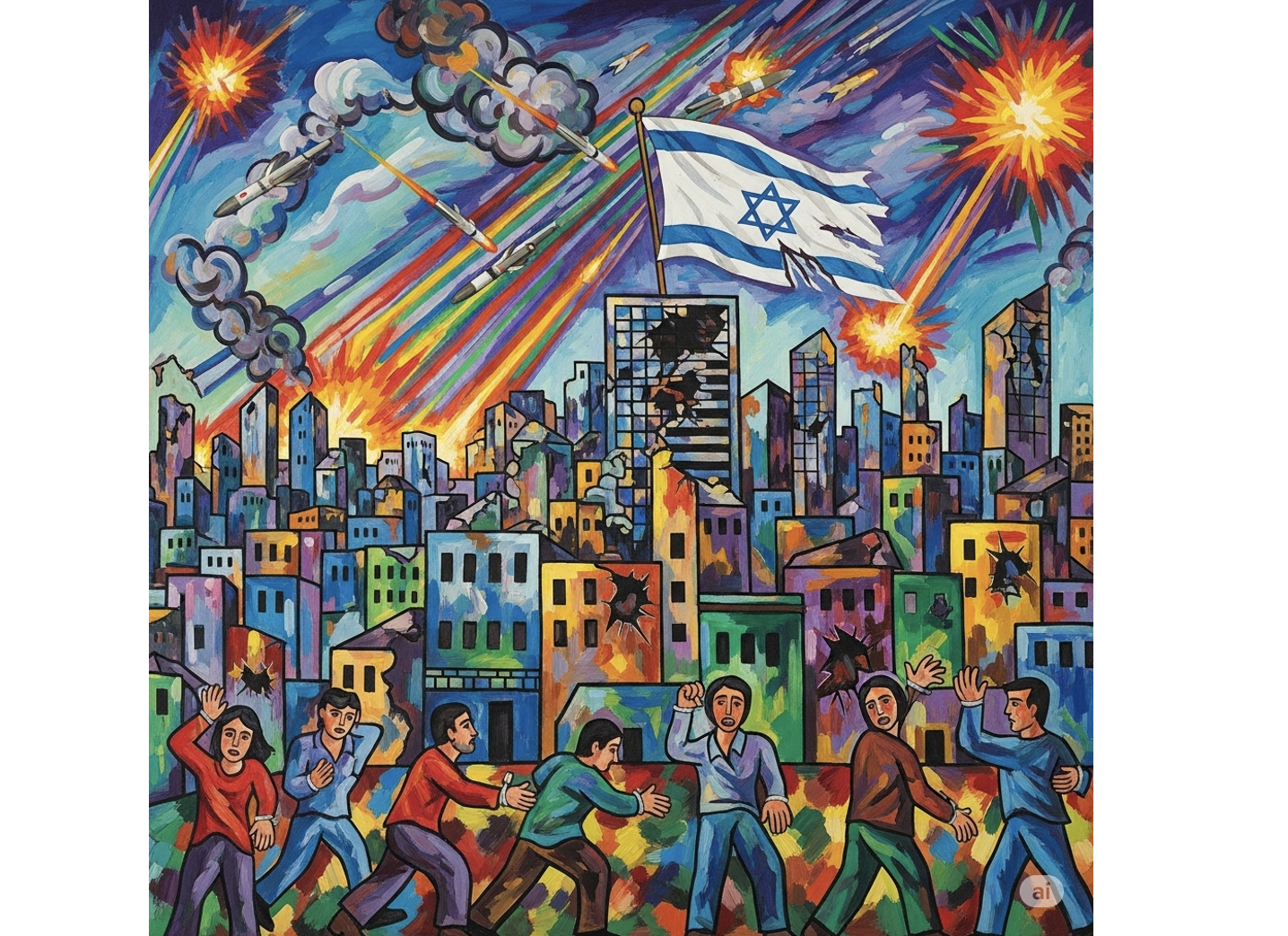
AI generated image via Gemini
We live in a time of profound moral confusion, where appearances and propaganda often distort the truth. Nowhere is this clearer than in the ongoing conflict with Hamas. Through carefully crafted narratives, Hamas and its supporters cast themselves as victims, accusing Israel of occupation, apartheid, starvation, and even genocide. This propaganda has misled many well-meaning people who believe they are siding with the oppressed. Yet those who look honestly see something very different: a democratic nation under relentless assault from radical Islamist terrorists who fire barrages of rockets, missiles, and drones into civilian neighborhoods (over 26,000 since October 7, 2023), carry out devastating suicide bombings, launch murderous raids, and kidnap innocents. Hamas openly rejects peace, glorifies jihad and intifada, and vows Israel’s destruction. Make no mistake: no nation—whether England, France, Australia, Canada, or the United States—would tolerate such brutality without wholly defending its people and sovereignty. To “see” clearly in this moment means rejecting false victimhood, standing firmly against terror, calling out Jew-hatred for what it is, and discerning good from evil even when the lines are deliberately blurred.
This same theme stands at the heart of this week’s Torah portion, Re’eh, which opens with a stark and timeless choice:
“See, I set before you today a blessing and a curse.” (Deuteronomy 11:26)
The blessing is tied to faithfulness in following G-d’s commandments, while the curse follows from turning away. At first glance, the lesson seems obvious. As Rabbi Ari Soussan noted, why then does the Torah emphasize the word “See”? Why not simply state that blessings and curses are before us?
The answer strikes at the essence of human struggle. The link between righteousness and blessing, or sin and curse, is not always immediately apparent. Quite often, the wicked appear to prosper while the righteous suffer. That is why the Torah insists on “See.” We are called to look deeper, to see beyond appearances, and to recognize the ultimate truth—that real blessing flows from choosing the good, while estrangement and curse inevitably follow from choosing evil.
Yet why does G-d not make this truth unmistakably obvious? Why not let blessings and curses follow instantly and visibly from our actions? The reason is profound: if every deed produced immediate consequences, free will would vanish. Who would ever sin if punishment were guaranteed in the moment, or who would refrain from doing good if reward were certain? To preserve the dignity of choice, G-d allows reality to unfold in ways that are subtle, complex, and at times painfully hidden. Only in this space of uncertainty can we exercise genuine moral freedom.
Rabbi Soussan illustrated this with a story: A man once said that whenever someone declared, “I believe with full faith in G-d,” he replied, “I don’t understand.” Pressed for explanation, he said, “If one believes in G-d with perfect certainty, then where is the room for free choice?” The community’s rabbi responded wisely: when we affirm “I believe with full faith,” it is not merely a statement of present fact but also a prayer. It is a plea for help to strengthen our faith, to persevere through doubt, and to draw nearer to G-d even in struggle.
This honesty about human nature is what makes the teaching so powerful. We all falter. We all doubt. Even the most devout stumble. Yet the Torah’s call is not one of despair but of hope: even when life’s justice seems clouded, even when our faith wavers, we are invited to keep striving, keep praying, and keep returning to G-d.
As Rosh Hashanah draws near—a season of teshuvah, of reflection and return—this message could not be more timely. We are summoned to look honestly at our lives, to acknowledge our failures but also our potential, and to return to G-d with sincerity and humility.
May we be granted the clarity to truly see, the courage to choose rightly, the strength to walk the enduring path of blessing, and the resolve to stand against those who rise up to destroy us.
Related Topics