


Selfishness in Jerusalem, Hurts Jews Everywhere
“Israel is not only responsible for the Jews who live within its borders. It carries a responsibility for the fate and future of the Jewish people everywhere.”
The wording has been expressed in different forms by Israeli leaders across generations, from David Ben-Gurion’s vision of Israel as the homeland of the Jewish people to the repeated insistence of presidents, prime ministers, and Jewish Agency leaders that Israel’s bond with world Jewry is not symbolic but foundational. Israel was created not merely as a state. It was created as a guarantee that Jews would never again stand alone.
That is why a difficult question must be asked today.
Since October 7, Jewish communities around the world have stood shoulder to shoulder with Israel. They raised hundreds of millions of dollars. They organized rallies. They confronted hostile crowds on university campuses. They defended Israel in television studios, newspaper columns, city councils, parliaments, synagogues, and social media feeds. They absorbed threats, harassment, professional consequences, and in some cases physical violence because they refused to abandon Israel during one of the darkest moments in its history. Whether in New York, Paris, London, Toronto, Melbourne, Johannesburg, or Buenos Aires, millions of Jews carried Israel’s pain as their own. They worried about the hostages. They worried about the soldiers. They worried about Israel’s future. They defended Israel’s right to destroy Hamas and protect its citizens after the barbaric atrocities of October 7. The question that must now be asked is equally simple and uncomfortable: while Jews around the world have kept Israel constantly in their minds, has Israel’s leadership kept them in mind as well?
There should be no ambiguity about one fundamental point. Israel did not choose the war that began on October 7. Hamas did. The massacre of civilians, the murder of entire families, the kidnappings, the rapes, and the deliberate targeting of innocent people created a moral and military obligation for Israel to respond. Most reasonable observers recognize Israel’s right and duty to defend itself against a terrorist organization committed to its destruction. Yet while Israel’s military campaign has been debated around the world, another battle has been taking place simultaneously: the battle over language. Throughout the war, several Israeli ministers and political figures have made statements that have become gifts to Israel’s enemies. Heritage Minister Amichai Eliyahu suggested that using a nuclear weapon on Gaza was “one way” to deal with the territory and later declared, “The government is rushing to erase Gaza, and thank God we are erasing this evil. All of Gaza will be Jewish.” Finance Minister Bezalel Smotrich spoke of “total annihilation” regarding parts of Gaza and repeatedly advocated policies that critics viewed as encouraging population transfer. National Security Minister Itamar Ben-Gvir promoted the idea of encouraging Palestinians to leave Gaza and has repeatedly employed inflammatory rhetoric. These statements were condemned not only abroad but also by Israeli opposition leaders and allies of Israel who described them as irresponsible, damaging, and morally indefensible.
The problem is not merely that such statements are offensive. The problem is that most people around the world do not follow Israeli politics closely enough to distinguish between political theater and government policy. The average American, Canadian, French, or British citizen is not spending hours studying coalition politics in Jerusalem. They do not know which minister belongs to which faction. They do not know who sits in the Security Cabinet and who does not. They do not understand which politicians are speaking primarily to their electoral base rather than shaping military strategy. What they hear is an Israeli minister speaking. What they see is an Israeli flag behind him. What they conclude is that he represents Israel. Every reckless statement becomes a headline. Every inflammatory comment becomes a screenshot. Every extreme remark becomes another piece of evidence used by those already determined to portray Israel as something it is not. In a war where legitimacy matters, these politicians repeatedly hand Israel’s adversaries exactly the material they are looking for.
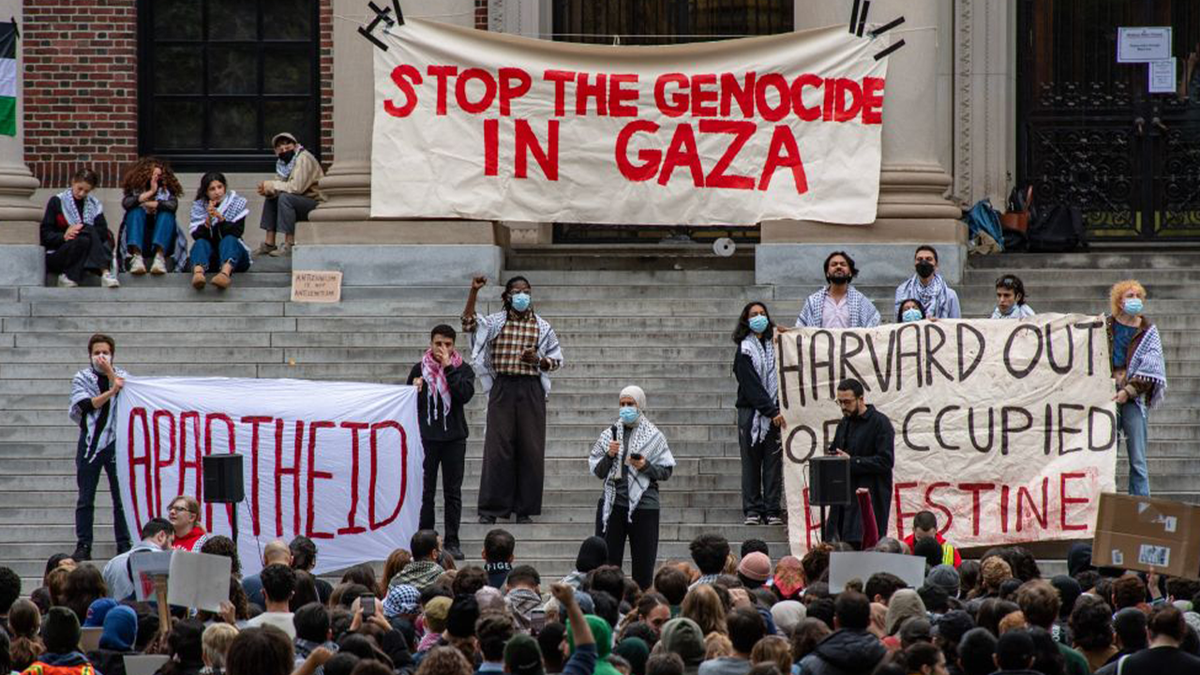
But the damage does not stop at Israel’s borders. This is where the selfishness of such behavior becomes impossible to ignore. The ministers who make these statements live under the protection of the Israeli state. They travel with security details. They operate within the world’s strongest concentration of Jewish political and military power. When they speak recklessly, they often pay no personal price. The people who pay the price are Jews thousands of miles away. They are the Jewish student on an American campus who suddenly finds herself forced to answer for comments she never made. They are the Jewish businessman in Europe whose loyalty is questioned. They are the Jewish family in Australia that suddenly faces hostility from neighbors. They are the synagogue members who must explain again and again that they are not responsible for every statement made by every Israeli politician. These ministers speak from behind a shield. Diaspora Jews absorb the consequences without one.
As a Muslim living in the United States, this reality is painfully familiar to me. Every time a radical cleric somewhere in the Middle East threatens the West, celebrates violence, or speaks in the name of Islam, millions of Muslims who had nothing to do with those statements immediately feel the consequences. Suddenly, ordinary Muslims become suspects in conversations they never started. Children are asked to defend ideas they never endorsed. Families are forced to explain that extremists do not represent them. The overwhelming majority of Muslims reject being held responsible for the words of distant radicals. Yet that is exactly what often happens. The same dynamic now confronts Jewish communities when Israeli politicians make reckless and inflammatory remarks. It is unfair when it happens to Muslims. It is unfair when it happens to Jews. And leaders who understand the real-world consequences of language should know better than anyone else.
This brings us to the deepest moral failure of all. The government of the state that was created to make Jews safer is allowing some of its most visible representatives to make Jews less safe. Not because military necessity requires it. Not because national security demands it. Not because Israel gains a strategic advantage from it. But often because local political incentives reward outrage, provocation, and ideological purity. The danger imposed on Jewish communities abroad is not even producing meaningful strategic gains. It is being imposed for cheap domestic political points, coalition maneuvering, social media applause, and election positioning. That is what makes it so disturbing. Israel’s leaders have every right to defend their country. They have every right to fight terrorism. They have every right to protect their citizens. They do not have the right to casually increase the burden carried by Jews around the world who have defended Israel with extraordinary loyalty and sacrifice.
Israel’s responsibility extends beyond the citizens who vote in its elections. It extends to the Jewish people as a whole. For decades, Diaspora Jews have stood up whenever Israel needed them. They have donated, advocated, lobbied, organized, educated, and defended. They have celebrated Israel’s victories and mourned its losses. They have treated Israel’s future as part of their own future. Any Israeli leader who ignores the consequences of his words for those communities is failing to understand the very purpose of the state he serves.
A government that claims to speak in the name of the Jewish people must remember that the Jewish people do not live only between the Jordan River and the Mediterranean Sea. They live in every corner of the globe. Their security matters. Their dignity matters. Their ability to live openly as Jews matters.
If Israeli leaders are unwilling to consider the consequences of their words for millions of Jews outside Israel, then they are not demonstrating strength. They are demonstrating irresponsibility. And if they are willing to place Jewish communities at greater risk for the sake of narrow political gain, then they have forgotten one of the most fundamental responsibilities entrusted to them.
The Jewish state was created to protect Jewish life.
It should never become a source of unnecessary danger to it.