Be the change you wish to see in the world.
Featured Post
For me, September 11 is yesterday, today and tomorrow
There is pressure to present suffering as a completed journey. Human experience is seldom so orderly
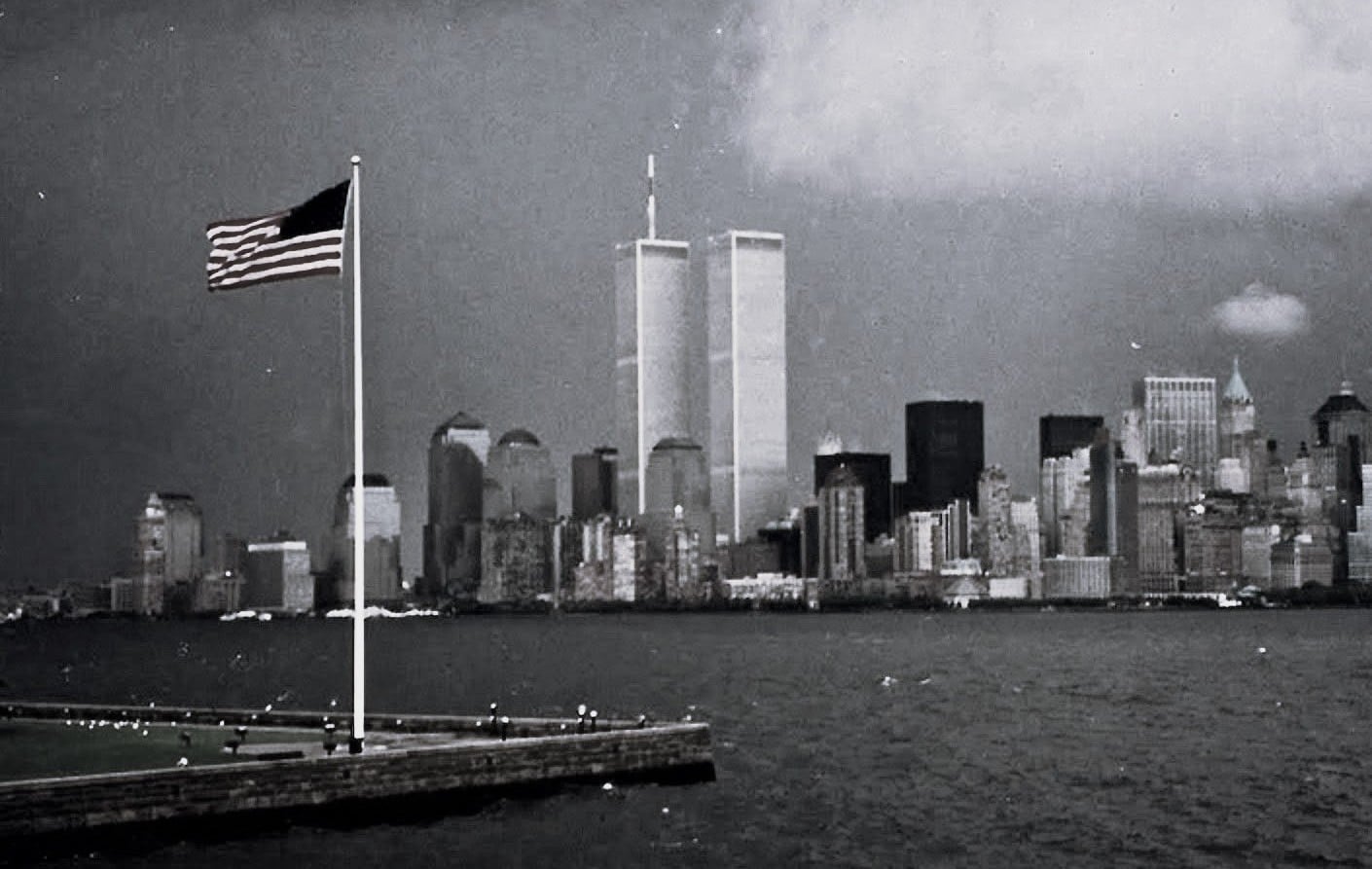
(Evan Kuz via Facebook)
There are events in one’s life that resist being relegated to the past. The calendar advances, the world resumes its ordinary rhythms, and yet part of us continues to stand in the hour when everything changed. To commemorate such an event is not simply to remember it. It is to decide, again and again, how we will carry it.
I recently reread Rachel Goldberg-Polin’s powerful book, When We See You Again, which I regard as a defining work of our generation. I expect to return to it for wisdom and strength. She divides her life into “The Before” and “The After” of the brutal kidnapping and barbaric murder of her beloved and only son Hersh, whose fate touched people far beyond his family. The distinction, simply expressed yet profound, is painfully familiar to many whose lives have been ruptured by tragedy.
The Before is not merely an earlier period. It is a world whose ordinariness often becomes precious only after it has disappeared: the morning when the people we love were still within reach, the conversation we assumed would continue, the plans made without hesitation, the confidence that tomorrow would resemble today.
The After is an altered way of inhabiting the world. Time continues, but it may no longer feel entirely continuous. Life moves forward, yet something within us remains tethered to the instant when before became after. September 11 created such a dividing line for countless people. There was the world before that morning, and there has been the world we have inhabited since.
At first, tragedy is remembered through detail: a sound, a smell, a voice, a face, the last ordinary exchange before life changed profoundly. These fragments can remain startlingly clear even as entire years recede. Memory does not preserve experience evenly. It holds tightly to what the heart struggles to release.
To be honest, time does not heal every wound. It has not healed mine. It can soften certain edges and teach us how to live beside what may not be repaired, but it does not necessarily restore what was taken. Some absences remain, and some questions may never receive an answer worthy of the lives that were lost.
With time, however, remembrance changes. We may begin to recognize the long trail tragedy leaves through our lives: the relationships it alters, the confidence it disturbs, the fears it awakens, and the decisions made quietly beneath its influence. Some consequences appear immediately. Others require years to reveal themselves.
There is pressure, particularly after many years, to present suffering as a completed journey. We prefer stories in which pain leads cleanly to wisdom and loss is redeemed by purpose. Human experience is seldom so orderly. Some wounds close; others remain tender. Healing may be less a destination than a continuing negotiation between what has been lost and what still remains.
Honest commemoration need not impose meaning where none can be found or suggest that later good compensates for lives taken and families forever altered. It should allow sorrow to remain sorrow. Yet alongside the memory of what was taken are the people who gave something of themselves: the person who reached for another, the one who refused to leave, the stranger whose name was never learned but whose kindness was never forgotten.
This is among tragedy’s most humbling truths: although suffering may feel intensely personal, survival rarely belongs to one person alone. We are carried by hands, voices, patience, faith, and presence. Even strength, which we often describe as an individual quality, is frequently something entrusted to us by others until we can hold it for ourselves.
Twenty-five years can transform the meaning of a memory. What once seemed like a single moment in time can become a lens through which we understand who we were, who we have become and how change calls us to serve others.
Eight days after the war in Ukraine began, I arrived in Przemyśl, Poland, with the first delegations of the Purple Vest Mission, an initiative of Access Israel that provides accessible evacuation and humanitarian assistance to people with disabilities and older adults during times of crisis. Our purpose was clear: to ensure that those most vulnerable were protected, supported and never left behind.
Sometime later, following my third extended period of service in Poland, my colleagues Michal and Rani and I had the privilege of spending time with Rabbi Haskel Lookstein. Rabbi Lookstein was principal of the school Michal and I attended during our formative years and remains our mentor and beloved friend.
For much of our visit, he listened as we returned to the same questions: Why the war? Why such suffering? Why does evil cause such devastation? Why are some lives taken while others are spared? Rabbi Lookstein did not claim to have answers. Instead, he suggested changing the vowel beneath the first letter, the Lamed. By moving a few dots and dashes, lamah becomes lemah.
Lamah asks, “Why?” Such questions arise naturally after tragedy, although their answers may remain beyond our reach. Lemah asks something different: “Toward what?” or “For what purpose?” It does not explain suffering, justify evil, or suggest that tragedy occurred so that something good might follow. It turns our attention toward a question we may be more capable of answering: Given what has happened, how might we respond? More directly, what are we going to do about it?
Rabbi Lookstein was not asking us to abandon the search for understanding. He was reminding us that when understanding remains elusive, we may still have some influence over what comes next. We may choose whether suffering makes us less attentive to the pain around us or more willing to recognize it. We may decide whether memory remains only a source of anguish or also becomes a summons to act.
Since that conversation, I have carried the distinction between lamah and lemah with me: during further visits to refugee centers in Poland, while assisting with the inclusive evacuation of people with disabilities in Israel since October 7, and while teaching how the principles of the Purple Vest Mission might be incorporated at the Bidi Bidi Refugee Settlement in Uganda, one of the world’s largest refugee settlements.
Rabbi Lookstein’s teaching has offered strength to many of us who have not found answers to the lamah of our tragedies. I have found no explanation for why September 11 unfolded as it did, why so many lives were taken, or why others were spared. Yet while standing among people displaced by war and beside people with disabilities at risk of being left behind, I began to understand the lemah more deeply.
Perhaps the question was not only why I had endured, but what I might do with the life that remained. The answer did not arrive as a grand revelation. It appeared in the person before me who needed to be seen, the person beside me who needed help, and the growing conviction that disability, age, or circumstance should not place someone beyond the reach of assistance.
This distinction extends far beyond my experience. When tragedy enters a life, lamah may express our anguish and longing to understand. Lemah may gently turn us toward the choices still available to us: whom we notice, how we respond, what we carry forward, and whether our pain can deepen our capacity to stand beside another person in theirs.
Perhaps this is among the deepest purposes of commemoration. It is not to extract a reassuring lesson from devastation or make suffering appear noble or necessary. It is to recognize that memory may carry an obligation. If we were once seen in our pain, perhaps we become more able to see others. If someone remained beside us, perhaps we come to understand the value of remaining. If we were carried when we could not continue alone, it may one day become our turn to carry.
This is how private grief enters the larger human story. We share what happened not to remain at its center, but to reach another person standing at the edge of an unbearable moment. Our experiences need not be identical for suffering to be recognized. Sometimes the greatest gift one person can offer another is the quiet assurance that pain has not made them invisible.
Moving forward need not require leaving the past behind. Some people, places, and moments are carried for life. But carrying them is different from remaining imprisoned by them. We can grieve what was lost and still welcome what remains. We can remember the worst of mornings while remaining grateful for an ordinary one. We can bear the scar without allowing it to become the entirety of who we are.
September 11 should be remembered for the enormity of what was taken and for the countless lives denied the years that might have followed. It should also remind us of the quiet courage of those who moved toward danger, the compassion of those who cared for strangers, and the human instinct to reach for one another when the world becomes unrecognizable.
We honor those touched by tragedy through the lives we build in its presence: lives that remain honest about what was taken, grateful for those who stayed, and attentive to those who now need someone to stand beside them.
We may never return to The Before. The After is the life we have been given, however different it may be from the life we expected. Within it, there is still sorrow, but there may also be responsibility: people to notice, burdens to share, kindnesses to offer, and choices whose ripples may travel farther than we will ever know.
The past may be beyond our power to change. But each day, we can decide what memory will ask of our future.
Related Topics
Related Posts