
What I learned serving alongside Haredi soldiers
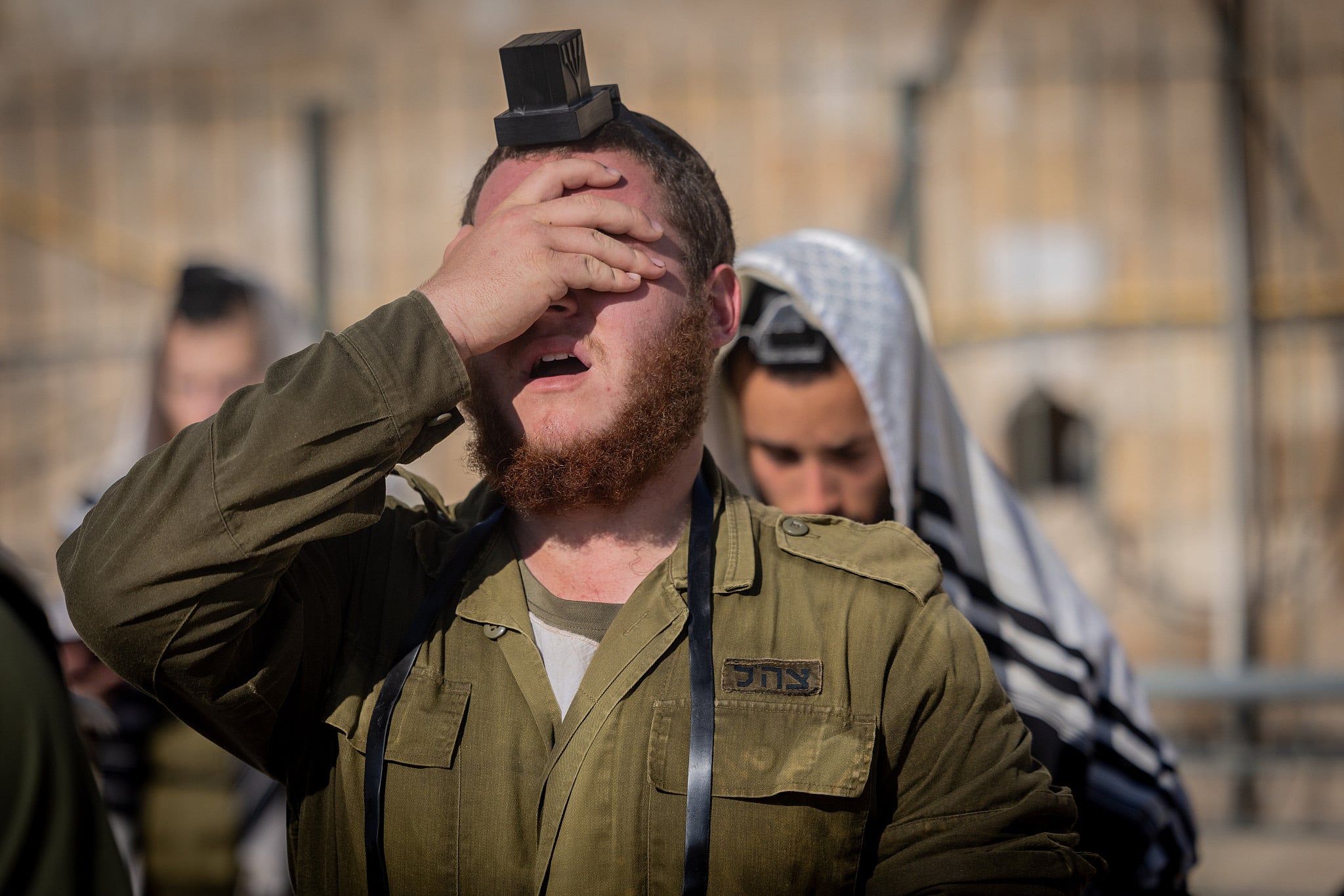
For years, Israel’s debate over Haredi military service felt abstract to me. It was a legal argument fought in the Knesset, on protest signs, and in headlines.
I thought I had a clear position.
Then, after October 7, an entire Haredi platoon joined my search-and-rescue reserve unit, and the debate suddenly became personal.
Between operational missions and long nights on base, I came to realize how wide the gap is between public discourse and lived reality. Like many Israelis, I had grown used to seeing Haredim as a single, uniform group, disconnected from higher education, absent from the workforce, and holding rigid views. What I encountered instead was diversity. I served alongside university students, lawyers, contractors, accountants, and young fathers. Some were right wing, others left wing. Beyond the headlines, I met people.
Dialogue came first.
We spoke about family, relationships, the cost of living, and the shared anxiety of returning to studies or work after yet another round of reserve duty. Only after trust was built did I begin asking the question that interested me most. Why did you enlist?
The answer I heard repeatedly was simple: “After October 7, I could not stand aside. I wanted to be a part, I wanted to contribute.” Among those who do enlist, motivation is genuine, even when the personal and social costs are high.
Still, it is important to place this experience in context. According to data from the Israel Democracy Institute, in the 2024 draft year, roughly 3060 Haredi men, about 22 percent of a single cohort, entered military or civilian national service. This remains a clear minority. Moreover, enlistment does not yet reflect a broad communal shift.
What distinguishes this minority from the majority is not a lack of religious commitment, but a willingness to serve despite significant social pressure. That pressure does not end at the base gates.
One soldier I serve with lives in Bnei Brak. When he goes home, he changes into civilian clothes and hides his weapon. No one in his neighborhood knows that he serves in the IDF. The fear of social stigma follows him even outside his service. And yet, he continues to report for duty.
Alongside this strong motivation, there are undeniable structural challenges. Since the Haredi platoon joined our unit, I have seen firsthand how much effort is required to enable service without forcing soldiers to abandon their way of life. Strict kosher standards, designated prayer spaces in every operational area, and constant adjustments around Shabbat and holidays all require real commitment.
Some accommodations worked, others didn’t.
More than once, it was clear that the system itself was not fully prepared, leaving soldiers to manage basic needs on their own. But this is not only a military challenge. Social norms within Haredi communities, the absence of supportive rabbinical leadership, and political incentives to preserve the status quo all play a central role. The IDF alone cannot resolve a challenge rooted in ideology, economics, and communal structure.
As the Knesset once again debates the draft law amid political standoffs and budgetary pressure, the lived reality of those already serving is largely absent from the discussion. Public debate often swings between coercion and exemption. Reality, as I learned in reserve service, is far more complex. If Israel is serious about increasing Haredi participation in national service, the solution will not come from legislation alone. Past experience shows that laws built on sanctions and abstract targets rarely change behavior. What does work is a framework grounded in incentives, clear budgeting, and respect for social reality.
First, policy must shift from coercion to motivation. Enlistment will grow gradually, not through force. A minority already chooses to serve, in the IDF or in civilian frameworks, and the state should focus on strengthening that existing momentum through clear incentives, predictable conditions, and designated funding.
Second, service must be part of a broader life trajectory. Without professional training, economic stability, and a clear path into the workforce, service remains a risk rather than an opportunity. When service is linked to real prospects for the future, participation becomes a rational choice rather than a symbolic demand.
The Haredi draft debate is often framed as a test of equality. In practice, it is a test of governance. A state that demands service without building viable frameworks will fail, not because of ideology, but because of policy.
Responsibility does not rest with the IDF alone. The military can adapt to religious needs, but it cannot replace political leadership or community responsibility. Meaningful change requires state investment, clear incentives, and long-term planning, alongside honest engagement from Haredi leadership willing to prepare young men for participation rather than shielding them from it.
The real challenge is no longer convincing people to serve, but proving that the state, together with communal leadership, knows how to support those who already do.