Set One More Place at the Table
Every year, on the Shabbat right after Tisha B’Av, we read a haftarah that opens with words that have shaped Jewish identity for centuries: “Comfort, comfort My people, says your God” (Isaiah 40:1). Not comfort once. Comfort twice. It’s as if the prophet already knew that real national pain, pain seared in by the fire of destruction, doesn’t heal in a single burst of hope. It takes a process. It takes work.
This year, Shabbat Nachamu isn’t landing as just another point on the calendar. It’s landing as a real test. Not only a test on the battlefield, but a much deeper question: do we still know how to be one people?
Our sages taught that the Second Temple fell because of baseless hatred among Jews themselves. Not because of a stronger enemy. Not because of military weakness. Internal division. That’s a hard lesson to accept, because it’s always easier to blame someone outside than to look inward. But that’s exactly where the power of the idea lives. If the destruction came from division, then rebuilding can come from unity.
The Bible is full of proof of this. When the people of Israel stood at the foot of Mount Sinai, the text uses an unusual grammatical form. It describes the entire nation “encamping” in the singular, not the plural, as if hundreds of thousands of people had become one body. Our tradition reads this as the people standing there “as one person with one heart.” That’s the moment we received the Torah, and it’s no accident that it happened at a moment of total unity. Contrast that with what happened when the scouts came back from the land of Israel and spread fear and slander, and the whole camp got swept up in collective panic and despair. That’s the exact moment an entire generation was told they would not enter the land. It wasn’t a lack of military strength that kept them out. It was a lack of shared faith and shared resolve.
And in the Song of Deborah, one of the oldest poems in the Bible, there’s a passage that almost hurts to read today. It calls out the tribes that stayed home instead of joining the shared fight, and it blesses the ones who showed up and put themselves on the line. Even then, victory or defeat weren’t only decided on the battlefield. They were decided by who chose to be part of a shared destiny and who chose to sit it out.
Today, there are plenty of forces, inside the Jewish world and outside it, trying to blur what makes us who we are. Some do it out of open hostility. Some out of cultural indifference. And some of it comes from within us, out of exhaustion, out of politics, out of pain that hasn’t been processed. But it’s precisely out of that attempt to blur our identity that unity has to grow. Not a fake unity that pretends we don’t disagree, because we do disagree, plenty, and that’s fine. That’s even healthy. But we agree on far more than we disagree on. We share a language, a memory, a destiny, and a set of values that, even when we argue about them fiercely, remain the ground all of us stand on.
In the end, we are not defined by the last thing we fought about. We are defined by whatever held us together for thousands of years in exile, with no state and no army of our own. That’s what identity is. And identity can’t be erased if we choose to hold onto it.
Anyone who has worked through healing from trauma knows this: you can’t skip past pain on your way to strength. The only way through hardship is actually going through it. Burying pain doesn’t build resilience. It just pushes the reckoning down the road to a harder moment later. Real resilience, for a person or for an entire people, gets built when we’re willing to look pain in the eye, give it room to exist, and then choose, from that honest place, how we move forward.
That is exactly what Shabbat Nachamu is asking of us. It doesn’t arrive right after Tisha B’Av by accident. It arrives because our sages understood you cannot leap straight from crisis to triumph. You need the mourning of Tisha B’Av for the comfort to be real. You need to acknowledge the pain for the recovery to carry any strength.
The Bible teaches us that in the periods when the people of Israel stood united, they were seen as unbeatable. Not because of army size, but because a people bound together by shared internal strength is the hardest thing in the world to break. Enemies can take territory. They cannot conquer a people that chooses, on purpose, to remain one people.
Real victory will not be decided on the battlefield alone. It will be decided in the moment each of us chooses to hold on to one another, not despite our differences, but through them. That is what made us who we are. And that is what can, once again, make us unbeatable.
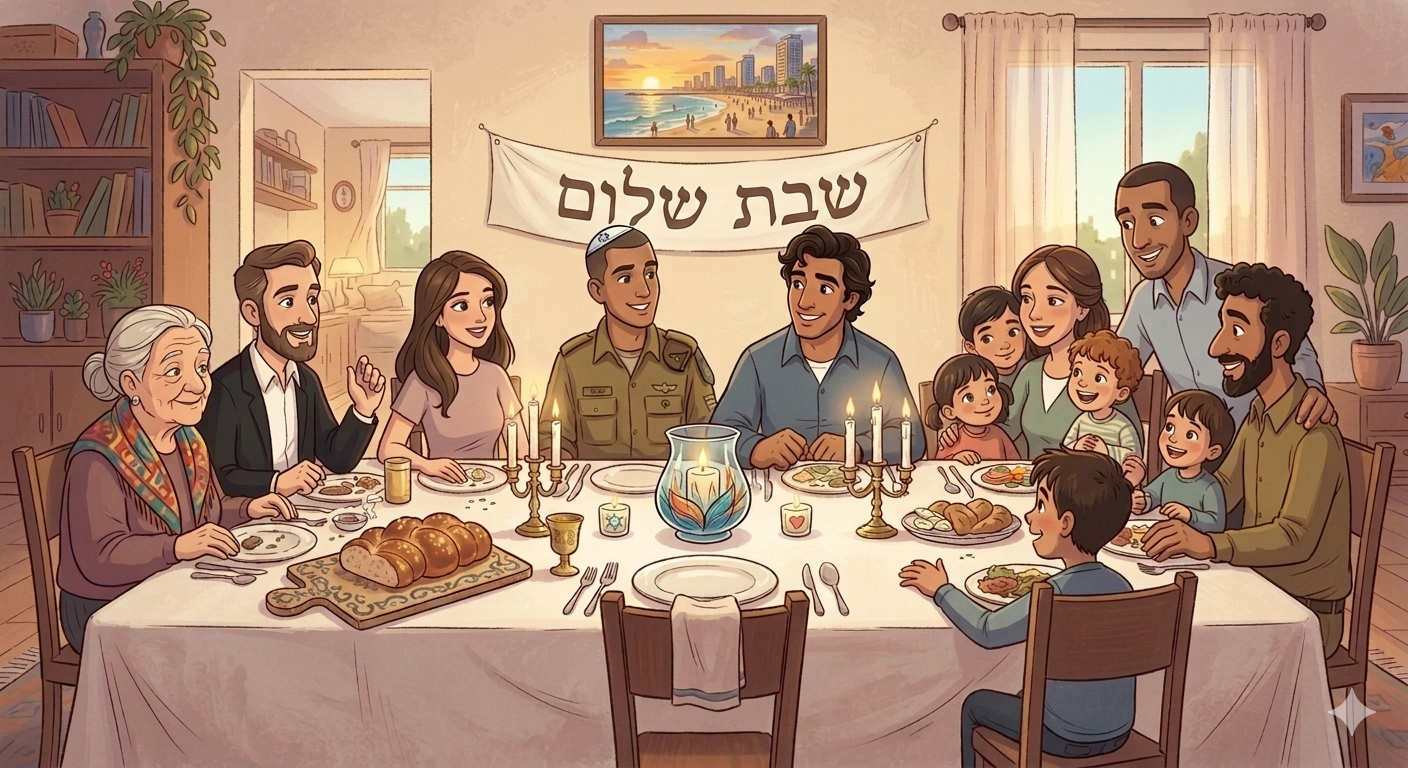
That is why I have been so moved by the beautiful “Set One More Place” initiative, which began in the United States and is now spreading across Europe and Israel. But saying the word unity is not enough. If we truly believe that national resilience is built by facing pain rather than burying it, then we must turn that belief into action.
We must build, together, a people strong enough to rise above antisemitism, hatred, and social division. This Shabbat, set one more place at your table. Invite someone you might not otherwise invite. Talk to them. Listen to them. Sometimes the simplest act of hospitality can become the first step toward healing a people. Together, we can strengthen our nation, because in the end, despite all our differences, we are one people