Shabbat enters once again. It does not rush. It does not demand. It arrives like an old friend, like a melody remembered before it is sung, like a quiet hand on the shoulder of a nation that never forgets. And we, the Jewish people, rise to meet it.
We are the people who carried Sinai in our hearts through deserts and centuries. The people who kindled candles in basements and attics, who whispered “Shabbat Shalom” even when the world turned its face away. The people who guarded the flame — not only of faith, but of identity, memory, and eternity.
We enter Shabbat, but truly, it is Shabbat that enters and uplifts us.
When it comes, we are no longer scattered threads. We become a royal tapestry, woven from prayers, tears, joy, and Torah. We become what we were always meant to be: a kingdom of priests, a holy nation. Not chosen for privilege — but for purpose. Chosen to be a light.
And so I walk to the synagogue, not only with my feet, but with the footsteps of those who came before me. I walk with Abraham, who said “Hineni.” With Rachel, who still weeps and waits. With King David, who sang us into hope. With the sages of Tzfat, with the rebels of Modiin, and with every Jewish mother who ever lit candles and whispered, “May you be like Ephraim and Menasheh.”
We are not a tale of survival. We are a symphony of return.
We are the songs of David — not weeping, but rising, like golden psalms lifted by the wind through the stones of a living Jerusalem, where every echo is a promise and every silence holds a prayer. We are not the footsteps of exile, but of return — a return written in fire upon the soul. And “Lecha Dodi” rises from our homes not as a whisper, but as a chorus, calling the Shabbat Queen as if we never left.
Hope is not merely rekindled — it dances in our eyes, it crowns our children, it walks beside us in the twilight as we welcome eternity into time.
Let there be a flame in every Jewish home. Let there be a melody in every Jewish heart. Let every child know — without doubt, without fear: You are part of a great people. You are a light among nations. You are a Jew.
Shabbat Shalom — from the soul, and from forever.
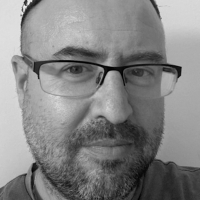
Rabbi Moshe (Mikhail) Salita is a Brooklyn-based rabbi, legal scholar, and emerging animal chaplain whose work unites Jewish spirituality, international law, and compassion for all living beings.
He holds a Master’s in International Law (with honors) from the National University “Odesa Law Academy,” where he is currently a PhD student researching the restitution of unlawfully confiscated Jewish communal property in Soviet Ukraine. He also earned a Master’s in Library and Information Science from Pratt Institute (New York) and a Master’s in Education and Special Education from Touro University, with graduate certificates in Applied Behavior Analysis (ABA) and Bilingual Education.
Rabbi Salita is an ordained rabbi of the Jewish Spiritual Leaders Institute (JSLI), a Doctor of Ministry student in Jewish Spirituality at the Graduate Theological Foundation, and an Animal Chaplain-in-Training with the Compassion Consortium in New York. His mission is to weave together justice, mercy, and creation care into one sacred path of Tikkun Olam — healing the moral and spiritual wounds of the world.
He serves as Executive Director of the Salita Foundation, originally founded by his brother, Dmitriy Salita — former WBF World Champion boxer, and inductee of both the New York Boxing Hall of Fame and the Jewish Sports Hall of Fame. Today, Rabbi Salita leads the Foundation toward a broader vision — uniting humanitarian ethics, environmental awareness, and cultural restitution.
Through the Foundation, he has launched the “Eco-Kosher Initiative,” a global program encouraging support for businesses and individuals who respect the environment, animals, and their communities. For him, “eco-kosher” is not limited to food — it is a moral philosophy of living in balance with creation, where sustainability and holiness walk hand in hand.
He is also devoted to preserving and gaining international recognition for the rare Israeli cat breed Kanaani — a living symbol of harmony between Jewish heritage and the natural world.
A descendant of Sruel ben Aharon Lekhtman, a Ruzhiner Hasid and brick-factory owner in Kitai-Gorod, Kamianets-Podilskyi — once a spiritual heart of the Ruzhin Hasidic movement in Tsarist-era Ukraine — Rabbi Salita continues his ancestor’s legacy of faith, integrity, and bridge-building. Sruel Lekhtman served as a close friend and estate manager for Pan Dembitsky, a Polish landowner remembered with respect in both Jewish and Ukrainian memory. Their friendship, crossing lines of faith and culture, remains a profound symbol of coexistence — especially meaningful for Ukraine today.
Although Rabbi Salita received Reform rabbinic education in the spirit of Jewish Universalism, he maintains a deep spiritual connection with Chabad, whose living Hasidic tradition unites intellect, compassion, and joy.
Following the example of the prophets — from Adam, the first caretaker of creation, to King Solomon, who understood the language of animals, and to Rav Papa, the sage who spoke kindly of cats — Rabbi Salita teaches that true holiness is revealed through compassion for all living beings. His life’s work is to show that caring for animals and serving God are one and the same sacred breath.