


Mathematics Teaching Professor, Author
Shanghai Jewish Refugees Museum: Remembering a Refugee Community
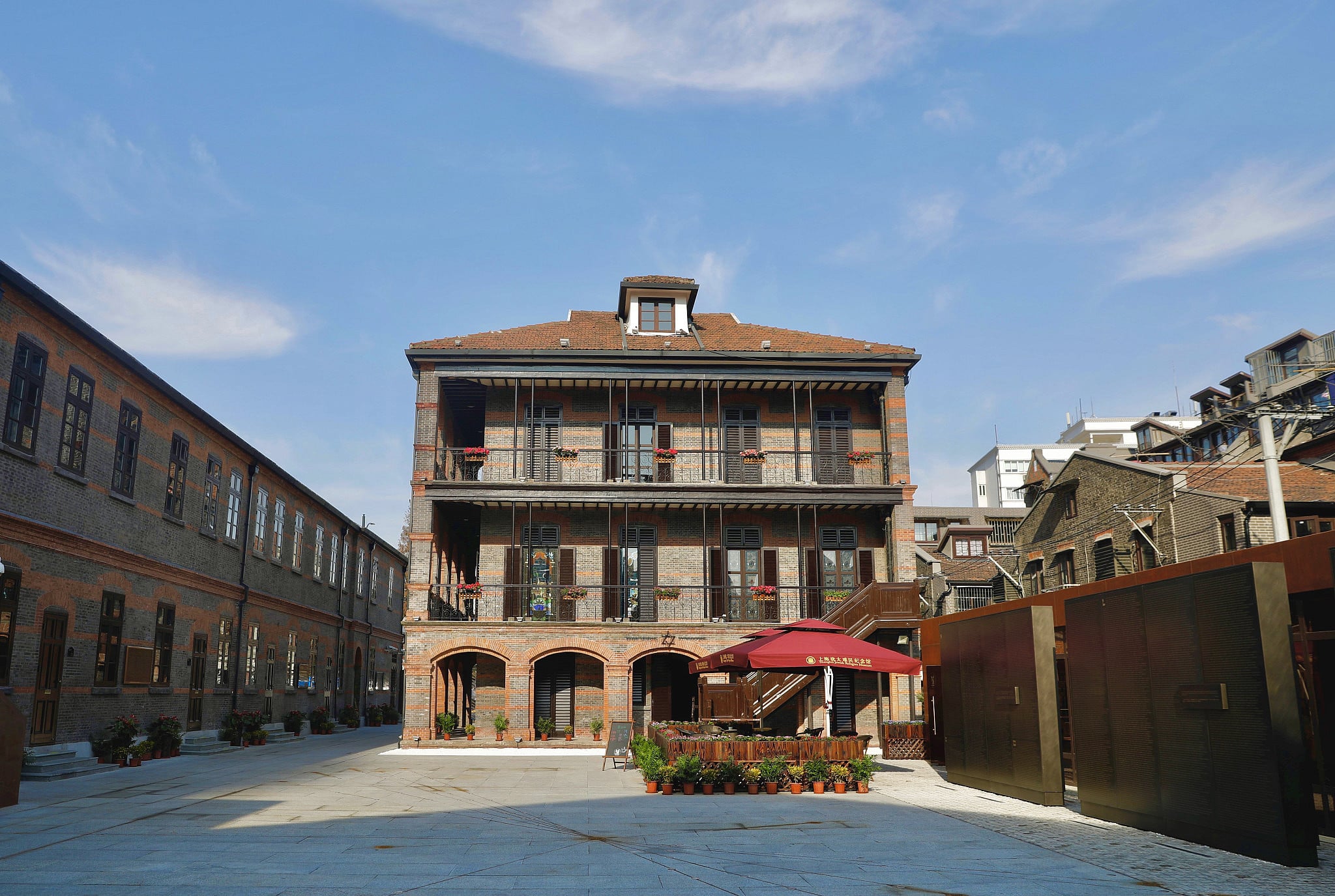
Ohel Moshe Synagogue (Source: Shanghai Jewish Refugees Museum, China)
The Shanghai Jewish Refugees Museum is located in Shanghai’s historic Hongkou District, an area that was once home to a thriving Jewish community dating back to the late 19th century. Built around the 1927 Ohel Moshe Synagogue, the museum stands in the former “Shanghai Ghetto,” where approximately 20,000 European Jewish refugees sought refuge from Nazi persecution during World War II. Today, the museum preserves their history and tells the story of their lives, struggles, and experiences in Shanghai.
I would like to thank the esteemed Sophia Tian, Head of the Exhibition & Research Department Shanghai Jewish Refugees Museum, for her support and guidance.
Museum
The Shanghai Jewish Refugees Museum is a significant historical site that preserves the story of Jewish refugees who sought safety in Shanghai after fleeing Nazi persecution in Europe. Located in the former Ohel Moshe (Moishe) Synagogue in the Tilanqiao Historic Area of Hongkou District, the museum commemorates the experiences of approximately 20,000 Jewish refugees who lived in Shanghai during the Japanese occupation.
Through photographs, documents, films, and personal belongings, the museum offers a glimpse into the challenges, resilience, and everyday lives of these refugees. It also provides an important reminder of Shanghai’s role as a place of refuge during one of the darkest periods of the twentieth century.
Synagogue and the Historical Sites of the Shanghai Jewish Refugee Community
These places are generally referred to as historical sites of the Shanghai Jewish refugee community. They include the Moshe Synagogue, White Horse Inn, JDC Site, Huoshan Park, and Roy Roof Garden, each reflecting an important part of refugee life in Shanghai during World War II.
The Moshe Synagogue, located within the Shanghai Jewish Refugees Museum, is one of the two remaining synagogues in Shanghai. Built in 1927 with funds raised by Russian Jews, it became an important place of worship and gathering for Jewish refugees during World War II. In 2007, it was renovated according to its original design and became the central building of the Shanghai Jewish Refugees Museum.
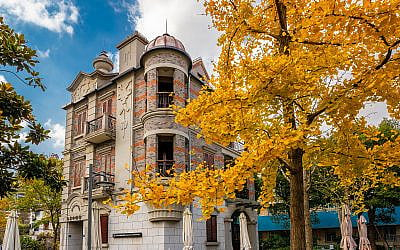
The White Horse Inn opened in 1939 and was founded by Rudolf Mosberg and his wife, Jewish refugees from Vienna. It became a popular gathering place for Jewish refugees in Shanghai. Originally located at Changyang Road and Lintong Road, it was demolished in 2009 and rebuilt in 2015 at No. 67 Changyang Road using some original building materials and furniture.
The JDC, or American Jewish Joint Distribution Committee, opened its Shanghai office at No. 119-121 Huoshan Road in 1938. It played an important role in helping Jewish refugees by providing funds for refugee camps, soup kitchens, hospitals, and other essential services.
Huoshan Park and the Roy Roof Garden were also important gathering places for Jewish refugees. Huoshan Park provided a place to rest and socialize, while the Roy Roof Garden, established on the rooftop of the Broadway Theatre in 1939, became a popular social and recreational space for the refugee community.
Current Exhibitions
The Shanghai Jewish Refugees Museum’s current exhibitions tell the story of Jewish refugees in Shanghai, from their arrival and survival during World War II to their lives after the war and the lasting connections between the Jewish and Chinese communities.
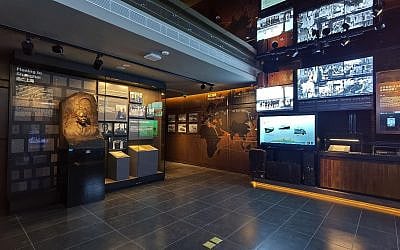
Part One Fleeing to Shanghai
In the 1930s and 1940s, many European Jews fled to Shanghai to escape Nazi persecution. With help from diplomats such as Dr. Ho Feng-shan and Jewish relief organizations, about 20,000 refugees reached Shanghai and settled there.
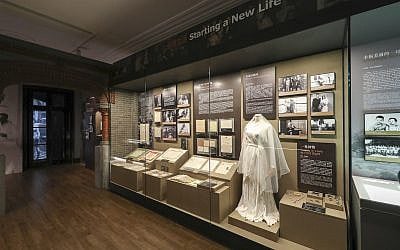
Part Two Starting a New Life
Despite difficult conditions, Jewish refugees worked to rebuild their lives, focusing on family, education, and self-reliance. They also organized cultural and sports activities and published newspapers and magazines.
Part Three Bitter-sweet Memories
In 1943, Japanese authorities established a designated area for stateless refugees, forcing many Jews into a restricted area of less than three square kilometers. The exhibition highlights their hardships and the mutual support between Jewish refugees and their Chinese neighbors.
Part Four After the War
After World War II, most Jewish refugees left Shanghai for countries including the United States, Australia, and Israel. Many continued to maintain strong connections with Shanghai.
Part Five Special Feelings for China
Many former refugees remained grateful to China for providing them with safety. Some stayed in China, while others later returned to visit friends, reconnect with their roots, or conduct business, strengthening Chinese-Jewish friendship.
Part Six Towards a Shared Future
The museum continues to collect, preserve, research, and share the history of Jewish refugees in Shanghai. It has also welcomed former refugees, their descendants, scholars, and visitors from around the world.
The Wall of Names
The Wall of Names commemorates Jewish refugees who found refuge in Shanghai during the 1930s and 1940s. First unveiled in 2014, it has been expanded over the years and now records an astonishing 19,672 names. The wall serves as a memorial and an important connection between the museum, former refugees, and their descendants.
If you have family members or friends who had been Jewish refugees in Shanghai, but whose names have not been found on the Wall, please do contact the museum. E-mail address: info@shjews.com.
Collections
The Shanghai Jewish Refugees Museum’s collections preserve personal objects and stories that offer a glimpse into the lives and experiences of Jewish refugees in China. Some of the notable collections include:
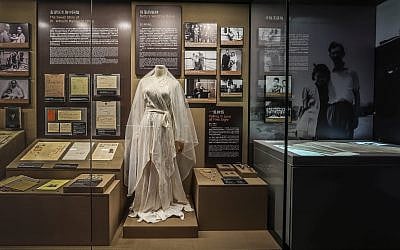
Betty’s Wedding Dress
Donated by former refugee Betty Grebenschikoff in 2013, this wedding dress combines Chinese and Western styles. Handmade by Betty’s mother-in-law in 1948, it became a cherished family keepsake and was later worn by both of Betty’s daughters at their own weddings.
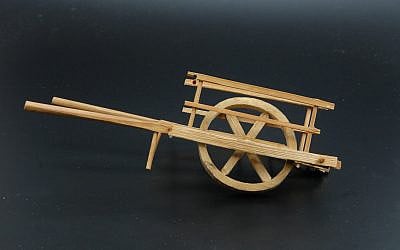
Josef’s Toy Wheelbarrow
This bamboo toy wheelbarrow was donated by former refugee Josef Rossbach in 2010 and was the museum’s first physical collection. Josef received it as a child in Shanghai in 1944, making it a lasting reminder of his childhood and the kindness he experienced from his Chinese neighbors.
The Five Passports
This collection includes Ruth Callmann’s German passport and four American passports, documenting her journey from Europe to Shanghai and later to the United States. Together, the passports trace her life as a refugee and her eventual resettlement, while reflecting her lasting connection to Shanghai.
A Handbag Awaiting Its Owner
This embroidered handbag belonged to a Jewish refugee couple who left it with a Chinese shopkeeper as security for medical expenses while living in Shanghai. Decades later, the shopkeeper’s granddaughter donated it to the museum, hoping to help locate the family’s descendants. The handbag represents both the hardships faced by refugees and the kindness of the Chinese people who helped them.
Online Video Center
The Shanghai Jewish Refugees Museum also features an online collection of videos that preserve the personal stories and experiences of Jewish refugees in Shanghai. One notable documentary, Survival in Shanghai, includes interviews with nearly 40 Jewish refugees and uses their firsthand accounts to tell the story of the approximately 20,000 European Jews who found refuge in Shanghai during World War II.
Historical Backgrounds
Jews first arrived in China as early as the Tang Dynasty (618 to 907 CE), traveling as merchants along the Silk Road. The oldest physical evidence of a Jewish presence is a Judeo-Persian letter dated to 718 CE, found in Dunhuang. A permanent Jewish community was later established in Kaifeng during the Song Dynasty (960 to 1279), where Persian-Jewish traders built a synagogue in 1163.
Jews began arriving in modern Shanghai in the mid-1800s. Following the 1842 Treaty of Nanjing, which opened Shanghai to international trade, wealthy Sephardic Jewish merchants from Iraq and India, known as Baghdadi Jews, settled in the city and established successful businesses.
In the late 1800s and early 1900s, Russian and Eastern European Jews also arrived in Shanghai. Many were fleeing pogroms and the Russian Revolution, and they helped establish a growing and vibrant Jewish community in the city.
After the 1937 Battle of Shanghai, Japan occupied the Chinese-controlled areas of the city, while the International Settlement and French Concession remained under foreign control. During the 1930s, as Nazi Germany persecuted European Jews and many countries closed their borders, Shanghai remained one of the few places that did not require an entry visa. As a result, about 20,000 European Jews sought refuge in the city, with the Ohel Moshe Synagogue serving as an important place of worship.
After Japan attacked Pearl Harbor in December 1941, Japanese forces occupied the foreign concessions and took control of the entire city. On February 18, 1943, the Japanese established the Restricted Sector for Stateless Refugees, commonly known as the Shanghai Ghetto, in Hongkou. Approximately 20,000 Jewish refugees were forced to live in the restricted area under difficult conditions until the end of the war. The ghetto was liberated on September 3, 1945.
After World War II, the situation of Shanghai’s Jewish community changed as China entered a civil war. By 1956, almost all of the Jewish residents had emigrated to other countries, including the United States, Australia, and Israel.
From 1960 to 2000, Jewish life in Shanghai was relatively limited because most Jewish refugees had left the city by the end of the1940s. During the Cultural Revolution, religious activities were restricted, making Jewish community life difficult. From the 1980s onward, China’s opening to the world brought foreign Jews, businesspeople, and diplomats back to Shanghai, gradually rebuilding Jewish connections and community life.
Which brings us to 2007.
In 2007, China was characterized by a booming, overheating economy, rapid urbanization, and an emerging sense of global power. The country was on the precipice of the 2008 Beijing Olympics, making it a pivotal year of infrastructure changes and focus on modernization.
Shanghai in 2007 was a bustling “Wild East”, experiencing a jaw-dropping physical and economic transformation. It was a city sharply divided between the towering, neon-lit skyscrapers of the brand-new financial district and the historic, rapidly disappearing neighborhoods of the past.
In 2007, the Jewish community in Shanghai was experiencing a revival, centered mostly on a growing expatriate and business population rather than the historic refugee community. That year, Jewish life in the city was defined by the opening of a major museum and the growth of expatriate institution.
It was in this year, 2007, that the former synagogue in Shanghai, Ohel Moshe Synagogue, was converted into the Shanghai Jewish Refugees Museum. Located in the historic Hongkou District, the museum was built around the 1927 synagogue and commemorates the approximately 20,000 European Jewish refugees who sought safety in Shanghai during the Holocaust.
The history of Jewish life in Shanghai is a story of survival, resilience, and friendship. From the earliest Jewish communities in China to the thousands of refugees who found safety in Shanghai during World War II, the city provided a place of refuge during one of history’s darkest periods.
Today, the Shanghai Jewish Refugees Museum preserves their stories, memories, and personal belongings, reminding visitors of the hardships they faced and the connections they built with the Chinese people. Its history continues to highlight the importance of tolerance, compassion, and remembering the past.
Contact Information:
Shanghai Jewish Refugees Museum, 62 Changyang Road, Hongkou District, Shanghai, China
Phone: 021-55133186, Email: info@shjews.com, Website: https://www.shhkjrm.com/en/