
Shavuot, Kashrut, and the Journey from Simplicity to Industry
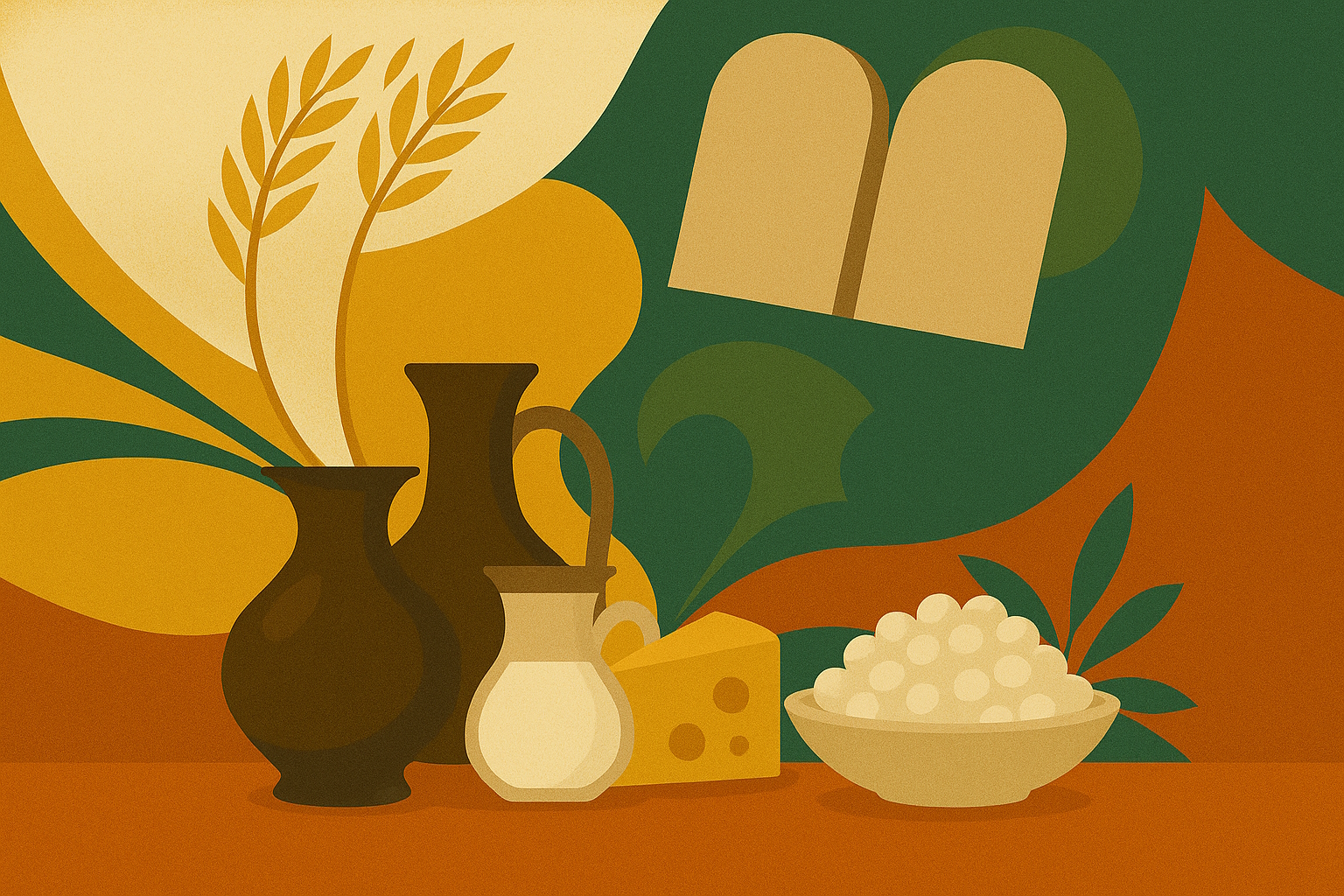
As Shavuot approaches, we prepare to stand again at Mount Sinai, symbolically reliving the moment our ancestors received the Torah. Among the many customs associated with this festival is the eating of dairy foods, often explained by the tradition that, before the giving of the Torah, the Jewish people had not yet been commanded regarding the separation of milk and meat (see Midrash Shir HaShirim Rabbah 4:11). After Sinai, their cookware and preparation methods were no longer valid under the new laws, and so they ate simple dairy meals.
This custom opens the door to a broader reflection on kashrut – a system that began with a few biblical commandments and grew into a vast, complex, and at times controversial industry. Understanding its historical development can help us better appreciate both its spiritual intent and its contemporary challenges.
Kashrut laws appear in several places in the Torah:
- Leviticus 11 and Deuteronomy 14 list kosher animals and fish.
- Exodus 23:19, Exodus 34:26, and Deuteronomy 14:21 prohibit boiling a kid in its mother’s milk—later interpreted by the sages as the foundation for separating meat and dairy.
- Leviticus 17:10–14 prohibits the consumption of blood.
These laws are presented without detailed explanation, prompting generations of rabbinic interpretation. Some view these laws as chukim (statutes) – commandments whose rationale is not fully understood, yet we sanctify them through our obedience.
In the Mishnah and Talmud, our sages expanded upon the Torah’s dietary laws:
- The six-hour wait between eating meat and dairy originates in Chullin 105a.
- Discussions on cooking and eating meat with milk appear in various tractates, especially Chullin.
- Concepts such as bitul (nullification) and ta’am (transferred taste) became central to halachic rulings.
The Shulchan Aruch (16th century) later codified many of these laws, becoming the basis for modern halachic practice.
In the 20th and 21st centuries, with the rise of mass food production, keeping kosher became significantly more complex. Hidden ingredients, industrial processing, and globalization made individual supervision impractical.
As a result, kashrut certification agencies emerged.
Some of the largest include:
OU (Orthodox Union)
OK, Star-K, Kof-K
Badatz, Rubin, Landau, and many more in Israel
As of 2025, the global kosher food industry is projected to reach approximately $53.64 billion, with expectations to grow to $111.33 billion by 2031, reflecting a compound annual growth rate (CAGR) of 10.8%.
Certified kosher products now include everything from cookies and coffee to pet food and toothpaste. There are more than 1,400 different kosher symbols worldwide, each with its own standards and levels of stringency.
In Israel, there are two main types of kosher certification that often spark debate and confusion: Rabbanut and Mehadrin.
Rabbanut kashrut is the baseline certification issued by local religious councils under the Chief Rabbinate of Israel. It ensures that the food meets basic halachic requirements- kosher ingredients, separation of milk and meat, and general rabbinic supervision. For many observant Jews, Rabbanut certification is sufficient.
Mehadrin kashrut, by contrast, refers to more stringent standards that go beyond the halachic minimum. These may include:
- Only using Chalav Yisrael (milk supervised by a Jew from milking)
- Only Glatt kosher meat ( “Glatt” means smooth in Yiddish. Glatt kosher meat is a stricter standard of kosher meat that requires the animal’s lungs to be completely smooth and free of any adhesions, in accordance with halachic (Jewish legal) guidelines for health and purity.
- Enhanced rabbinic supervision (sometimes full-time mashgichim)
- Stricter inspection of produce for insects
Different Mehadrin agencies may follow different customs and stringencies, leading to a wide variety of standards and sometimes conflicting expectations. Some communities view Mehadrin certification as essential, while others see it as an unnecessary complication that divides rather than unites.
This tension contributes to the broader conversation about how far the kosher world has moved from its original spiritual roots.
A Personal Reflection
I respect everyone’s choice to follow the level of kashrut that aligns with their values – whether it’s Rabbanut or Mehadrin.
While these developments stem from a sincere desire to uphold halacha in a modern world, I can’t help but ask: Is this what Hashem intended?
Kashrut was meant to instill mindfulness, self-discipline, and holiness in our everyday lives. However, when it becomes entangled in branding, competition, and endless stringencies, we may risk losing sight of its true purpose.
To me, what comes out of our mouths matters more than what goes into our mouths.
“The tongue is more deadly than the sword. The sword kills only at close range, but the tongue can kill from afar.” Talmud, Arachin 15b
Our manner of speech, our compassion, our integrity – these are the real measures of sanctity.
Speaking lashon hara (negative speech about others) not only harms relationships, but also damages the soul of the speaker and the dignity of the one spoken about. Judaism teaches that words hold immense power – just as they can uplift, heal, and inspire, they can also wound, divide, and destroy. Guarding one’s tongue is considered a sign of inner strength and moral responsibility, reflecting a deep awareness of the sacred potential of speech and the responsibility that comes with it.
At Sinai, the Jewish nation was unified, humble, and spiritually open. They weren’t comparing certification agencies or debating dairy stringencies, they were preparing their hearts to receive the Torah.
As Shavuot draws near, may we strive to reconnect with that same openness of heart and spirit.
Let us honor our traditions while remembering that rituals are a means, not an end. They should lead us to greater compassion, deeper reflection, and a more ethical Jewish life.
Join me in lifting our hearts in prayer for the swift and safe return of all the hostages.
Chag Sameach!!