
CFO | Empower Society for Good I Author
Shavuot – The Democratization of Knowledge
As we approach Shavuot, we commemorate the momentous occasion of receiving the Torah at Mount Sinai. Rabbi Jonathan Sacks profoundly articulated that what was given at Sinai was not merely a set of laws but a revolutionary shift—the democratization of knowledge. This pivotal event marked the end of literacy and wisdom as a priestly elite’s sole privilege. Instead, it heralded a new era where the divine teachings were accessible to every individual, signifying a radical transformation in the dissemination and ownership of knowledge.
In this article, we also expand on the impact on Rabbi Sacks’s version of the Covenant, based on mutual responsibility and destiny. This Covenant leads to seeking a kinder world. In a separate article, I explored the Book of Ruth as a book of Kindness and how it can be used as an ancient text to understand the UN SDGs, which is the world vision for Tikkun Olam, and how this manifests itself in the concept of ESG.
Link: https://www.upgradingesg.com/the-book-of-ruth-timeless-lessons-for-today
Historical Context: Knowledge as Power
Historically, religious authorities often restricted access to sacred texts, maintaining power through controlled knowledge. For centuries, the church forbade the translation of the Bible into vernacular languages, effectively monopolizing religious and intellectual life. This control ensured that religious knowledge and interpretation remained the exclusive domain of the clergy, preventing common people from engaging directly with their sacred texts. Remarkably, it wasn’t until 1870 that compulsory education became the norm in England, a leading imperial power. This marked a significant stride towards widespread literacy and learning, dismantling the barriers that had long confined knowledge to an elite few.
The Evolution of Society and Knowledge
Reflecting on the 18th-century Industrial Revolution, we see a world dominated by emperors and counts, where most people lived as subsistence farmers or serfs. The past two centuries have witnessed profound changes, moving us from feudal systems to a world increasingly driven by democratic values and the free exchange of knowledge. The democratization of knowledge has been a crucial driver of these transformations, empowering individuals to contribute to societal progress and innovation.
Rabbi Sacks often spoke of two journeys: the journey from and the journey to. The journey from our historical context has not been without turmoil. While there has been a rise in prosperity, there has also been a decline in moral and ethical standards. Today, we are navigating a complex journey from colonialism, imperialism, and slavery towards a new world order characterized by capitalism, socialism, and communism. The fall of communism has given way to capitalism’s dominance. Still, the excesses of capitalism have highlighted the need for balance, leading to the rise of ESG (Environmental, Social, and Governance) principles. These principles emphasize that society, businesses and individuals should pursue profit and consider their social and environmental impact.
The Spiritual Journey from Passover to Shavuot
In this context, the journey from Passover to Shavuot is particularly poignant. This period, marked by the counting of the Omer, symbolizes spiritual growth and transformation. Each day of counting brings new opportunities for reflection and self-improvement. This year, I embarked on a personal journey guided by a book dedicated to the spiritual significance of the Omer, seeking to enrich my understanding and practice. Each day, I contemplated the deeper meanings behind the rituals and practices, drawing connections between ancient traditions and contemporary life.
Since October 7th and October 8th, we, too, have been on a collective journey marked by vulnerability and resilience.
Quoting from the book – The Dance of the Omer by Rav Benji Olsen – Day 38:
“Trust, as a path to enlightenment, often leads to vulnerability, which in turn fosters bravery. Bravery cultivates connection, connection leads to purpose, and purpose enriches life.”
This cycle of trust and vulnerability has been particularly relevant as we navigate the aftermath of recent traumas, finding strength in our shared heritage and faith.”
Amidst these challenges, we have seen a resurgence of commitment to our land and traditions. As university students recently articulated, Zionism is integral to our Jewish identity. This affirmation highlights the deep connection between our spiritual journey and our national identity. It underscores the enduring relevance of our ancient texts and how they continue to inform our contemporary lives and aspirations.
Shavuot: Celebrating Knowledge and Learning
Shavuot embodies the democratization of knowledge, with communities worldwide engaging in learning sessions and discussions. This year’s theme of “non-acceptance” and antisemitism / anti-Israel encourages us to critically examine the world around us and aspire for positive change. As we participate in these learning opportunities, we reflect on our collective journey and the world we wish to create. The night of Shavuot, known as Tikkun Leil Shavuot, is traditionally dedicated to studying the Torah and engaging in discussions that deepen our understanding and commitment to our faith and values.
The communal learning sessions are a testament to the ongoing relevance of the Torah in our lives. These sessions are not merely academic exercises but opportunities for communal bonding and spiritual enrichment. They remind us that the Torah’s teachings are not static but dynamic, evolving with each generation as we grapple with new challenges and questions.
Rabbi Sacks Covenant
In a recent webinar with Dr Tanya White https://www.tanyawhite.org/, she examined Rabbi Sacks’ teachings on “Covenant” and how Shavuot, which celebrates the giving of the Torah on Har Sinai, is opportune to reflect on.
I asked ChatGPT to expand on this.
Rabbi Jonathan Sacks’ concept of Covenant is a central theme in his writings, exploring the relationship between God and the Jewish people. This concept is deeply connected to the giving of the Torah on Har Sinai (Mount Sinai), which is celebrated during the festival of Shavuot. Here’s an expanded view of how these ideas interrelate:
The Concept of Covenant
- Definition: Rabbi Sacks defines the Covenant as a binding agreement between God and the Jewish people, characterized by mutual commitments. It is not a contract based on mutual interests but a covenant based on mutual responsibility and destiny.
- Two Covenants: Sacks often distinguishes between the Covenant of Fate (Brit Goral) and the Covenant of Destiny (Brit Ye’ud). The Covenant of Fate binds Jews together through shared history and suffering, while the Covenant of Destiny is about shared purpose and mission.
The Giving of the Torah at Har Sinai
- Revelation and Covenant: The giving of the Torah at Har Sinai represents the formalization of the Covenant between God and the Israelites. At Sinai, the Israelites collectively accept the Torah, committing to live by its laws and values, thereby solidifying their unique relationship with God.
- Matan Torah (Giving of the Torah): This event is a foundational moment for the Jewish people, where they receive divine instruction and guidance. It is a moment of national revelation, where the Israelites hear God’s voice and accept the responsibilities that come with being God’s chosen people.
Shavuot and the Covenant
- Celebration of Revelation: Shavuot, also known as the Festival of Weeks, commemorates the giving of the Torah at Sinai. It is a celebration of the moment when the Covenant was sealed through the acceptance of the Torah.
- Renewal of Commitment: Each year, Shavuot is an opportunity for Jews to renew their commitment to the Covenant. The festival emphasizes the ongoing relevance of the Torah and the responsibilities it entails.
Rabbi Sacks’ Perspective
- Covenantal Relationship: Rabbi Sacks highlights that the giving of the Torah is more than just a historical event; it is the establishment of an eternal relationship. The Torah serves as the constitution of the Jewish people, guiding their moral and spiritual journey.
- Collective Responsibility: According to Sacks, the Covenant at Sinai emphasizes collective responsibility. The Israelites are not just individuals bound by personal faith but a community united by a shared mission to uphold and embody the values of the Torah.
- Moral and Ethical Imperatives: Sacks often underscores the moral and ethical imperatives that come with the Covenant. The Torah provides a framework for justice, compassion, and holiness, which Jews are obligated to bring into the world.
- Intergenerational Continuity: The Covenant is seen as binding across generations. Rabbi Sacks speaks of the importance of transmitting the values and teachings of the Torah to future generations, ensuring the continuity of the Jewish people and their mission.
In Summary
Rabbi Sacks’ concept of Covenant is deeply intertwined with the giving of the Torah at Har Sinai, celebrated during Shavuot. The Covenant is a binding, eternal agreement that shapes the identity, responsibilities, and destiny of the Jewish people. Shavuot serves as an annual reminder of this momentous event, encouraging Jews to renew their commitment to the values and mission articulated in the Torah.
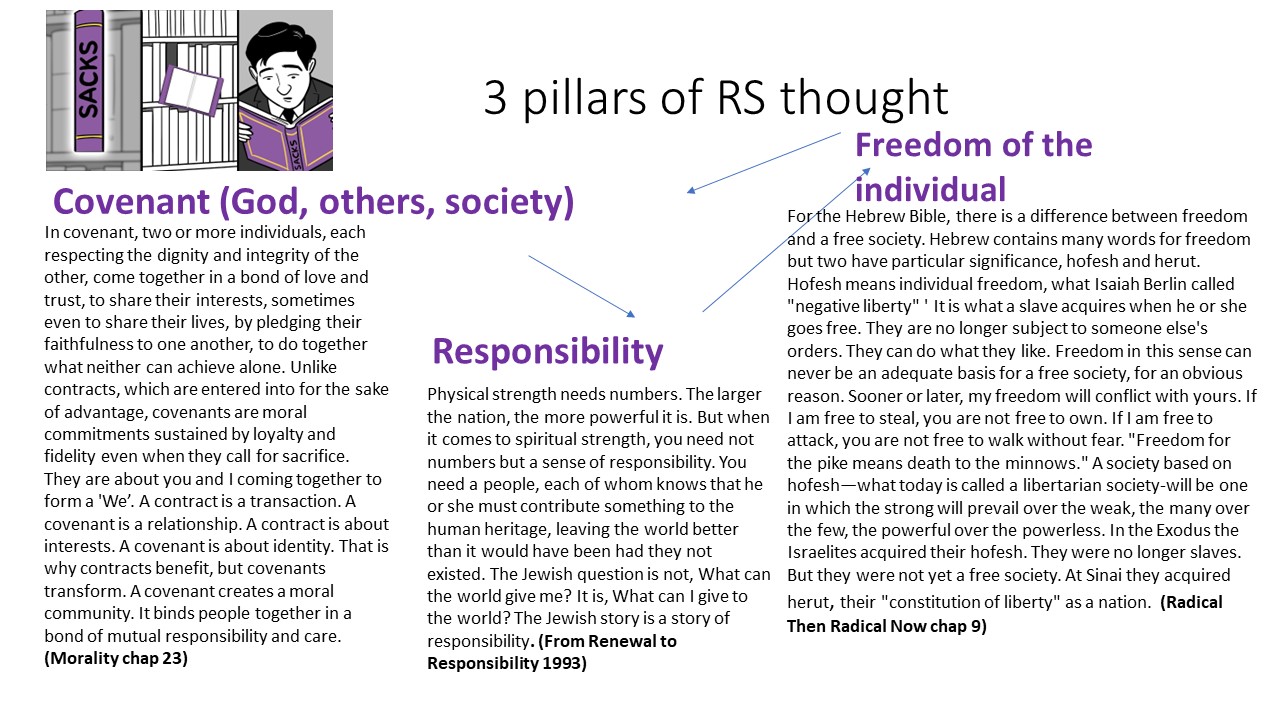
Diagram credit – Dr Tanya White
The Book of Ruth: A Testament to Kindness and Redemption
The Book of Ruth, read during Shavuot, offers profound insights into this journey. Known as the Book of Kindness, Ruth’s story is a testament to loyalty, love, and redemption. Her unwavering commitment to Naomi and her embrace of a new faith and people exemplify the values we seek to cultivate. By studying Ruth’s story, we are reminded of the power of kindness and the potential for transformation through compassion and integrity. Ruth’s journey from Moab to Bethlehem symbolises the broader journey we all undertake—from estrangement to belonging, from loss to redemption.
Ruth’s story also highlights the importance of inclusion and the transformative power of love and loyalty. Her willingness to leave her homeland and adopt a new way of life for the sake of her mother-in-law is a powerful example of selflessness and devotion. This narrative encourages us to consider how we can extend kindness and support to those around us, fostering a sense of community and shared purpose.
Further reading: https://www.upgradingesg.com/the-book-of-ruth-timeless-lessons-for-today
Reflecting on Our Collective Journey
As we celebrate Shavuot, let us reflect on our past, understand our present, and envision a future rooted in the democratisation of knowledge, guided by the values of kindness and justice. This journey from Sinai to today is ongoing, and it is up to us to shape the path forward with wisdom, courage, and compassion.
The democratization of knowledge is not just a historical milestone but a continuous process that requires vigilance and commitment. In a world where information is more accessible than ever, we must ensure that this knowledge serves the greater good. By fostering a learning and critical thinking culture, we can empower individuals to make informed decisions and contribute positively to society.
Through this spirit, we see a renaissance of scholarship in the Books of Tanach in Israel. These teachings, with profound political, emotional, and social impact, offer a glimpse of hope for a better future.
Conclusion: A Call to Action
Shavuot invites us to renew our commitment to learning and growth. It challenges us to consider the impact of our actions and the kind of world we want to build. By embracing the values of the Torah and the lessons from the Book of Ruth, we can work towards a future that honours the principles of justice, compassion, and inclusivity.
Let us use this Shavuot to deepen our understanding, strengthen our communities, and reaffirm our dedication to the timeless values that guide us. As we journey together, let us remember that the democratization of knowledge is a powerful tool for change, and with it, we can create a more just and compassionate world for all.
Cover image generated by AI
Related Posts