She came to Israel despite the fear. Then the sirens came.
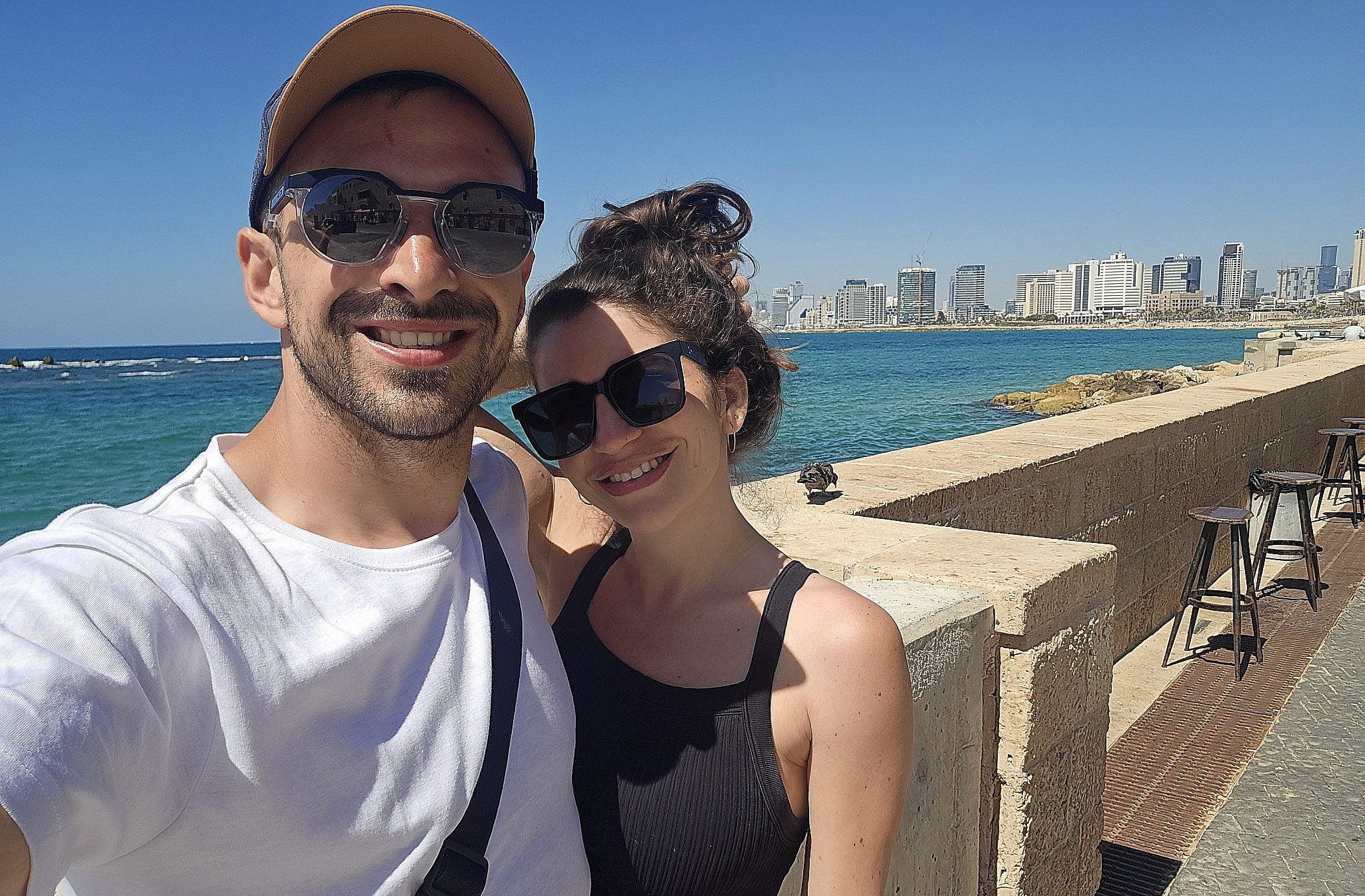
The first thing Annie De Bruyn noticed about Israel was not the tension. It was the way people kept returning to life.
When my girlfriend left Los Angeles and arrived in Israel in late April with no return ticket, many people around her could not understand why. For them, Israel only existed through a screen: alerts, protests, war footage, and certainty from people who had never set foot here.
That distance matters. Pew Research Center found in April that 60% of American adults hold an unfavorable view of Israel, up from 53% last year. Among younger Americans, roughly three-quarters of adults under 30 view Israel unfavorably. For Annie, those numbers became the background noise to what was meant to be an exciting new beginning.
“When 99% of people you tell immediately ask, ‘What are his views on Palestine?’ ‘Is he a Zionist?’ it’s jarring,” Annie told me. “If he were from any other country, he would never be faced with this kind of blind judgment.”
I was that “he” – an Israeli, a Jew, and apparently, a political litmus test.
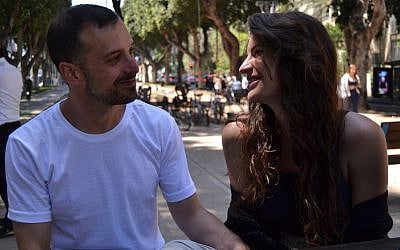
Still, Annie came. Not because she dismissed the fear, but because she did not want fear to do all her thinking for her.
“I wanted to see for myself,” she said.
For much of her first month, what she saw was quieter, warmer, and more ordinary than she had been led to believe.
“A majority of my time here has been peaceful,” Annie said. “What has surprised me most is how quickly the rhythm of everyday life becomes contagious. People are out enjoying their day, meeting friends, gathering in parks, walking with their families, and simply living.”
Jerusalem upended some of her assumptions almost immediately. She had expected heaviness. What she did not expect was beauty.
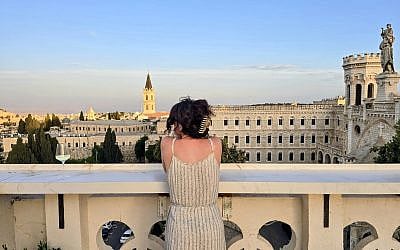
“One of my favorite things about Jerusalem has been its beauty,” she said. “The views of the city, the way greenery is woven between the limestone buildings, and the incredible architectural details have captivated me from the moment I arrived.”
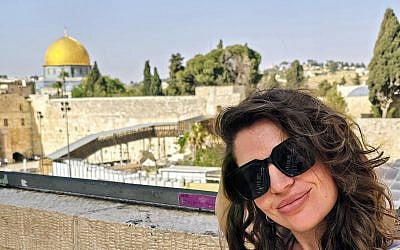
She felt the city’s layers: the history that does not feel sealed off in the past, the religious atmosphere that made her more aware of how she dressed, and the contrast with Tel Aviv’s freedom. Above all, she noticed how normal life felt. She walked alone, sat in cafés, heard English in unexpected places, and watched people build lives here.
“For much of my first month, life felt so normal that I occasionally found myself forgetting I was in a region experiencing conflict,” she said.
Then, on the very first morning in our new apartment, the sirens came.
We woke to an emergency alert on our phones. Moments later, the sound rose over Jerusalem for the first time in months. To Israelis, there is a terrible familiarity to that sound. To Annie, it was entirely new.
“To put it simply, it was unsettling,” she said. “The sirens carry a weight that is difficult to describe until you hear them yourself.”
Then came the distant vibrations of interceptions.
“It was a sensation unlike anything I had experienced before,” she said. “Each time they hit, I was shaken and just wanted to be held. It felt heavier somehow, and abrasive, as though the atmosphere itself had shifted.”
The warnings she had heard from abroad were no longer theoretical. They had a sound, weight, and moved through the walls.
But when she later spoke about that morning, the siren was not the center of the story. The care was.
“I was incredibly grateful not to be alone,” she said. “Toby calmly explained what was happening and provided the reassurance I needed. Thankfully, it was a brief event, and life resumed very quickly afterward.”
That same day, she went to the market. When a shopkeeper learned that Annie had just experienced her first siren, she did not brush it off or tell her to get used to it. She asked how she was doing. She understood that a first siren is not just a sound, but an initiation into something difficult.
“What stood out to me most wasn’t the siren itself, but what happened shortly afterward,” Annie said. “I was met with genuine care and concern.”
That has become the deeper story of Annie’s time here so far: not the absence of danger, but the presence of people.
“I’ve experienced that same kindness repeatedly,” she said. “People have welcomed me, helped me, answered my questions, and shared pieces of their lives with me. The resilience of this community continues to inspire me. Not because people ignore difficult realities, but because they continue choosing life in the presence of them.”
Another business owner told her, “Once you come here, you keep coming back.”
She understands that now. To her surprise, one of the hardest parts of being here has not been the war, but the possibility that she may leave soon.
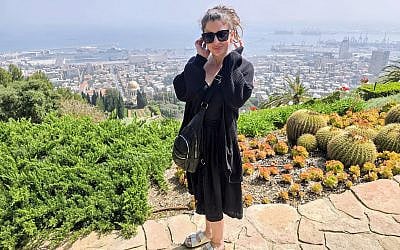
“The possibility that I may have to leave feels far more difficult to think about than staying,” she said. “Even knowing the complexities of this place, I haven’t found myself wanting to leave.”
None of this makes Israel simple. It does not erase the conflict, grief, fear, or moral questions that shape life here. But it does challenge the idea that a place can be understood only through headlines, slogans, or the certainty of distance and fear.
“One of the most interesting parts of this experience has been recognizing the gap that can sometimes exist between how a place is portrayed from afar and what it feels like to actually be there,” Annie said.
The sirens were frightening. But what stayed with her was the hand that held hers, the shopkeeper who asked if she was okay, the strangers who helped, and the people who kept choosing life.
“If there is anything I can offer from my time here,” she said, “it is an encouragement to stay curious. To be willing to listen. To hold compassion for people whose experiences may differ from our own.”