

Shoftim: Tzedek
Devarim 16:18: Judges and enforcers you shall give to yourself in all of your doors, i.e., cities that Hashem your Lord gives to you and your tribes. And they will judge the nation a right judgment.
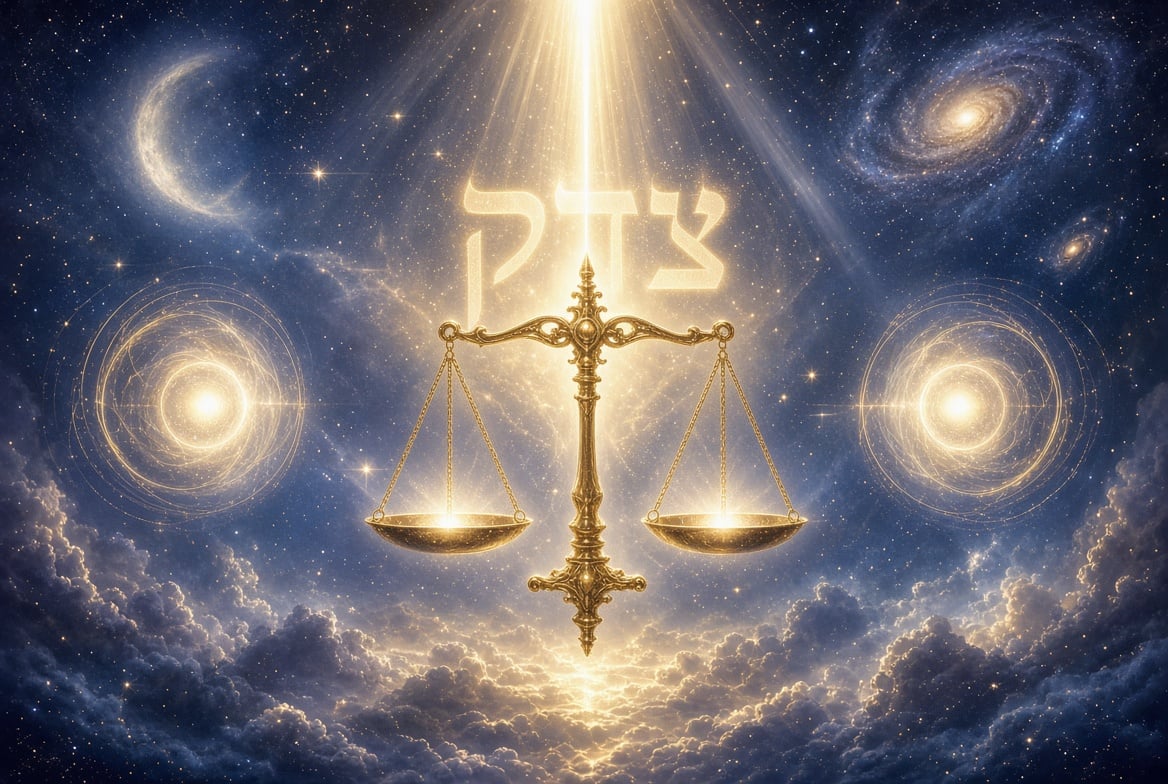
The word Tzedek is mentioned a lot in this week’s Parshah. This word is the root of the word Tzaddik, which refers to a righteous person. The next Pesukim state that a judge should not take any bribes: “For the bribe blinds the eyes of the wise… Tzedek Tzedek Tirdof, righteous righteousness you shall pursue…” There is a lot in this word, since there is an entire world that depends on it.
The word itself describes the first letter of the word, Tzadi or Tzadik. In Lashon Kodesh, the word Tzad means ‘side,’ meaning that there are two sides to a coin and we choose to take a certain position, a specific side. Which side do we veer to? The side of righteousness, rather than the ‘other side.’ We see this word come up as well in other places, like (Vayikra 19:15) “B’Tzedek Tishpot Amisecha, with righteousness you shall judge your friend.” (Vayikra 19:36) “Moznei Tzedek, Avnei Tzedek, right scales and right stones (for weighing).” There are two ways to measure and judge; we should always choose to side with Tzedek.
We are familiar with the Pesukim, “Hashem Tze’va’os Imanu… Hashem Tze’va’os Ashrei…” The word Tze’va’os (צבאות) is from the same word as צבא, army. When an army comes upon a nation they must come with a righteous intent; even if their actions will be to kill and conquer, they must initiate their battle from a source of righteousness. And that is why the word itself speaks of their intention, צ-באת Tzedek Ba, Comes with righteousness. Hashem too, as he sends His army to us, like the legions of Malachim, Galaxies, Sun, Moon, and stars, He sends them to us with righteousness. And that is why they are called צבא השמים, the army of the heavens.
We have two eyes to see. As some may know, the eyes are the windows to the soul. This isn’t simply a saying of the elders; they actually tell an entire story. One who recognizes how their own eyes look when they are mad or sad will very easily be able to tell the emotions of others as they are feeling sad or mad. If we know how our eyes gleam as we are happy and in love, we will start reading the eyes of others as they too are in this state. Each emotion is intricately detailed in their own unique squint or eye setting.
As a kid I used to wonder about the eyes, especially since they are on the sides of the head but somehow they see straight. I would play around, closing my right eye and seeing how wide just my left eye can see, squinting, reading my own eyes in different situations… it was all interesting, but it didn’t give me much information until I started using my eyes for their true purpose.
As mentioned above, the judge should not take bribes since it blinds their eyes. We know it to be factual in the sense that the judge can no longer see clearly and judge properly. It would be awesome to see if a judge was actually physically blinded, but our natural interpretation of this Pasuk is that our judgment is blinded and that the judge can no longer see good or bad in their court. It may be that this is why the next Pasuk states, Tzedek Tzedek Tirdof, stating this word twice to make sure that we keep both of our eyes, both sides of our head, clear and righteous.
As we see with Korach (Rashi, Bamidbar 16:7) that his eye distorted his vision. Our vision is meant to see the past and future. We use our intuition to learn from the past and plan for the future, but if we entertain silly ideas we will start seeing through a wrong lens and there goes our time. We may end up seeing totally distorted images and creating false dreams that we never truly wish and want.
Think about it, there are times that we are dead-set in our ways and we can only think about one thing and one thing only. I see it with kids who are stuck playing a certain video game; all they can think of when they want something in their life is related to this particular thing. Adults as well, we forge certain beliefs in our minds and think that the only way forward is if we take revenge on that one, buy that investment, achieve that dream… but in truth their vision is narrow like in a tunnel; all they see before their inner eye is their focal point and nothing else.
For this reason it is important to get to know our eyes. What are we meant to be looking at and what are they meant to be used for? We all know the story of the Chozeh of Lublin who covered his eyes for many years because he only wanted to see what was pure and holy, and for this dedication he earned to see far beyond his own parameters and peered through the entire world and beyond this world as well. A Bachur heard of what the Chozeh did and decided that he too wanted to see far beyond his limited space, so he covered his eyes with a handkerchief. In less than a year this Bachur was brought to the Chozeh asking for his help since he became blind.
He asked the Chozeh of Lublin, “I did the same thing you did, why then was I punished with blindness?!” The Chozeh replied, “Those who want to see, will not, but those who don’t, will.” The eyes we have on the sides of our heads are simply the physical machinery for “seeing.” Yes, just as we must take care of our physical body we must take care of them as well, but just as we must use our body to serve our soul, we must use our seeing power to see through our soul. Our souls are like a thread of light lowered from the heavens directly into our bodies; the lower tip of this thread enters our bodies and gives it life. “Just see how the body cannot do anything without it (Niddah 31a).”
Our souls can see without our bodies, and all we need to do is raise ourselves beyond the body and start seeing from the soul’s eye. Korach’s ‘eye’ fooled him, not his ‘eyes.’ His inner eye was blinded by a certain belief; he figured that his life was meant to be lived in a certain way in order to achieve something great. Sadly he was mistaken. The judges too have to be able to see correctly through the lens of righteousness, and sadly when they mix earthly affairs into their soul’s desire they become blinded to the truth.
Tzedek is the mechanism to rise higher. We constantly say that “All we do should be done L’shem Shamayim” (Mishnah Avos 2:12). In order to move our way upward to Shamayim, the heavens, we must always look for righteousness. This is how we become Tzaddikim. A Tzaddik, like the Chozeh and the like, are people who are constantly looking to do what is right and just. They don’t get lost in the desires of this fake world. Their eye is set to see heaven and they see it in every grain of sand. Each person, innocent or guilty, has a higher soul that comes from a place of Tz’va Hashamayim. We are all from the side of goodness, the side of Hashem, and what we need in our life is some more Tzaddik and Tzedek! As the Pasuk in Tehillim 145:17: “Hashem is Tzaddik in all of His ways:” it is clear that this is our goal in life. Be it in any situation we may find ourselves in, if we use Tzedek in our lives we will surely succeed!
Good Shabbos
Duvi Lemmer
LemmerHypnotherapy.com