Shoulder-to-Shoulder with Israel’s Creatives
Boycotts will not heal Gaza; they will only silence the very artists still brave enough to build bridges
The 43rd Jerusalem Film Festival is around the corner, and I find myself wishing, with unusual force, that I could be in Jerusalem on opening night.
There is something deeply moving about cinema under the stars at Sultan’s Pool. Something ancient and modern at once. Jerusalem, of all cities, knows how to carry contradiction. It knows grief and laughter, exile and return, silence and song. And this year, as the festival opens on July 9 with Moshe Rosenthal’s Tell Me Everything, I feel that Israeli cinema deserves not only applause, but solidarity.
Israel’s creative professionals need it. Playwrights, musicians, composers, actors, comedians, writers, filmmakers and producers have borne a heavy burden since the Hamas-led massacre of October 7 and the war that followed in Gaza. They have lived through the trauma of their own society, the anguish of hostages and bereaved families, the moral torment of war, and the growing chill of cultural isolation abroad.
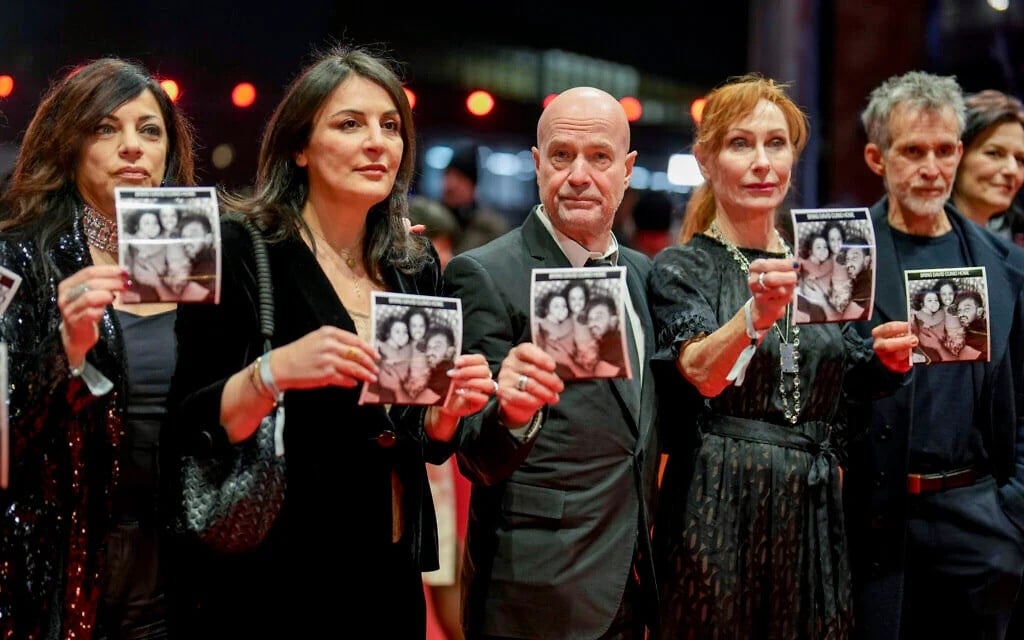
Invitations withdrawn. Exhibitions cancelled. Films avoided. Festivals nervous. Co-producers hesitant. Distributors afraid of controversy. Artists asked, implicitly or openly, to account for the actions of a state before their work may be seen.
This is not serious moral engagement. It is cultural flattening.
I understand that many people across the world are distressed by the suffering in Gaza. Any decent person should be moved by human suffering. War hardens language, and sometimes hardens hearts. The arts should be one of the few remaining places where human complexity survives. Yet the boycott of Israeli culture often does the opposite. It reduces artists to passports. It treats nationality as guilt. It mistakes silence for justice.
The irony is almost unbearable, because many Israeli creatives are among the fiercest critics of their own government. Israeli cinema has never been propaganda cinema in the crude sense its enemies imagine. It has often been restless, self-interrogating, morally uncomfortable and unusually brave. It has looked at war, trauma, family, memory, grief, faith, minorities, soldiers, Palestinians, and the fault lines of Israeli society with an honesty that many larger countries would struggle to tolerate.
That is why the campaign to isolate Israeli artists is not only unfair. It is unintelligent.
It punishes the people most likely to ask difficult questions. It weakens the spaces where Israelis and Palestinians may still meet as human beings rather than slogans. It makes the world smaller at the very moment we need wider rooms.
For me, this is also personal. One of the figures who first fired my curiosity about Israel’s creative life was Renen Schorr, the legendary founder of Jerusalem’s Sam Spiegel Film and Television School. I never knew him personally, but I admired him from afar. He understood that storytelling is not decoration. It is infrastructure. A nation that cannot tell its own stories, in all their pain and beauty, becomes dependent on the stories others tell about it.
Schorr founded Sam Spiegel in 1989, when Israeli cinema was still searching for its global voice. He helped build an institution that taught Israeli filmmakers to be local without becoming narrow, and universal without becoming rootless. His famous instinct – that the more Israeli a film is, the more universal it can become – remains one of the great principles of serious cultural work.
How fitting, then, that the 43rd Jerusalem Film Festival opens just two days after what would have been his July 7 birth anniversary. Renen Schorr is no longer with us, but the creative house he helped build is alive, stubborn, generous and necessary.
Sam Spiegel has again been ranked by The Hollywood Reporter among the world’s 15 leading international film schools. That alone would be remarkable for a small country under immense pressure. But the more important detail is this: Sam Spiegel continues to run a program for Palestinians and Arabic-speaking students, now in its fifth year, making it one of the rare institutions in the region where Jewish, Muslim and Christian students – Israeli and Palestinian – study, live and create side by side.
Let us pause there.
At a time when much of the world is shouting about separation, this Israeli film school is practicing proximity. At a time when boycott activists claim that culture must be severed from Israel, Sam Spiegel is using culture to create shared space. At a time when people insist that dialogue is impossible, students are learning to frame shots, develop scripts, edit scenes and listen across wounded identities.
That is not public relations. That is civilization.
And it is precisely why cultural boycotts are so destructive. They do not merely target official institutions. They wound fragile ecosystems of trust. They frighten young artists. They discourage collaboration. They deprive Palestinian and Arabic-speaking students of precisely the kinds of shared artistic platforms that should be protected. They tell Israeli creatives that no matter how humane, critical, dissident or bridge-building their work may be, they remain unacceptable.
What message does that send? Not “change policy.” Not “deepen dialogue.” Not “protect human dignity.” The message becomes: disappear.
Cinema should not be asked to do the work of diplomacy, but it should never be turned into a battlefield where artists are punished for existing. An artist is not an embassy. A filmmaker is not a foreign ministry. A composer is not a cabinet vote. A comedian is not a military briefing. An author is not a government communique.
Art is where countries argue with themselves.
This is why the case of Nadav Lapid has troubled so many serious people in the global film world. Lapid is no government mouthpiece. He is known internationally as one of Israel’s sharpest cinematic critics. Yet he was pressured out of participation in a French festival because his film received partial support from the Israel Film Fund. The logic is circular and chilling: if Israeli public funding supports critical art, the funding becomes proof of contamination; if the state threatens critical art, the artist is still treated as contaminated by the state.
There is no escape from such reasoning. That is why it fails intellectually and morally.
The same problem now haunts the wider Israeli film and television industry. Before October 7, Israeli creativity travelled with astonishing ease for a country of its size. Fauda, Shtisel, Tehran, In Treatment, Homeland and many other adaptations or exports showed the world that Hebrew-language, locally rooted storytelling could speak globally. Israeli television and film punched far above their weight because the stories were intimate, urgent and human.
Now there is caution. Fear. Quiet avoidance. The market has become nervous. International partners worry about backlash. Festivals worry about protests. Cinemas worry about disruption. The result is not moral clarity, but cultural shrinkage.
And yet Israel’s creatives continue.
They write. They film. They compose. They rehearse. They perform. They argue. They mourn. They laugh, sometimes because laughter itself is resistance. They turn trauma into testimony, confusion into drama, grief into music, memory into form.
This, too, is resilience and renewal.
Not the loud kind. Not the slogan kind. The patient kind. The kind that sits in an editing room at midnight. The kind that teaches young filmmakers to keep working when the world looks away. The kind that insists that a society under pressure must not surrender its imagination.
The Jerusalem Film Festival matters this year because it is more than a festival. It is a gathering of creative courage. Opening with Tell Me Everything, a film described by its own creators as intimate, local and human, is a declaration that Israeli cinema will not wait for permission to exist. It will continue to tell stories from the particular soil of Israeli life and trust that the human heart can still recognize itself.
That is what culture does at its best. It does not erase politics, but it refuses to let politics erase people.
Standing with Israel’s creatives does not require anyone to abandon compassion for Palestinians. It does not require silence about suffering. It does not require agreement with every policy of any Israeli government. It requires something simpler and more humane: the refusal to punish artists for their nationality, and the wisdom to recognize that cultural bridges are harder to rebuild once burned.
Israel’s creative professionals are not peripheral to the country’s future. They are central to it. Cybersecurity may defend borders. Medicine may heal bodies. Agriculture may make deserts bloom. But culture protects the soul of a people. It gives language to fear, beauty to endurance, and shape to hope.
Innovating the future of Israel will not be done by technology alone. It will also be done by filmmakers, playwrights, musicians, composers, actors, comedians and authors who keep asking what it means to live, love, argue and create in this small, astonishing, wounded, brilliant country.
So, as the Jerusalem Film Festival opens, I stand shoulder-to-shoulder with Israel’s creatives.
Not because art is beyond criticism, but because art must remain open to encounter. Not because Israel’s artists speak with one voice, but because their diversity is precisely their strength. And not because boycotts are harmless gestures, but because they wound the very people still brave enough to imagine, create, and defend the possibility of a shared future.