
Shouldering the weight of life in Israel
On our recent trip to America, I found myself trying to describe to family and friends some of our daily life experiences in Israel. The kind they won’t likely read about in the news or see on TV, but are curious to understand.
The news covers the major stories. The fighting on seven fronts, the hostages, the losses of soldiers, the wounded, those displaced from their homes, the infighting and politics and of course, the recent war with Iran.
The hearts of Jews around the world have been with Israelis as we have been forced to brave the many long months since October 7th. They know about the pain, the fear, the uncertainty, the instability, the courage, the resilience and the determination. They know about the immeasurable grief of so many families who have lost loved ones, are waiting for hostages to come home or are spending countless hours sitting by the hospital beds of those injured.
But there is also a lot that is unknown. The many little aspects of life right now that are wearing people down.
First, there are all the ways in which this war is affecting the lives of families of soldiers. They are carrying a lion’s share of the burden. The constant worry of parents, siblings and spouses. The tension and distance the gap in experiences is creating in marriages. The kids who go weeks without a hug from a parent who is serving. The impact on family planning. The financial implications of months away from work. The countless wives (and some husbands) managing households alone while juggling a whole new set of responsibilities. And a dating scene which has been completely upended as tens of thousands of young people’s lives have been interrupted, bringing many blossoming relationships to a grinding halt. These are the challenges even in the best of cases, when soldiers come back physically and mentally healthy.
Then there are the sorts of things that all Israelis contend with in one way or another. The kind that pale in comparison to the enormity of the situations described above, but still add up over time.
Sometimes it is the small stressful decisions we face. Should we go to the beach even if we are worried about a siren? Should we travel up North despite the unrest in Syria? Should we continue shopping at our local supermarket after another deadly terror attack right outside?
But mostly I feel it in the absurd reality of our existence in this war. In the moments that are so bizarre you just can’t believe this is real life.
Like the kids all over Israel who lay down and covered their heads next to their bonfires when a siren sounded on Lag Baomer night. Or my son running off into a miklat (public shelter) with a date 10 minutes after meeting her. Or the three cute little 10-year-old boys who responsibly banged on our front door when a siren caught them on the street. Or our neighbor who sent a picture of the tens of kids she hustled into her mamad (safe room) when a siren went off while they waited for the school bus at the stop outside her home.
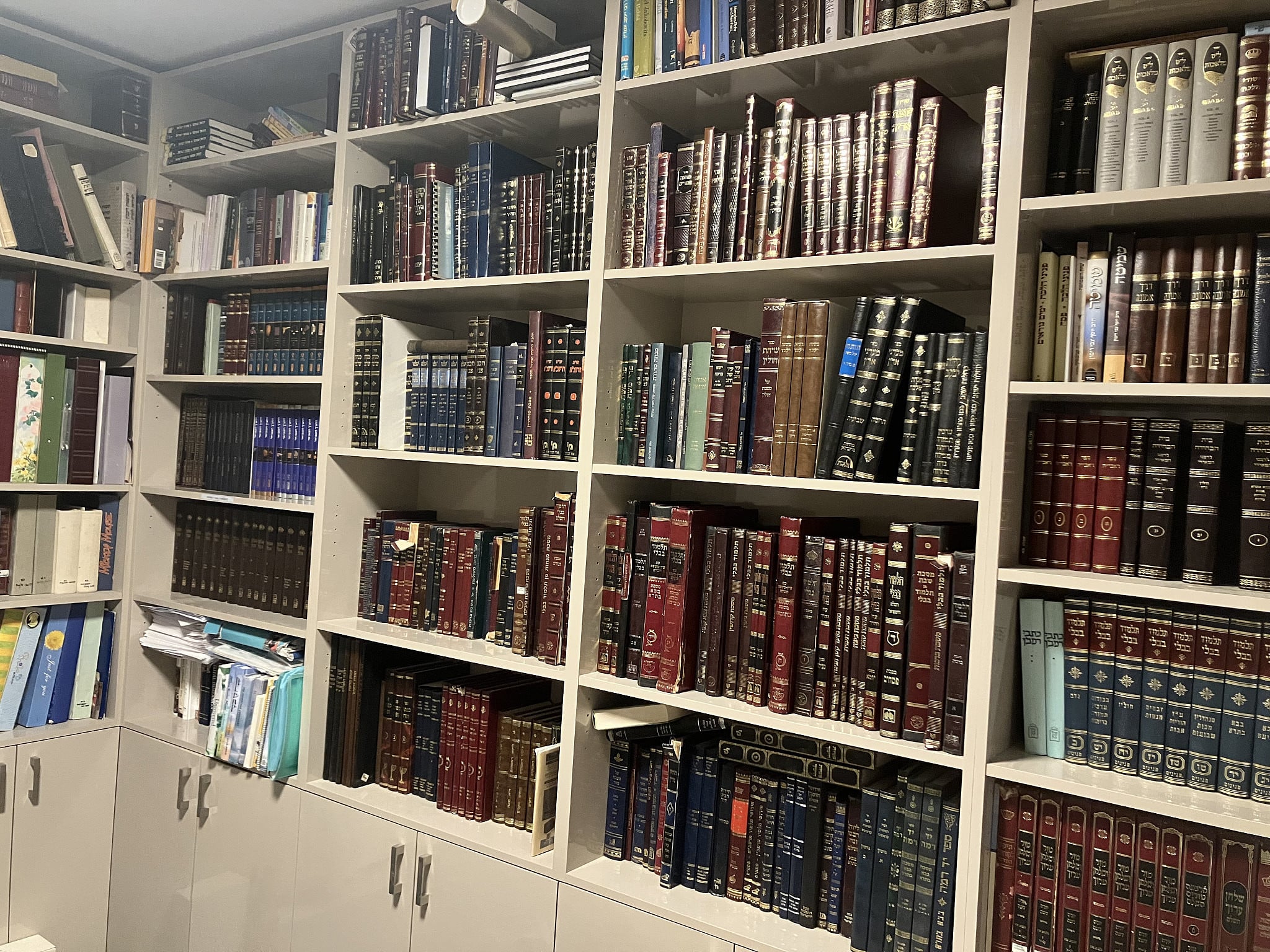
Or the assembly line we created to empty the many books from our mamad when Iran missiles began falling.
Though we were woken up at 3 a.m. on Friday morning June 13th with an “extreme alert,” it was only on Saturday night after Shabbat that we saw footage of the immense damage caused to buildings by the ballistic missiles that landed in Ramat Gan and began to understand what we were dealing with. Many of the buildings had not been directly hit but just the force and shockwaves of the missiles were enough to blow out windows and hurl furniture in apartments that were down the block.
Suddenly, I could not shake the thought of the hundreds of heavy books that line the walls of our safe room (which doubles as a study/library) falling on our heads.
Sometimes, when I share anxious thoughts with my family, I can be thought to be overreacting. This time, however, there was universal recognition and acknowledgement of the threat. The seven of us then spent the next hour passing pile after pile of books from one to another until they were all neatly stacked in the storage closet under our steps.
It was a heavy load to carry.
It was also another one of those ridiculous moments that might even be funny if it weren’t so real and scary. And we felt the fear in a part of the country that did not suffer the brunt of this war. Those who did are carrying so much more.
The ceasefire in Iran was declared on a Tuesday. We waited a few more days before deciding it was reasonable to reload our shelves. Life moves forward and we can’t live in fear forever. But as Iran continues to pop up in the news, I find myself wondering if and when we might be moving the books out again.
These types of thoughts and experiences weigh on us daily in small but significant ways. They pile up and continue to impact us long after they are over. They add volume even as they are nothing compared to the much heavier losses people have suffered.
And still, I wouldn’t trade our life here for anything. Shouldering the weight – literally, sometimes — and sharing in the burden of what it means to live in Israel these days is a privilege that is our life’s greatest blessing. It fills our days with meaning, connection and a sense of purpose. This is the land promised to us by God. It is the eternal country of the Jewish people. Living here is indeed a privilege. And with privilege, as we know, comes responsibility.
I write this on our flight back to Israel. As the plane descends I look out the window at the country below. All I can see is its beauty. These are heavy days but when we land my heart already feels lighter.
It’s good to be home.