


Smart diplomacy can make Turkey and Qatar part of the solution
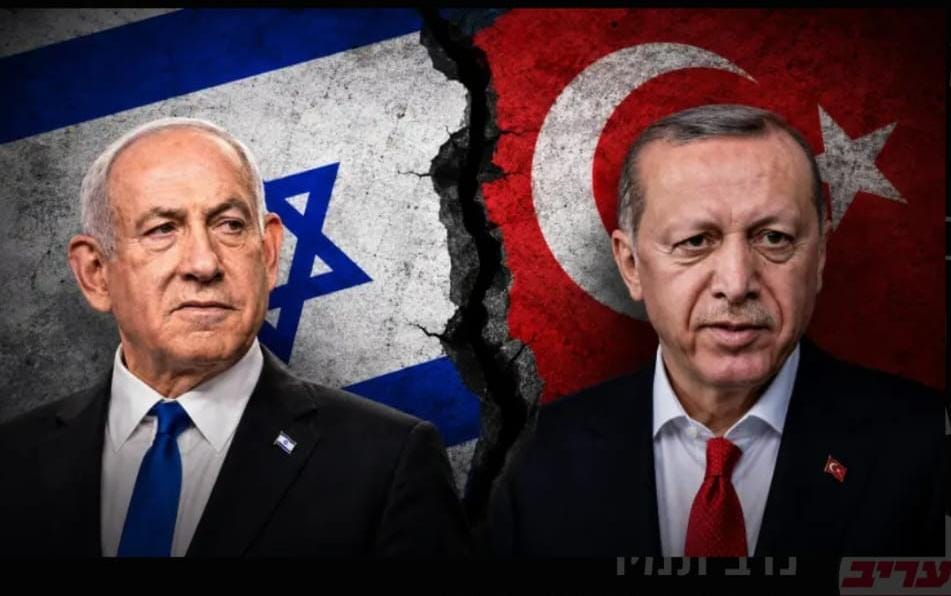
Last week, US President Trump, who maintains close relations with Turkish President Erdoğan, attended a NATO summit in Istanbul. Israelis struggle to accept the close relationship between Trump and Erdogan, refusing to understand that it goes beyond the connection between two strongmen and is also tied to US strategic interests.
Israeli discourse treats Turkey and Qatar as bitter enemies, as if they were Iran. Thus, we miss the fact that both are important allies of the US and the reasons for these alliances. On the Israeli right, they are constantly on the lookout for the next threat, and the Qatari-Turkish axis serves this purpose. In the liberal camp, many will deride Netanyahu, not only for the illegal activities of his office staff on behalf of Qatar but also for the fact that Qatar and Turkey influence American policy in the region more than he does. Thus, it happens that both sides in Israeli politics try to present Turkey and Qatar as absolutely evil.
The Israeli tendency to attribute naivety to Americans and Israeli astonishment that Americans supposedly do not understand why Qatar and Turkey are enemies stem from a one-dimensional, overly simplistic approach to diplomacy. The real role of diplomacy is to create leverage and not to engage in binary propaganda that distinguishes the countries of the world between positive and bad without any nuance.
Qatar hosts the largest American base in the region, while Turkey is a US ally within NATO, with the second-largest military in the alliance and a strategic location. The US sees both as important levers for advancing its interests in the region. True, both countries have extensive ties with Hamas leadership, but we consider it challenging to internalize the fact that without Qatar and Turkey’s influence on Hamas, we would not have been able to retrieve our hostages, and without Turkey, we would not have been able to eliminate the Iranian sphere of influence in Syria, which was also the main supply route for Hezbollah.
In the foreseeable future, as long as Islamic movements influence the countries in the region, we will need American leverage through Qatar and Turkey. Contrary to the illusion in Israel that Hamas will be disarmed by the IDF or only by the Abraham Accords countries, it will not happen without Qatari influence—we don’t need to love the Qataris and Turks, but we must know how to leverage their influence for our interests.
In many conflicts around the world, there has been success in DDR (disarmament, demilitarization, and reintegration) efforts, such as in Northern Ireland and Colombia. Trump’s 20-point plan for Gaza and peace between Israel and Lebanon will not materialize without the US leveraging the influence of Qatar and Turkey in the region.
In diplomacy, there is the term “frenemies,” which is a blend of friend and enemy, referring to countries that are not allies and even have different interests in certain areas but also share common interests. Qatar and Turkey are two such countries. Israel and Qatar have a common interest in Hamas and Hezbollah transforming from terrorist organizations into political movements (since neither will disappear completely). We share a common interest with Qatar in ensuring that Gaza, Lebanon, and Syria cease to be centers of regional instability, as this instability affects the economies of all countries in the region, including Qatar and Turkey.
A point worth remembering is that Qatar began to operate in Gaza only after an American-Israeli request, and even then, the Qataris demanded written approval to avoid being placed on the list of state sponsors of terrorism maintained by the US State Department.
In sum, effective diplomacy does not rely on just crisis management or public relations but rather on designing long-term incentive systems. In the case of Qatar and Turkey, their regional status and complex relationships with the US and the West allow them to serve as “behavior shapers” of non-state actors. When Israel chooses to exclude them from the discourse or present them only through a prism of hostility, it effectively relinquishes critical channels of influence over those very organizations it seeks to neutralize.
A more pragmatic view of Qatar and Turkey, as entities that can be harnessed rather than simply ideological rivals, could significantly expand Israel’s diplomatic toolkit and strengthen its ability to achieve stable and sustainable results over time.
Of course, as with any regional issue, resolving the conflict with the Palestinians would eliminate the government’s need to seek enemies to divert public attention from the most significant threat to our existence—a binational catastrophe, toward which Israeli right-wing governments are leading us.