
I write what I see
So Jews Are the Problem, Again
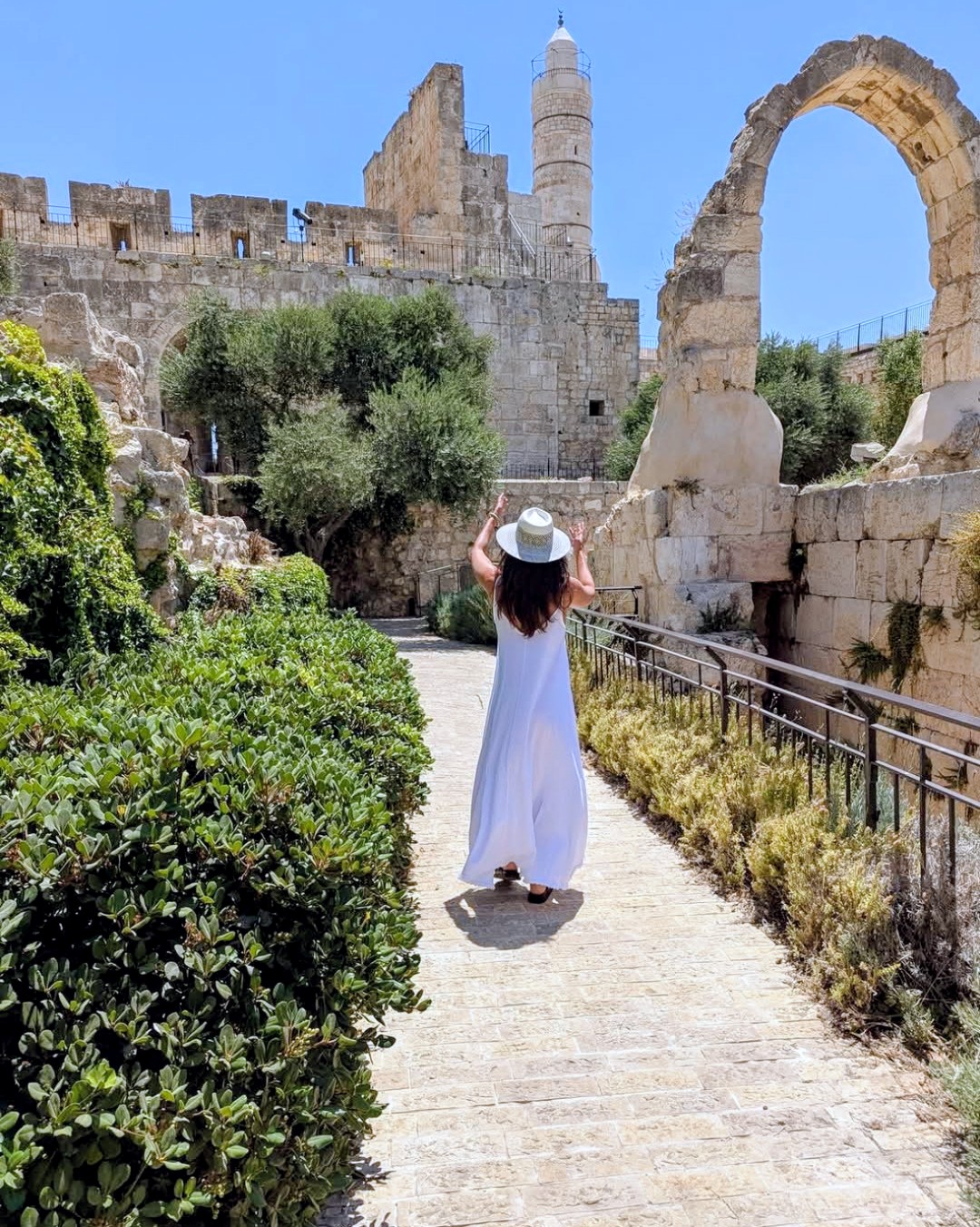
In Jerusalem, where every stone remembers us, even as the world pretends to forget (Photo Levinsky)
When I first wrote this months ago—under the title “The Day Israel Ceases to Exist”—it was an imagined scenario—a dystopian vision of what it would look like if Israel were erased not by rockets and missiles but by resolutions. Now, after the UN vote for Palestinian statehood and major Western nations rushing to recognize it, the nightmare I once sketched feels alarmingly close. If this sounds alarmist, remember: every Jewish warning once sounded alarmist—until it didn’t. What follows is the warning I wrote then. Today, it reads less like fiction and more like a mirror.
The Triumph of Erasure
Imagine they have won.
The forces that sought Israel’s destruction—academic elites, students, international courts, NGOs, the UN, UNRWA, politicians, journalists, cultural figures and celebrities who declared Israel’s self-defense a “genocide,” peace activists, and, of course, Jews against Zionism—have finally achieved their goal. The students who once screamed “from the river to the sea,” the tenured professors who called Zionism colonialism, the politicians who framed Israel as an apartheid state, and the media that rebranded terrorism as “resistance” have all emerged victorious. The erasure of Israel has become the new world order. It no longer exists.
There’s no more Israel. No more Jews in the land—so relax, damn it, just relax
This war was different, yet also the continuation of something much older. Terror had long been the backdrop—bus bombings, hijackings, café massacres—layered over centuries of occupation by empire after empire. October 7 was not simply “unbelievable”; it was earth-shattering, a culmination rather than a beginning. Weapons were used, and war was waged against Jews from the moment the first aliyot arrived. But it was also a war of ideas: false narratives, distortions of Jewish history, a decades-long campaign to sever Jewish history from its roots, to turn truth into myth and myth into truth. The result? The world’s twenty-third Arab state—PALESTINE—built atop the ashes of Jewish civilization, just as Al-Aqsa itself was built atop the ruins of the Second Temple.
For the first time in millennia, not a single Jew remains in Israel—something even Rome, Byzantium, and the Ottomans never fully managed. The Western Wall stands abandoned. Hebrew is erased from the streets. Synagogues old and new have been burned or repurposed into mosques or chicken coops. A people who’ve survived exile, persecution, pogroms, and genocide are now erased from their own homeland—not by swords or gas chambers, but by the stroke of a pen, the ink of an academic thesis, the resolution of an international body, and the collective clamor of virtue-signaling teens, and anyone who doesn’t care but just wants to be on the “right side of history” because . . . no more Zionism, no more “Zios,” no more “occupiers,” “oppressors,” or “apartheid.” No more genocide of Palestine’s indigenous people! Done.
It took about 77 years to win this war, but in truth, it had been over 3,000 years that the Jews had lingered like unwanted pests, never fully leaving their homeland. Even those in the diaspora never truly forgot their “supposed” roots.
Yet, thanks to figures like Edward Said, Noam Chomsky, and Richard Falk—and later Nadia Abu El-Haj—their theories seeped from seminar rooms into mainstream discourse. Said recast the Jewish return as “colonialism.” Chomsky gave it moral cover under the banner of anti-imperialism. Falk carried it into the halls of the UN. Abu El-Haj went further still, insisting that Israeli archaeology was nothing more than a colonial instrument to invent legitimacy, while Palestinian finds were dismissed, ignored, or destroyed. Meanwhile, the world fawned over the poetry of Mahmoud Darwish, rarely pausing to confront what his verses actually celebrated: a Palestine purified of Jews.
When Hezbollah’s Hassan Nasrallah was killed in 2024, campus groups in the West held vigils and posted elegies—some couldn’t even spell his name. They mourned a militia chief as if he were a folk hero. It was insanity in the making.
This intellectual and cultural varnish gave cover to propaganda campaigns where horrific videos of war—many staged, many recycled—were passed off as truth. And all the while, the real images from Israel’s side were of another kind entirely: mutilated bodies, unspeakable torture, hostages rotting in tunnels. The perpetrators were not faceless strangers but people’s neighbors, classmates, even relatives—brothers, sons, grandsons—acting together in a plot to unleash murder.
Many lives were lost on the Palestinian side, and tragedy did unfold there. But those deaths were the result of a war Hamas ignited, embedding itself inside homes, schools, and hospitals, and then dragging civilians into the line of fire. Their suffering was real, but it was weaponized—paraded before cameras as proof of Israel’s supposed crimes.They didn’t seek peace; they demanded we vanish.
No one seemed to bother with another reality: the inclusion of ordinary Gazans in the October 7 onslaught. Videos showed them pouring into Israel, torturing, dragging Israelis naked and half-naked through the streets, hauled on motorbikes and trucks, their bodies flailing across gravel while mobs kicked, spat, and screamed for blood. Those images flashed briefly, then were erased—as if they had never existed. The world was not phased. The message was implicit: the victims had brought it on themselves.
They ignored the fact that Israel did not choose the war. It was dragged into it by those who glorify bloodshed and will stop only when Jews are gone.
On Palestinian television children were shown handling weapons and chanting for the death of Jews. Their schoolbooks promoted the death of Jews. Nobody was shocked, it was maddening that not one single humanitarian seemed bothered, neither were academics or the institutions that claimed to defend life. They sat in their ivory towers, cloaked in moral pretense, while excusing a culture that celebrated death.
From the moment Hamas unleashed its assault, the unspoken demand was plain: fold, evacuate, vanish. The message has been brutal and simple—reward terror, punish survival. International censure, arms embargoes, and a forensic moralism tied Israel’s hands until we were forced off the map. For years every strike had been dissected as if Israel’s purpose was to target the innocent, a scrutiny no other nation had ever endured. In the end, none of it mattered. Israel is gone. And the lesson left for the young is clear: terror wins. Whether that rule applies only when Jews are the target, or whether the world has now set the precedent for all, time will tell.
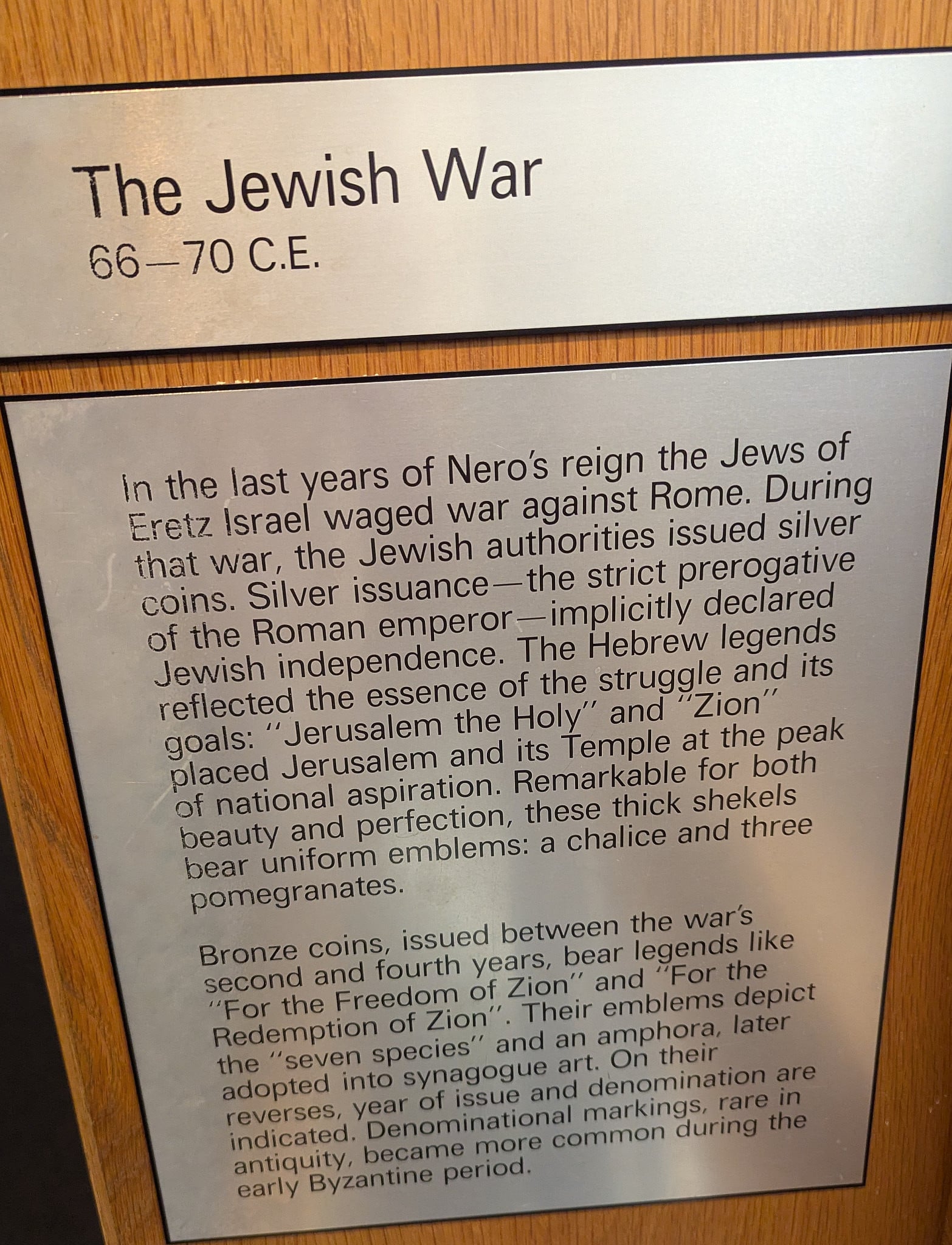
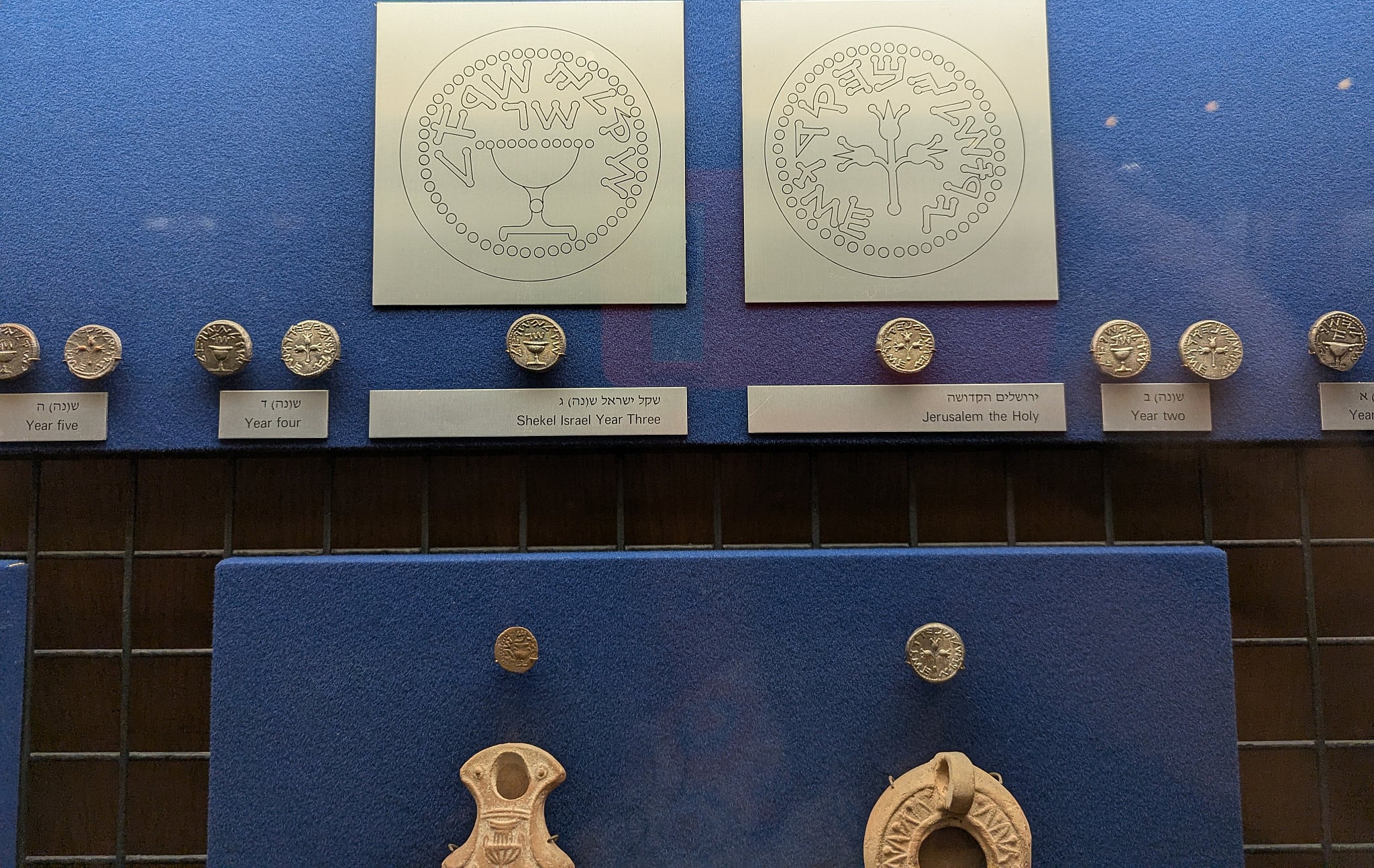
This erasure of Jewish history was all the more grotesque because the evidence has always been in plain sight: coins, pottery, cities unearthed, liturgy, writings, and documents like the Cairo Geniza. In Israeli museums, coins from the Jewish War of 66–70 CE bear Hebrew inscriptions—“Jerusalem the Holy,” “For the Freedom of Zion”—a direct assertion of independence, struck while resisting Roman siege. Centuries later, Rome answered with erasure, renaming Jerusalem Aelia Capitolina. Towns with Hebrew names were later Islamized. The irony is glaring: the very artifacts proclaiming Jewish survival mirror today’s struggle. Once again, rather than honoring survival, the world set about erasing it.
Instagram-famous Alana Hadid—the self-proclaimed daughter of a “Nakba survivor”—turned Jewish suffering into a punchline, mocking Israelis and their trauma. But, of course, that’s the Zionist narrative, isn’t it? The truth is, she was simply an ardent advocate fighting for the freedom of Palestine. She took on everyone, never discriminating. Pro-Israel activists would tell you she reveled in smearing Israel, dismissing Jewish fears of rising antisemitism, and referring to the murdered Bibas babies as “unalive” when they were returned to Israel in a casket. She blamed Israeli violence for their “unaliveness.” And her critics would tell you that this was the level of discourse they were up against—smug, privileged activists who trivialized Jewish history while cloaking themselves in the mantle of oppression, wearing it like a fashion statement. But for others, she was just a freedom fighter.
But now it’s over
Israel was not destroyed by force of arms but by something far more insidious, more like a steady corrosion of legitimacy that was staged in classrooms, courtrooms, and international halls, where a new language was coined—dressing up antisemitism as law and morality. October 7 ripped away the last facade, and from that moment the campaign to claim Israel was not only excused but it was openly celebrated, then woven into the fabric of a morality that no longer remembered history at all.
For decades, Jews clung to a certainty that statehood, once granted, was immutable. That sovereignty, once won, could not be undone. They mistook recognition for permanence, believing that law, history, and faith had anchored them beyond the reach of time or political whim. But history does not honor contracts, and permanence is an illusion. What was written in stone could be chiseled away; what was ratified in ink could be crossed out.
The terror that followed was all about erasure—the quiet, methodical unmaking of a nation. The world rationalized the terror and celebrated it. Jewish deaths were excused as necessary, as the price of resistance, because when oppression is redefined, so is murder!
What they called diplomacy was really existential isolation: Israelis barred from sports, from universities, from the cultural stage. In time even the very idea of Israel became intolerable. Hatred, once a murmur, was now doctrine—spreading as swiftly as it was absolute. And in the end, the Jews were left to ask: how many times can you be told you are the enemy before you believe it?
A New Chapter
Now they breathe. Zionism is dead. The Israeli flag is banned, Hatikvah outlawed. The Quran, revised once more, now speaks of Jerusalem with greater clarity, for at last, it is the uncontested capital of Palestine. Tisha B’Av, once a day of Jewish mourning, is reborn as Palestinian Independence Day. The old names—those of Jewish kings, prophets, and sanctuaries—are stripped away, overwritten with the names of martyrs. The transformation is not symbolic; it is systemic, woven into law, education, and media, ensuring that memory itself conforms.
The Islamization of Israel is now in full force
Palestinians, five million strong, have streamed back home—from refugee camps across the Arab world, settling throughout Palestine. Yet this land is not a blank canvas; Druze, Christians, Armenians, Assyrians, and Bedouins remain, their presence a reminder that history here has always been more crowded and contested than the slogans admit. So how do Palestinians define themselves in this evolving landscape?
Still, in the West the activists, the politicians, the academics, the celebrities, even well-meaning suburban parents bask in their victory. The Jewish state is no more. No war was declared, no treaties signed. It simply ceased to be, dissolved under the weight of boycotts, resolutions, and righteous indignation. Now they are left to revel in the void where Israel once stood even though they have yet to visit Palestine.
But will this void ever truly be enough? The architects of this destruction won’t rest. For even in the absence of Israel, the need to blame, to find a target, will remain.
Beneath the surface of victory, a subtle shift begins to take hold—an unease creeping quietly into the ranks. A victory so complete, so absolute, should bring peace. Instead, it brings something else: a quiet, lingering emptiness. The slogans that once carried the weight of purpose now flutter weakly on the walls of university campuses—Berkeley, Columbia—and the streets of London, Paris, and New York. Remnants of the battle persist: green bandanas, graffiti calling Jews “Nazis,” “garbage,” “baby killers,” and “pigs,” along with protest signs abandoned in forgotten corners. Israel may be gone, and Jews no longer walk that land, but here, in America, a quiet discomfort remains. Every time a Jew or Israeli is seen, this discomfort is magnified, hinting that the war itself never truly ended—only transformed.
Meanwhile, in Palestine, the final stages of change unfold, and even the stones aren’t spared. Mount of Olives, home to a 2,500-year-old Jewish cemetery—the oldest in the world—is razed, its tombs shattered as they once were under Jordanian rule. Over fifty thousand graves were destroyed then, used as building materials, paving stones, and even latrines. This time, the task is complete. History is rewritten; its remnants buried—just in case the dead decide to speak. Without Israel, Palestine is said to thrive; power struggles will cease, economic prosperity will soar, and harmony will reign in every corner. And look, there’s even an Ilhan Omar Street, where everyone gathers to sing “Ya Salam” and sip their perfect cups of peace. Who knew utopia was just one power shift away?
But even here, questions linger. After generations of bloodshed, martyrs, resistance, and sacrifice in the name of liberation, the people were promised justice—a paradise reborn. Yet, as the dust settles, the same leaders remain in power, the same factions fight for dominance, and the same grievances continue to fester. The Druze, the Bedouins, and other communities watch from the sidelines, hesitant and uncertain, unsure of their place in this new order. While Palestine may claim victory, can it truly deliver on its promises when its leadership is still entrenched in a battle for control, with no clear victor in sight? Can the vision of freedom and prosperity be fulfilled when old divisions deepen and new ones begin to surface? The Druze, who have coexisted with Jews and Arabs alike, feel the tremors of uncertainty, their futures hanging in the balance. The Bedouins, once sustained by Israel’s infrastructure and security, now wonder who will provide the stability they once relied on. As power struggles continue, the future remains uncertain—for all who call this land home. And as disillusionment grows, one question lingers: when the promised peace falters, who will they blame?
As Palestine strives to remake itself, erasing the remnants of its past, it forgets one vital truth: in their effort to silence history, they’ve only ensured its persistence. The graves that were destroyed, the narratives buried beneath the weight of resistance, they’re not gone. The absence of Israel doesn’t erase the Jewish story; it didn’t then and it won’t now. The more they attempt to erase us, the more deeply entrenched we become in the collective memory. While they hope the Jewish narrative will fade into the shadows, they fail to grasp the simple truth: in their hatred, in their desire to make us vanish, they only guarantee that we will never forget who we are. By trying to make us disappear, they ensure that we will always remember we’re Jews—and as long as we remember, we will never fade.
What I once imagined as a cautionary tale now reads like reality. There is a nagging quiet these days: I scroll through newspapers, I read the comments, and I see the applause for Israel’s erasure. The lies pile up, and I don’t even feel like responding. It feels like defeat—but a defeat that leaves you restless, unable to sit still.
Even back in the States, I can’t escape the reality. I kept the app on my phone that alerts me when missiles are launched at Israel. It goes off every few days. That sound follows me here, thousands of miles away. It’s a reminder that Israel lives under siege, even as the world debates whether it should live at all.
The images remain carved into memory: our hostages dragged through Gaza’s streets like cattle led to slaughter, crowds turning terror into a carnival of humiliation. Who can erase that? Who dares to compare it to Israel defending itself? Only madness could call this justice.
Once again, a catastrophic betrayal unfolds—repeated in the language of law and legitimacy. Once again, the world nods along, while Jews are left to fight for their survival.
Related Topics
Related Posts