

Mathematics Teaching Professor, Author
Sofia Synagogue, Bulgaria: the largest synagogue in Southeastern Europe
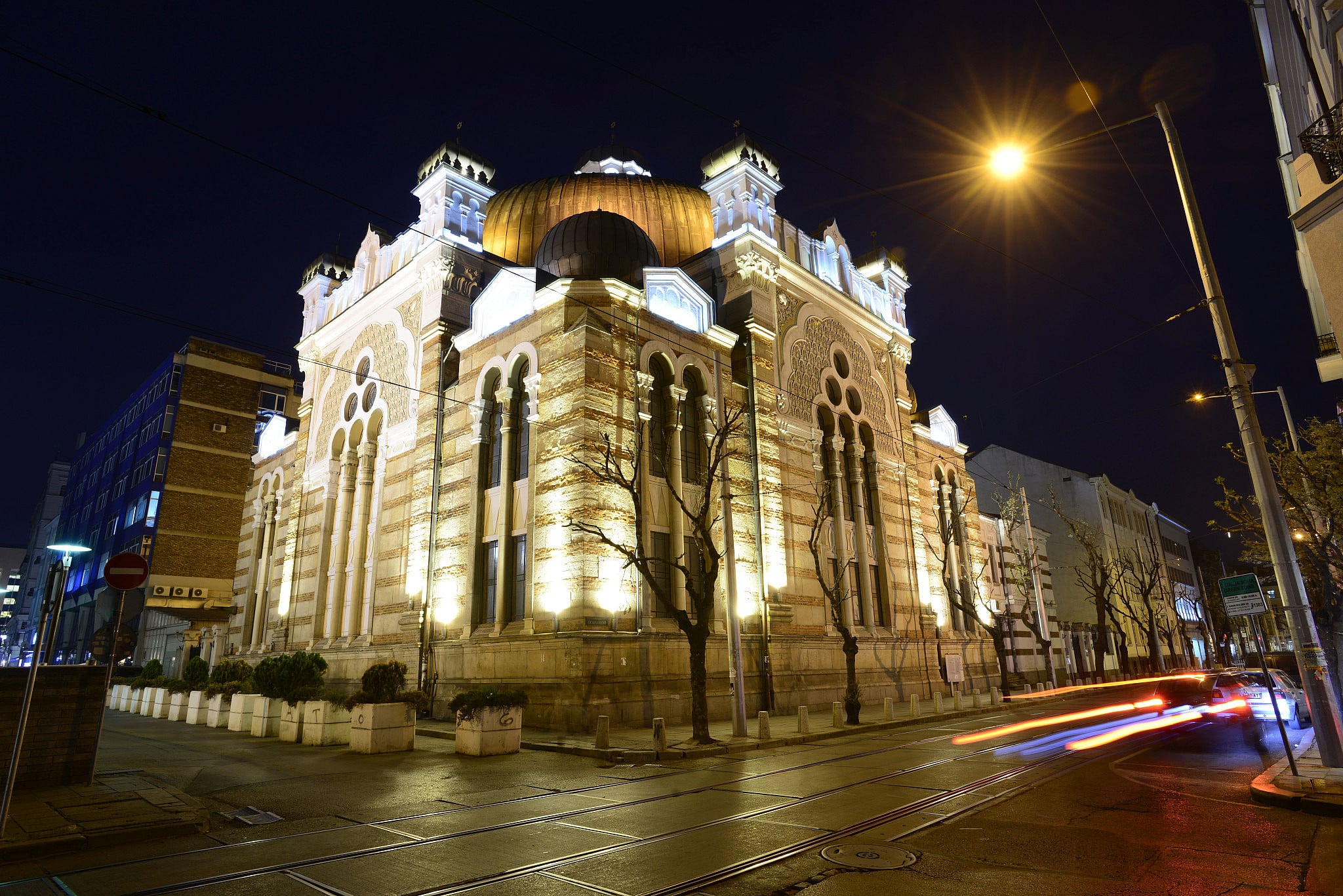
Sofia Synagogue (Source: Solomon Frances)
The Sofia Synagogue is a 117-year-old Orthodox Jewish synagogue and home to the Jewish religious community in Sofia, Bulgaria. Completed in 1909, it is the largest synagogue in Southeastern Europe, the third largest Sephardic synagogue in Europe, and one of the two active synagogues remaining in Bulgaria.
I would like to thank the esteemed Julia Gavazova, Julia Georgieva and Ester Zevulun for their support and guidance.
Synagogue
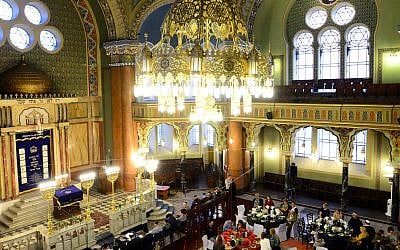
The Sofia Synagogue is one of Bulgaria’s most important architectural, cultural, and religious landmarks. Located in the heart of Sofia, it remains an active place of worship while also serving as a symbol of the country’s rich Jewish heritage. Designed by Austrian architect Friedrich Grünanger, the synagogue combines Moorish Revival and Venetian architectural styles, creating a distinctive and elegant appearance. The building occupies 659 square meters with a total built-up area of approximately 1,000 square meters. Its centerpiece is a magnificent octagonal prayer hall crowned by a dome measuring about 20 meters in diameter and reaching a height of 31 meters. The sanctuary is renowned for its exceptional acoustics and can accommodate approximately 1,170 worshippers.
The synagogue’s interior is richly decorated with colorful Venetian mosaics, Carrara marble columns, intricate stone carvings, and ornamental wall details. At the eastern end of the prayer hall stands the Aron HaKodesh, placed on a raised white marble platform and enclosed by beautifully crafted railings. The seating is made of durable Slavonian oak, and in accordance with Jewish tradition, the decorations avoid depicting human figures. Instead, the ceiling is artistically painted to represent the heavens. The building also featured an advanced underfloor heating system for its time, with warm air circulating beneath the floor and rising through metal grilles in the aisles, while two towers on the roof served as chimneys for the heating system.
A distinctive aspect of the synagogue’s design is the repeated use of the number eight, a sacred symbol in Judaism representing renewal, covenant, and divine blessing. Architect Grünanger incorporated this symbolism throughout the building, from the octagonal prayer hall and dome to the arrangement of eight lamps on the central chandelier and the octagonal stars and eight-petaled floral patterns in the Venetian mosaic floor. The number eight also recalls important Jewish traditions, including the brit milah (circumcision) performed on the eighth day after birth and the eight day celebration of Hanukkah, commemorating the miracle of the Temple’s rededication.
Through its harmonious architecture, symbolic decorations, and artistic craftsmanship, the Sofia Synagogue stands as a remarkable testament to Jewish history, faith, and architectural excellence in Bulgaria.
Religious Events
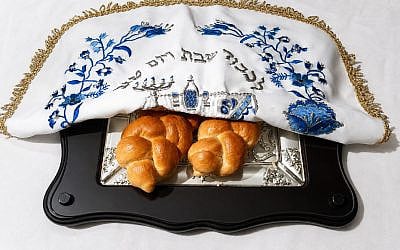
The Sofia Synagogue is the spiritual center of Sofia’s Jewish community, where regular worship services, religious festivals, and life cycle events are held. One of the most important traditions observed is Shabbat, the Jewish day of rest, which begins before sunset on Friday and ends after sunset on Saturday. During this time, worshippers gather for Kabbalat Shabbat on Friday evening, read and study the Torah on Saturday morning, and conclude the Sabbath with the Havdalah ceremony on Saturday evening.
The synagogue also hosts important life events such as weddings, Bar and Bat Mitzvahs and Brit Milah, while celebrating major Jewish holidays, including Yom Kippur and Purim. Through these religious practices, the Sofia Synagogue continues to preserve Jewish faith, traditions, and community life in Bulgaria.
Community Outreach
The Sofia Synagogue also provides support for Jewish refugees arriving in Bulgaria by offering assistance with religious needs, including access to kosher food, Shabbat observance, and guidance from rabbis. In addition, the synagogue supplies a variety of kosher products, including kosher wine and grape juice, honey, white and yellow cheese, whole chicken and chicken cuts, beef, and matzah, helping members of the community maintain their religious dietary practices.
The Niche
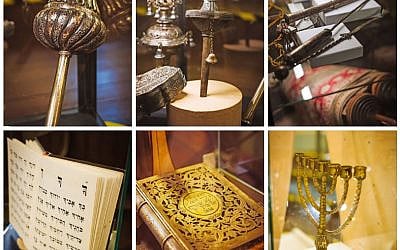
In February, the synagogue inaugurated The Niche, a new exhibition dedicated to memory, continuity, and the preservation of Jewish cultural heritage. Through selected artifacts and personal stories, it highlights the spirituality, history, and lasting contribution of Bulgarian Jews. More than an exhibition, The Niche is a space where memory connects generations and preserves the community’s rich cultural legacy.
The Central Sofia Synagogue, one of Sofia’s architectural landmarks and the largest synagogue in the Balkans, now offers an interactive audio guide that introduces visitors to the rich heritage of Bulgarian Jews in a modern and engaging way.
Featuring 18 audio stories in seven languages, Bulgarian, English, Hebrew, Spanish, French, German and Italian, the guide explores the synagogue’s history, architecture, and spiritual life through accessible and engaging narratives for both local and international visitors.
Historical Backgrounds
Jews are believed to have first settled in present-day Bulgaria after the Roman conquest in 46 CE. They arrived in Sofia during the early centuries of Roman rule, and by the 9th century an established Jewish community already existed. In 811, the community grew when Khan Krum brought Jewish captives to the city following his campaign in Thessaly.
The earliest Jewish residents were mainly Romaniote (Byzantine) Jews, later joined by Ashkenazi Jews fleeing persecution in Central Europe during the late 14th century. After the expulsion of the Jews from Spain in 1492, thousands of Sephardic Jews settled in the Bulgarian lands of the Ottoman Empire, particularly in Sofia, Plovdiv, and other major trading centers, where they became the dominant Jewish community and shaped the region’s religious and cultural life for centuries.
In the late 19th century, economic decline in Bulgaria’s smaller towns prompted many Jews to move to Sofia, where they established the working-class neighborhood of Yuch Bunar. By the early 20th century, Sofia’s Jewish community was predominantly Sephardic, with Ladino as its main language, and had become an important part of the capital’s growing urban life.
Plans for the Central Sofia Synagogue began in 1903, and construction officially started on November 13, 1905.
Which brings us to 1909.
In 1909, Bulgaria was a newly independent, rapidly modernizing nation flush with national pride. Having formally secured international recognition of its independence from the Ottoman Empire in April of that year, the young state transitioned from an autonomous principality to a sovereign Tsardom under Tsar Ferdinand I.
In 1909, Sofia was transforming from an overgrown Ottoman provincial town into a vibrant European capital. The city was modernizing with new electric trams, a bustling population, and newly laid yellow cobblestones.
It was in this year, 1909, the Central Sofia Synagogue was officially inaugurated as one of the most impressive Jewish architectural landmarks in Southeastern Europe. The dedication ceremony took place on September 9, 1909, in the presence of King Ferdinand I of Bulgaria, Queen Eleonore, Prime Minister Aleksandar Malinov, Metropolitan Partenii, government officials, and diplomatic representatives.
The opening marked a major achievement for Sofia’s Jewish community. Designed as a grand center of religious and communal life, the synagogue remains one of the largest synagogues in Europe and a significant symbol of Bulgaria’s Jewish heritage.
During the Second World War, Sofia was heavily bombed, and the Central Sofia Synagogue was partially damaged. On April 13, 1944, a bomb struck the northeastern corner of the building but did not explode. The impact damaged the structure and shattered the synagogue’s beautiful stained-glass windows. In memory of this event, artist Prof. Gredi Assa created a new stained-glass window above the balcony.
The synagogue remained closed only during 1943 to 1944, when many Sofia Jews forcibly expelled from Sofia and interned in towns across the country. The bombing also damaged the balcony and several columns in the main hall, while the community’s valuable library was destroyed.
By the end of WWII, nearly 50,000 Jews from Bulgaria’s pre-war borders were saved, while more than 11,000 Jews from Bulgarian-administered territories were murdered.
Then in 1956, the synagogue was declared a cultural monument of national importance. During the socialist period, an attempt was made in 1982 to convert the building into a concert hall, but the synagogue’s leaders successfully defended its religious function, allowing it to remain a place of worship and heritage.
The Central Sofia Synagogue stands as a remarkable symbol of Jewish heritage, resilience, and cultural continuity in Bulgaria. From its opening in 1909 to the challenges of war and political change, the synagogue has remained a place of worship, memory, and community life.
Today, it serves not only as an active religious center but also as a cultural landmark that preserves the history, traditions, and contributions of Bulgarian Jews. Through its architecture, museum exhibitions, and educational initiatives, the synagogue continues to connect past generations with the present and future, keeping alive the story of a vibrant and enduring community.
Contact Information:
Central Sofia Synagogue, Exarch Joseph Street 16, 1000 Sofia Center, Sofia, Bulgaria
Phone: +359 2 983 12 73
Email: info@sofiasynagogue.com
Website: https://www.sofiasynagogue.com/en/home/