
A Liberal Atheist Who Supports and Studies Israel
‘Someone came into our home and tried to kill us’: Antizionism and Jewish power
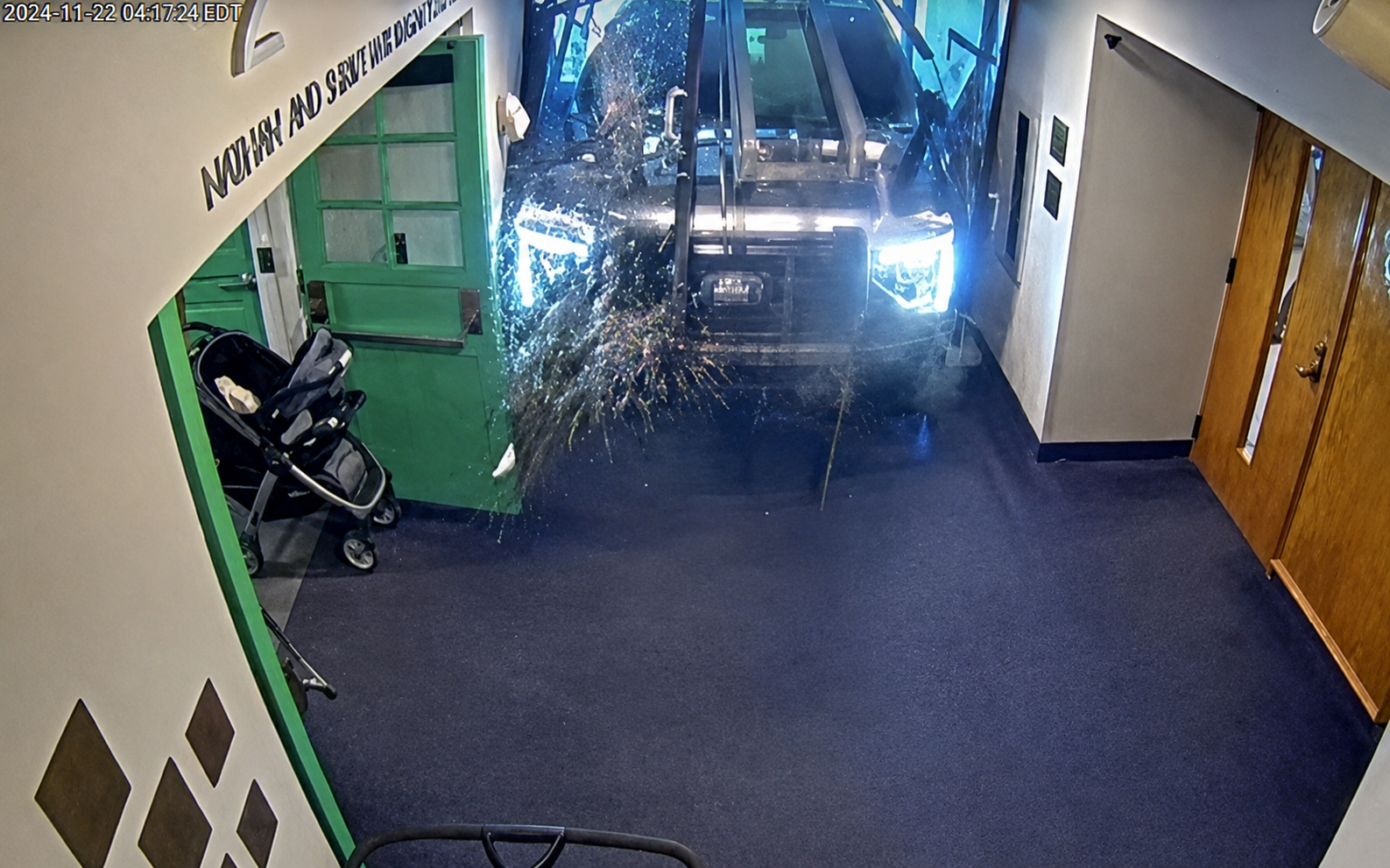
Footage from Temple Israel of Ayman Ghazali driving his pickup truck into the entrance of Temple Israel. March 12, 2026. | Photo provided by FBI
At 12:19 p.m., a Ford F-150 smashed through the doors of Temple Israel. It hit the synagogue once, backed up, then drove full speed, tearing down nearly 200 feet of the interior hallway before being wedged between the walls.
Over 100 children were inside.
The truck hit Danny Phillips, the synagogue’s security director, leaving him with severe injuries. Phillips still made his way to a classroom to warn teachers and the children before collapsing. The driver began firing his AR-15 through the windshield. Temple Israel’s armed security guards fired back.
Then the fireworks went off.
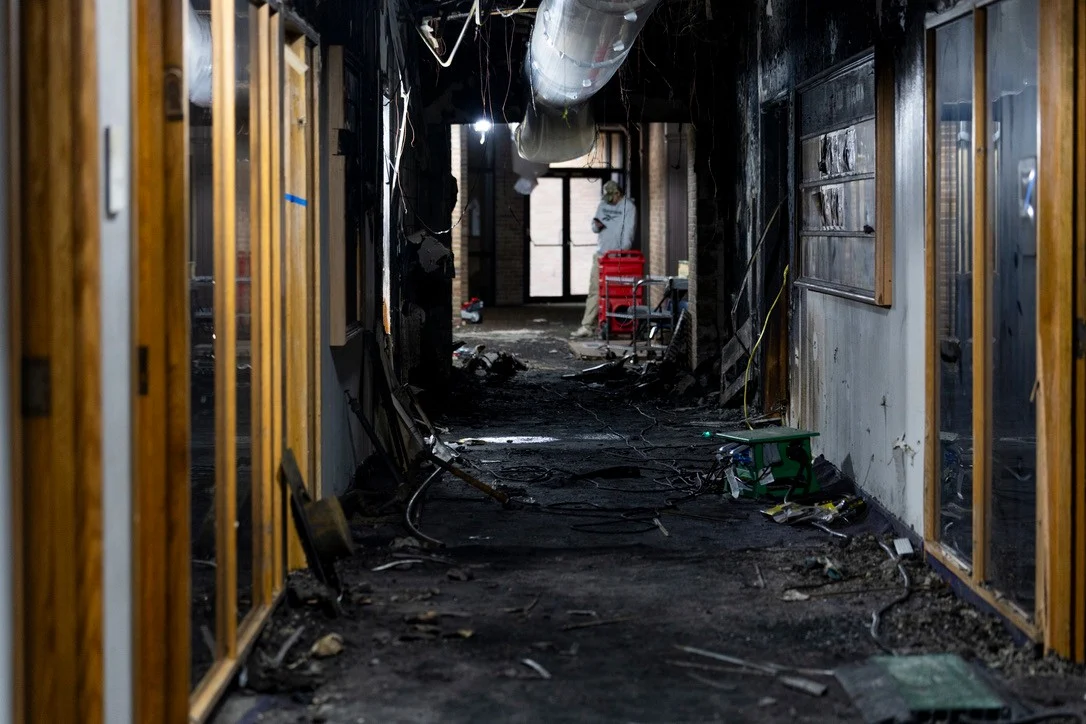
Fire and black smoke filled the hallway as teachers locked their doors, hid the children in bathrooms and corners, and carried infants, some of them still in their sleep sacks, away from the building. Police and SWAT moved in through the smoke, wreckage, and broken glass.
Inside the truck was 300 rounds of ammunition and 35 gallons of gas. The gasoline and the fireworks were brought to burn the place down. He was hoping for a grand explosion.
Had the gasoline done what it was intended, the preschool children would have burned alive.
Thankfully it didn’t.
This time, the children came out alive.
The man was Ayman Ghazali and it wasn’t a spontaneous attack. For weeks he had researched the largest Jewish institution in Michigan. He had looked up Temple Israel events. He went and bought an AR with ammunition, practiced shooting, purchased $2,200 worth of fireworks, and made different trips to gather all the gasoline.
The night before the attack he searched, “What time is lunch at Temple Israel?” On the morning of the attack, he called Israel “pure evil” and a “cancerous and malignant growth.”
Over the past year, I’ve spent more time working with Jews than at any point in my life, writing with them, speaking with them, hearing their hopes and worries from all over the world. I’ve gleaned a few facts about their communal life that non-Jews don’t understand and seldom hear.
One of those facts is their security.
A friend that I write with and who I’m doing a podcast with mentioned armed security in passing. I stopped her because I thought maybe she was communicating in a way I didn’t understand. She seemed surprised by my surprise. She says, “Yes, armed guards. Synagogues have had those for decades.”
She said it so nonchalantly, as if it’s normal to have armed security at a religious service.
The reaction bothered me and I began hearing versions of it everywhere: the police cruiser outside, the locked entrance, security desks, giving people your name, conferences’ location not being revealed until the day before, somebody watching the parking lot.
Nobody said any of this dramatically. It was spoken about so precisely, so matter-of-factly, that it felt eerie. People described armed protection with such ease, where I was expecting an emotional intensity.
I thought this was insane.
Not that Jews had to take precautions, but how ordinary the precautions became. Jews are only 2% of the American population, and last year they were targets of 63% of all religious-based hate crimes, basically two-thirds.
Now change the situation and imagine the response. If Christian services required armed security, and Christian families drove to church with the thought that a truck might slam through the doors, explode, and burn everyone alive, America would react differently. If the Black community had to withhold the location of a conference until the day before because revealing it earlier increased the danger of bombs, munitions, or attacks aimed at them, America would rightly be incensed.
If any other small American minority absorbed two-thirds of the country’s religious hate crimes in their houses of worship, where they had to hire armed guards, we would call this an outrage. It would be a national crisis. It would be a moral indictment and stain upon the country. We would call it an emergency. There would be national statements. We would have hearings, television specials, emergency funding, commissions and speeches, and condemnations all around.
But somehow with Jews, it’s just a regular day.
Security.
I began seeing how much of Jewish life is planned around the possibility that someone’s going to kill you. Living day-to-day that way is almost impossible for the non-Jew to understand.
We can organize a conference without wondering who’s going to bring a rifle or 35 gallons of gas to blow the building up. We can send our kids to camp or to a celebration or a beach party without having to check the exits.
It’s an ordinary freedom that people rarely think outside of.
I understand this isn’t new. American religious history is full of persecution of various religious groups, from the Klan and the Black church to Muslims and Sikhs. They all have sordid histories in America. But the current disparity is impossible to miss.
October 7th didn’t bring about the armed guard. It has provided them more job security.
For example, ADL recorded 3,698 antisemitic incidents in 2022 and 9,354 in 2024.
Antizionism has become even more influential in parts of academia and activism, the media and ordinary American life, bringing with it a very different picture of Jews from the ones most Americans had been taught.
We grew up reading Night and watching Schindler’s List. We learned about Hitler, Goebbels, the ghettos, deportations, and the concentration camp. We know all about Auschwitz. We were taught to see Jews as a small minority that can be isolated and demonized and eventually killed, all while their neighbors looked away or found reasons to do nothing.
The contemporary picture is its photographic negative. Antizionism has educated people in a different image of the Jew. Jews are white, wealthy, European. They’re colonial and militarized. They’re privileged and powerful. They run things. They’re not oppressed or persecuted.
They’re the oppressor and only use being endangered as a cover.
When we understand Jews through the antizionist image of power, it becomes harder to see their struggles, vulnerability, and fear. Their warnings begin to sound self-serving, their security concerns exaggerated, their talk about Jew-hatred as just an excuse.
The locked synagogue and the police cruiser and armed guard lose some of their ability to shock, because those behind them have already been placed on the wrong side of history.
These are two different images America is presented with, and from looking around, it’s apparent to me that the population has chosen to view Jews through the lens of antizionism and corrupt power.
For 80 years we’ve asked how ordinary people could watch Jews be threatened and endangered without understanding or doing something about it. We’ve tried to learn the lessons from the Shoah that their German neighbors didn’t. We’ve built museums. We’ve assigned books, made films, and congratulated ourselves for having learned that lesson.
Interestingly enough, those who said they would punch a Nazi before October 7th ended up being one after. They just called themselves something else. Critics of Israel or anti-Zionists, when really the outcome is the same. They contribute to Jews being harmed and having to live in fear.
Jewish preschool children go to school behind armed security. Synagogues train for gunmen. Jewish holidays require police. And the armed guard is talked about nonchalantly.
He shouldn’t be.
This isn’t the view that Jews should perpetually be viewed as victims. The first step is to tear apart the image antizionism has painted for us: that the Jew is a racial supremacist, warmonger, oppressing, occupying imperialist.
Once we realize that image has been passed down through Soviet propaganda, Arab nationalism, a hateful Islamism, and propagated by academics and Western leftists, once we realize that it’s been transmitted and communicated to us through a theory that doesn’t hold under scrutiny, we can begin to see this inversion for what it is.
The Jew as all-powerful evil is a lie. Just look at their armed guards.
Once we strip back this antizionist depiction and call out the hatred it contains, non-Jews like me can begin to see Jewish people as they actually are and hopefully grant to them the same sympathy we would anyone else.
Related Topics
Related Posts