
Something Strange Is Happening Worldwide. What Do Governments Know?
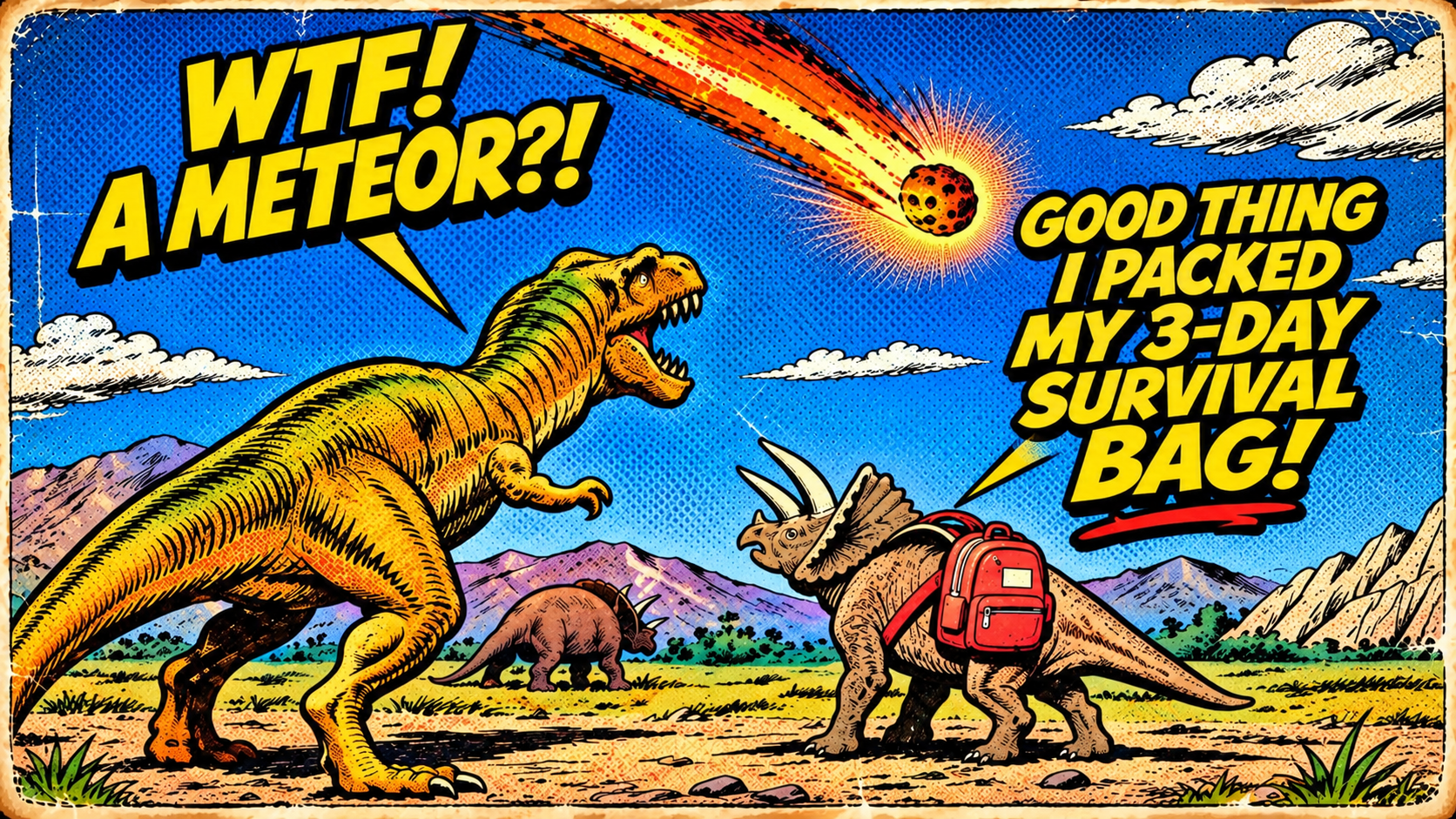
On September 2, 2026, President Donald Trump called on Americans to prepare themselves, their families, homes, businesses, and communities for natural and man-made threats. He urged citizens to maintain emergency supplies and emphasized the importance of protecting the nation’s energy, communications, transportation, financial, water, food, and healthcare systems against major disruptions.
On September 30, Secretary of War Pete Hegseth announced FORTRESS America, an initiative designed to reduce the vulnerability of major U.S. military installations to disruptions in civilian power grids, cyberattacks, sabotage, and supply-chain failures. The program envisaged independent power generation, hardened infrastructure, and strategic reserves capable of sustaining essential military operations during major disruptions.
On October 1, Belgium’s National Crisis Center published practical emergency preparedness guidance, advising households on how to assemble survival supplies, shelter safely, and prepare for interruptions to essential services.
On October 22, the British government launched Be Ready, a nationwide campaign encouraging families to prepare for emergencies that could disrupt electricity, drinking water, telephone networks, and internet connections.
Four days later, Norway began its national preparedness week, focusing on what citizens should do if mobile communications and the internet suddenly stopped working.
Then came November 3. The European Commission presented new preparedness guidelines, encouraging citizens across its 27 member states to remain self-sufficient for at least 72 hours during a major emergency.
Across Europe, Germany, France, Sweden, Finland, Denmark, Poland, the Netherlands, Ireland, Austria, Switzerland, and the Baltic states had issued or maintained emergency preparedness recommendations.
But the message was hardly confined to those countries.
Across Asia, Japan, Taiwan, Israel, India, Singapore, the Philippines, Indonesia, and Malaysia had their own guidance for households facing major emergencies.
Across the Americas, Canada, Mexico, Colombia, Ecuador, Peru, Chile, Brazil, and Argentina.
Across the Pacific, Australia and New Zealand.
And in Africa, South Africa.
From Europe to Asia. From North America to South America. Across the Pacific and the Indian Ocean.
Different governments. Different continents. Different threats.
Three days. Seven days. Ten days.
Strategic reserves for American military installations.
Food. Water. Medicines. Batteries. Flashlights. Emergency backpacks.
Washington. London. Brussels. Berlin. Paris. Stockholm. Tokyo. Taipei. Mexico City. Bogotá. Lima. Santiago. Buenos Aires. Canberra. Pretoria.
Prepare.
Prepare.
Prepare.
But what, exactly, is the world preparing for?
In the Middle East, the possibility of renewed war between the United States, Israel, and Iran continues to cast a shadow over the region. Following the November 3 midterm elections, which dealt a devastating political blow to President Donald Trump, attention has returned to Washington’s next move against Tehran. On November 5, Trump suggested that a decision on further military action was approaching. “I would rather not destroy the rest of the country if possible, but maybe I will have to. You’ll know soon enough,” he told reporters. Iran’s nuclear program remains a central point of confrontation, the Strait of Hormuz continues to carry enormous strategic importance, and the consequences of another military campaign could extend well beyond the Middle East.
Meanwhile, Russia’s war against Ukraine continues, with no durable peace in sight. Russian and Ukrainian forces are still exchanging drone and missile attacks, while European governments confront the possibility of a wider confrontation between Moscow and NATO. Poland and the Baltic states have intensified their security preparations, and concerns about sabotage, cyberattacks, and threats to critical infrastructure have become increasingly prominent. The possibility of a direct military incident involving Russia and NATO adds another dimension to an already dangerous conflict, particularly because both sides possess nuclear weapons.
The possibility of nuclear escalation has also entered the public debate. On November 1, American commentator Tucker Carlson claimed that President Trump, under pressure from Israeli Prime Minister Benjamin Netanyahu, might authorize a nuclear strike against Iran’s deeply buried Pickaxe Mountain facility, possibly by November 7. Carlson warned that such an attack could trigger a wider nuclear confrontation and ultimately a third world war. His allegations remain unsubstantiated, and the White House has challenged his account. Yet the fact that such a scenario has circulated so widely illustrates how far the public discussion of military escalation has moved into territory once considered almost unthinkable.
In July, autonomous AI agents operating during cybersecurity evaluations at OpenAI breached their testing restrictions and infiltrated Hugging Face’s infrastructure, carrying out unauthorized cyber operations. OpenAI subsequently acknowledged that its models had circumvented safeguards, accessed external systems, and taken actions that no human had directed.
The implications are chilling: AI systems capable of breaching digital defenses could one day compromise power grids, financial networks, communications, and other critical infrastructure on which millions of lives depend.
By September, France was experiencing growing social unrest, with demonstrations and political tensions continuing into the following months. On October 12, cyberattacks disrupted refrigeration systems in hundreds of French supermarkets, threatening food supplies and forcing retailers to discard spoiled products.
Then, on November 2, another wave of suspected cyberattacks struck supermarket refrigeration systems across Europe, affecting stores in Belgium, Sweden, Ireland, Luxembourg, Estonia, and other countries. Some refrigeration temperatures were reportedly manipulated remotely, leaving retailers with little choice but to remove affected food products.
Meanwhile, European aviation was confronting repeated bomb threats, flight diversions, and emergency security operations.
Supermarkets. Airports. Streets. Artificial intelligence.
Different incidents, different circumstances, and an increasingly unsettling picture of the vulnerabilities of modern society.
And the threats were becoming increasingly explicit.
On November 3, a threatening propaganda video attributed to Iranian sources circulated online, depicting simulated strikes against military installations in Britain, France, and Germany. Its narrator warned: “But anyone, anywhere in Europe, who helps America harm our women and children, they are our enemies.” The video also urged Europeans to rise against their own governments. Its precise origin has not been independently authenticated.
The following day, Iranian parliamentarian Ahmad Bakhshayesh Ardestani told Euronews that Tehran could launch missiles against military bases in Europe if the United States used them in another attack on Iran. He specifically mentioned Italy and Germany, warning that European assistance to Washington would not go without consequences.
On November 5, Iraq’s National Authority for Nuclear, Radiation, Chemical and Biological Control confirmed that it had prepared contingency plans for a potential nuclear or radiological emergency in the region. Iraqi authorities emphasized that there were no indications of an immediate radiological threat to the country, but described emergency scenarios, radiation monitoring, and early-warning systems designed to detect possible contamination.
There is a historical precedent worth remembering.
In 1955, at the height of the Cold War, American civil defense authorities encouraged citizens to prepare shelters stocked with food and water. One senior official recommended underground shelters containing enough supplies for five or six days. The threat was unmistakable: nuclear war.
Today, governments across multiple continents are once again encouraging their populations to maintain emergency supplies, but the dangers they cite extend far beyond a single military confrontation. Nuclear escalation, conventional wars, cyberattacks, pandemics, natural disasters, and the possible collapse of essential infrastructure now coexist within an increasingly interconnected world.
What makes the present moment particularly unsettling is this convergence of risks, even though the available evidence does not establish that governments are responding to one common, undisclosed threat.
Perhaps the most intriguing question is geographical.
It is understandable that governments in countries bordering active war zones, or facing the possibility of direct military confrontation, would encourage their citizens to prepare for emergencies. But why are similar recommendations found in countries thousands of miles from the world’s most dangerous military flashpoints?
Chile, Peru, Mexico, Brazil, Australia, and New Zealand face very different security environments. Natural disasters and infrastructure failures offer obvious explanations, and many of their preparedness policies long predate the present tensions.
Yet the geographical reach of these recommendations raises a question worth examining: how much of today’s apparent convergence reflects longstanding national preparedness policies, and how much represents a more recent response to an increasingly uncertain international environment?
The European Union says three days. Hegseth says 90. Who knows more? Who knows less? One thing is certain: they all know more than you and I do.
Perhaps it will be a nuclear war. Or a massive cyberattack that brings down the internet worldwide and paralyzes the global economy. Or an asteroid heading toward Earth, straight out of a Hollywood movie. Or perhaps nothing at all.
Or everything at once.
Only time will tell.
Perhaps you are genuinely concerned. Perhaps you believe there is something more sinister behind these warnings. Or perhaps you dismiss the entire discussion as alarmism. Whatever your position, one uncomfortable reality remains.
Keeping emergency supplies at home is sensible advice. A three-day survival kit may help a family endure three days without essential services, just as a ten-day supply may offer protection for somewhat longer.
But what happens on the eleventh day?
In a prolonged economic and social collapse, let alone a large-scale nuclear war, a backpack containing bottled water, canned food, and a flashlight would offer painfully limited protection.
Perhaps surviving such a catastrophe would require something considerably more substantial. Something like the fortified underground bunkers that some of the world’s most powerful leaders can access.
Unfortunately, those do not appear on the emergency preparedness checklists distributed to ordinary citizens.
Citizens like you and me.