CEO of Time to Stand Up for Israel
Somewhere Between Heart and Brains Lies Reason
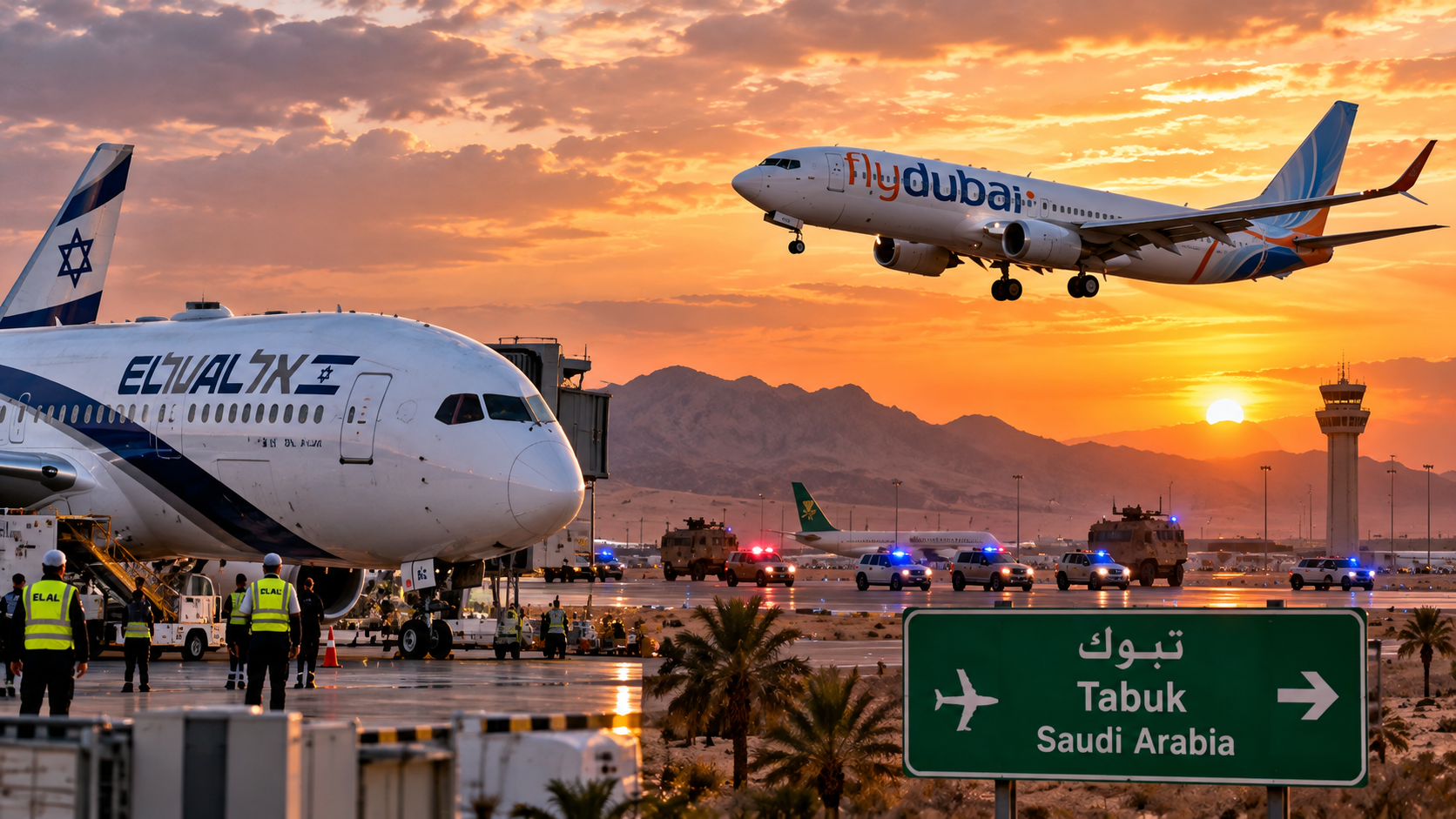
Photo Credits: Sabine Sterk ( AI)
Ask me what I like most about Israel and you will receive the same answer I have given for years: the Israeli spirit.
It is something difficult to explain to people who have never experienced Israel beyond the headlines. It is the optimism, the courage, the incredible ability to get up again after disaster, the stubborn refusal to allow enemies to dictate how Israelis live their lives. It is the almost unbelievable capacity to experience something terrible today and still make plans for tomorrow. I love that spirit. I admire it enormously. Perhaps that is exactly why I sometimes worry about it, because “Your greatest virtue can also be your greatest downfall.” Somewhere between heart and brains lies reason, and sometimes I fear that the wonderful Israeli belief that everything will eventually work out can become so strong that legitimate warnings are dismissed as unnecessary worrying.
I remember the week after the Abraham Accords were signed in 2020. Suddenly hundreds, perhaps thousands, of Israelis were boarding airplanes to the United Arab Emirates. Businessmen, rabbis, politicians, tourists, everyone seemed eager to discover this new world that had suddenly opened its doors. I watched it with amazement, but also with unease. On LinkedIn I received threatening messages from ordinary people claiming to be from the UAE, and I kept thinking that signing a peace agreement, however historic and important it may be, cannot erase years of hostility overnight. Governments can sign documents in minutes, but changing attitudes within societies can take generations. I told Israeli friends, “For God’s sake, be careful.” I told them I would not simply assume that every person on every street had suddenly become friendly toward Israelis because their governments had established diplomatic relations. The answer I repeatedly received was almost characteristically Israeli: “Don’t worry, you worry too much. All will be good.” I tried to let that feeling go, but it never completely left me.
Then came October 7, 2023. After the initial horror, I remember telling friends that I feared this would become a long lasting war with devastating consequences for Israel, not only militarily but diplomatically, socially and internationally. Again I heard variations of the same reassuring response: “Come on, stop worrying, you worry too much. All will be good.” Almost three years later, it is impossible to pretend that everything simply became good. Israel has survived, fought and demonstrated extraordinary resilience, but the consequences of October 7 continue to reverberate far beyond the battlefield. That does not diminish the Israeli spirit. To me, it proves how badly that spirit is needed, but resilience should never become an excuse for complacency.
More recently, I warned different stakeholders about the website Archive Genocide and the enormous amount of material it was collecting and organizing. I believed that the potential impact of such a project on the international narrative surrounding Israel should at least be taken seriously. The response I received was familiar: “Do not worry, you worry too much, it is just noise, all will be okay.” Yet the project has continued expanding its searchable archive and recently announced an updated Gaza Node Map containing tens of thousands of events and more than 130,000 video clips. Then came NAZA, the documentary by Yuval Abraham and Rachel Szor, which was screened in competition at the Venice Film Festival and presents extremely serious allegations about Israeli military conduct in Gaza, allegations that the IDF disputes. Whether one agrees with such productions or completely rejects their conclusions is not even my point. My point is that narratives matter. Images matter. Archives matter. Films matter. Waiting until something has reached millions of people before recognizing its potential impact is not a communications strategy. But hey, “kol beseder.”
And believe me, I do not want to be right all the time. My ego is simply not that big. There are moments when I desperately want somebody to prove me wrong.
Today was one of those moments.
On September 30, Flydubai flight FZ1073 was travelling from Dubai to Tel Aviv when a violent incident erupted in the cockpit. According to Israeli officials and passenger accounts, the co pilot, reported to be an Omani national, attacked and stabbed the captain, after which the aircraft plunged dramatically. Israeli officials suspect that he attempted to take control of the aircraft and crash it, although the motive remains under investigation and should not be presented as conclusively established until that investigation is complete. Israeli passengers and other personnel aboard intervened, the attacker was subdued, other pilots aboard helped regain control, and the aircraft eventually made an emergency landing in Tabuk, Saudi Arabia. Israeli fighter jets had been scrambled as the emergency unfolded.
Think about that for a moment. People boarded an ordinary commercial flight between two countries whose relationship has been celebrated as one of the great achievements of the Abraham Accords, and suddenly passengers found themselves fighting for their lives thousands of metres above the Middle East.
For me, this incident proves something more complicated than simply saying that the UAE is safe or unsafe. No country on earth can guarantee absolute security, and the fact that one individual allegedly committed this act does not justify judging an entire population or an entire country. But normalization between governments must never be confused with the disappearance of every security threat. Diplomatic friendship does not automatically eliminate extremism, hatred or individual radicalization. Peace agreements are extraordinarily valuable, but vigilance remains necessary precisely because peace is valuable enough to protect.
And there is another lesson that I have repeated for years: when I have the choice, I prefer to fly El Al.
Yes, El Al can be more expensive. Yes, another airline may sometimes offer a cheaper ticket or a more convenient connection. But when I travel to Israel, price is not my only consideration. Security matters enormously to me. Israel’s national airline operates within a security environment shaped by decades of threats against Israeli aviation, and that history inevitably influences how I personally make my travel choices.
For me it comes down to one very simple principle: some things you can buy, but your life is worth more than everything.
I will never stop loving the Israeli spirit. I hope Israelis never lose that extraordinary optimism, humor, courage and determination that make the country what it is. But optimism and vigilance are not enemies. Courage and caution can coexist. Peace and preparedness can coexist. Trust and verification can coexist.
Perhaps Israel does not need less “kol beseder.”
Perhaps it occasionally needs someone standing beside it saying, “Maybe everything will be okay, but let us make damn sure it will be.”
Because somewhere between heart and brains lies reason.
And sometimes worrying is not pessimism.
Sometimes it is vigilance.
Related Posts