South Africa’s 1994 lesson in leadership for Israel
Today, April 27, five days after Israel’s Independence Day, South Africa celebrates Freedom Day, marking its first democratic elections in 1994 and the end of apartheid. In the Israeli context, the useful comparison is not between regimes but rather between how leadership operates under challenges.
A review of South Africa’s relatively smooth transition from apartheid, a system in which a white minority oppressed a Black majority, shows how leaders worthy of the designation see the general good rather than personal and partisan interests, strive to unite rather than divide, and seek solutions rather than scapegoats. These priorities contrast sharply with those of Israel’s recent leadership.
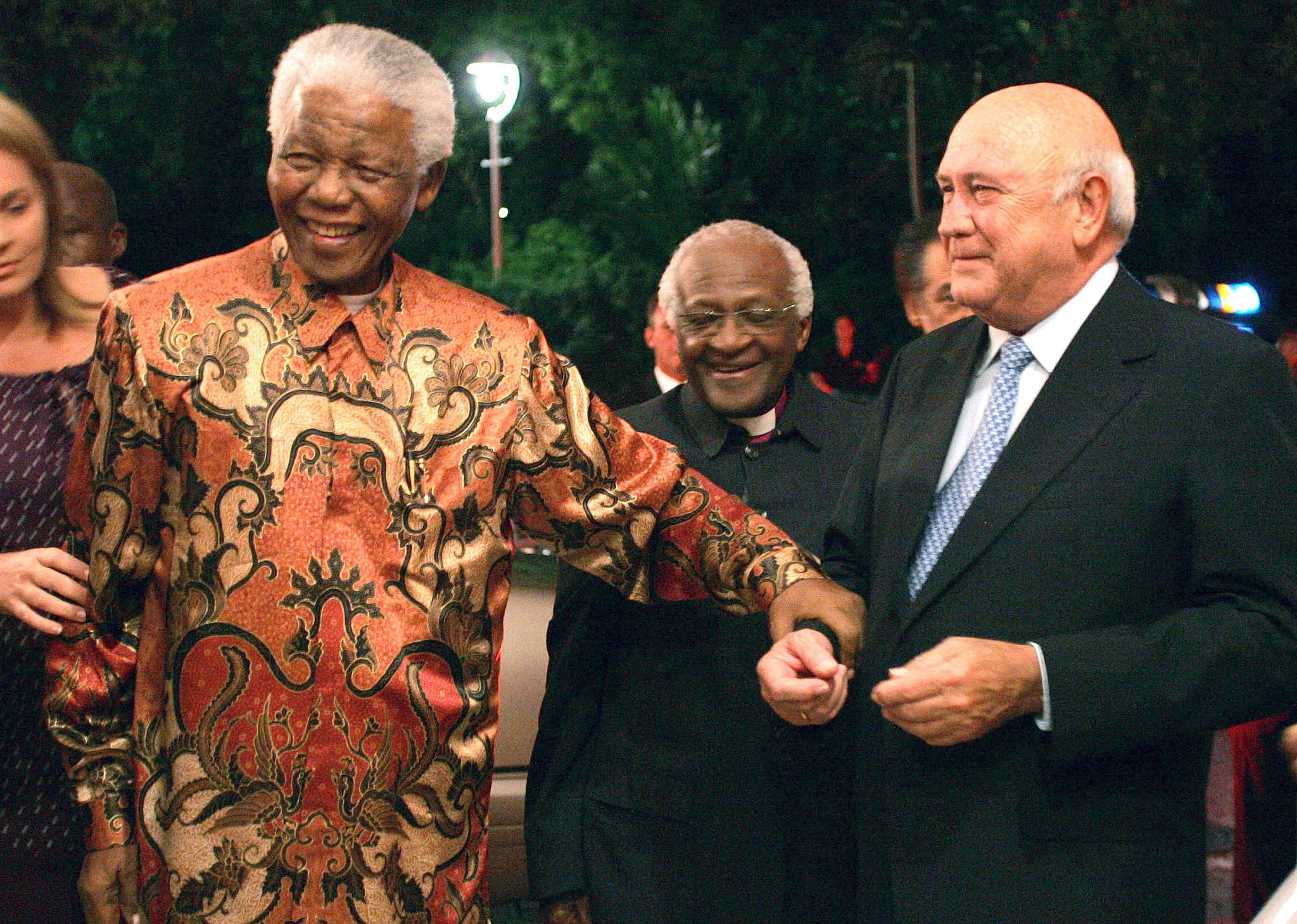
The exemplary leader who first comes to mind is Nelson Mandela, and rightly so. He spent 27 years in prison, yet did not emerge seeking revenge against his oppressors, but instead pursued reconciliation. His actions aimed at inclusion rather than exclusion, including retaining white staff who served the previous regime, including the woman who was to become his personal secretary. No wonder he is widely commemorated, including on all South African banknotes.
However, as the Nobel Peace Prize committee recognized when it awarded the prize jointly to Mandela, the first Black president, and to the all-but-forgotten last white president, Frederik Willem de Klerk, credit is due to both. De Klerk grasped changing reality, the limits of power, and the national cost of clinging to it. He understood that holding onto racism would be disastrous and embarked on a path opposite to the one he had been elected to pursue.
In 1989, when de Klerk assumed the dual role of state president and leader of the National Party, which had ruled South Africa since 1948, he was under pressure from multiple directions. Domestically, ongoing violence had brought about a prolonged state of emergency. Internationally, as the Cold War thawed, the importance of South Africa’s strategic location declined and the West became less willing to overlook its injustices. International sanctions took their toll. He understood that he could not force reality to suit himself and the privileged white minority, and that change was therefore essential.
De Klerk, considered the most conservative of the candidates to succeed the outgoing president, surprised the nation in February 1990. In his first State of the Nation address, he presented a comprehensive plan for change: political movements that had opposed the regime and been outlawed, including the African National Congress (ANC, later the major political party) would be legalized; those imprisoned for belonging to them, including Mandela, would be released; the state of emergency and various laws of segregation and discrimination would be repealed. It is hard to overstate how stunned all sectors of South African society – and observers worldwide – were.
What followed was a long and difficult process of negotiation. There were substantive disagreements, misunderstandings, and periods of breakdown, against a backdrop of violence between Black and white communities and among Black groupings. Some Blacks opposed reconciliation, while elements of the white right sought to resist the loss of dominance, grounded, according to some, in religious belief that left no room for flexibility, including the biblical curse of Noah’s son Ham, who “would be a slave unto his brethren”.
One can but imagine what might have happened had the principal actors not been determined to see the process through: Mandela, who forgave and reconciled, and de Klerk, who relinquished power, both his own as president, and that of the whites.
A legislator who had left the National Party for the opposition was asked if and how de Klerk could implement his plan. His response, “I know my people, they will respond to strong leadership with vision,” captured two vital elements: a vision that identified the necessary direction, and determined leadership to carry it forward. In 1992, the president initiated a whites-only referendum asking a single question: Do you support continuation of the reform process aimed at a new Constitution through negotiation? His efforts were rewarded – sixty-nine percent voted in favor. The first word in the preamble to the new constitution is “Heal” – its formulators understood what a torn nation requires.
True, one can point to shortcomings in the conduct of those involved and in the process itself. It is fair to ask whether, given crime, inequality and unemployment, the end of apartheid significantly improved the lives of most Black South Africans. It is also worth questioning whether affirmative action, which concentrated power and wealth in relatively few Black hands, was properly implemented.
But none of this diminishes the historic role of two leaders who saw the abyss facing their country and acted decisively to prevent it from falling in. They read the situation and told the public the truth. Above all, they did not yield to the political fringes and were not dragged along by circumstances. Rather, they initiated and acted to shape reality – not in order to benefit themselves and their supporters, but for the common good.
As Israel enters a new year of independence and approaches elections, one can hope that we, too, will soon benefit from leadership worthy of its name, before it is too late.