
Clear analysis of Israel's politics, security and history
Sparta: The Rise of Israel’s Arms Industry
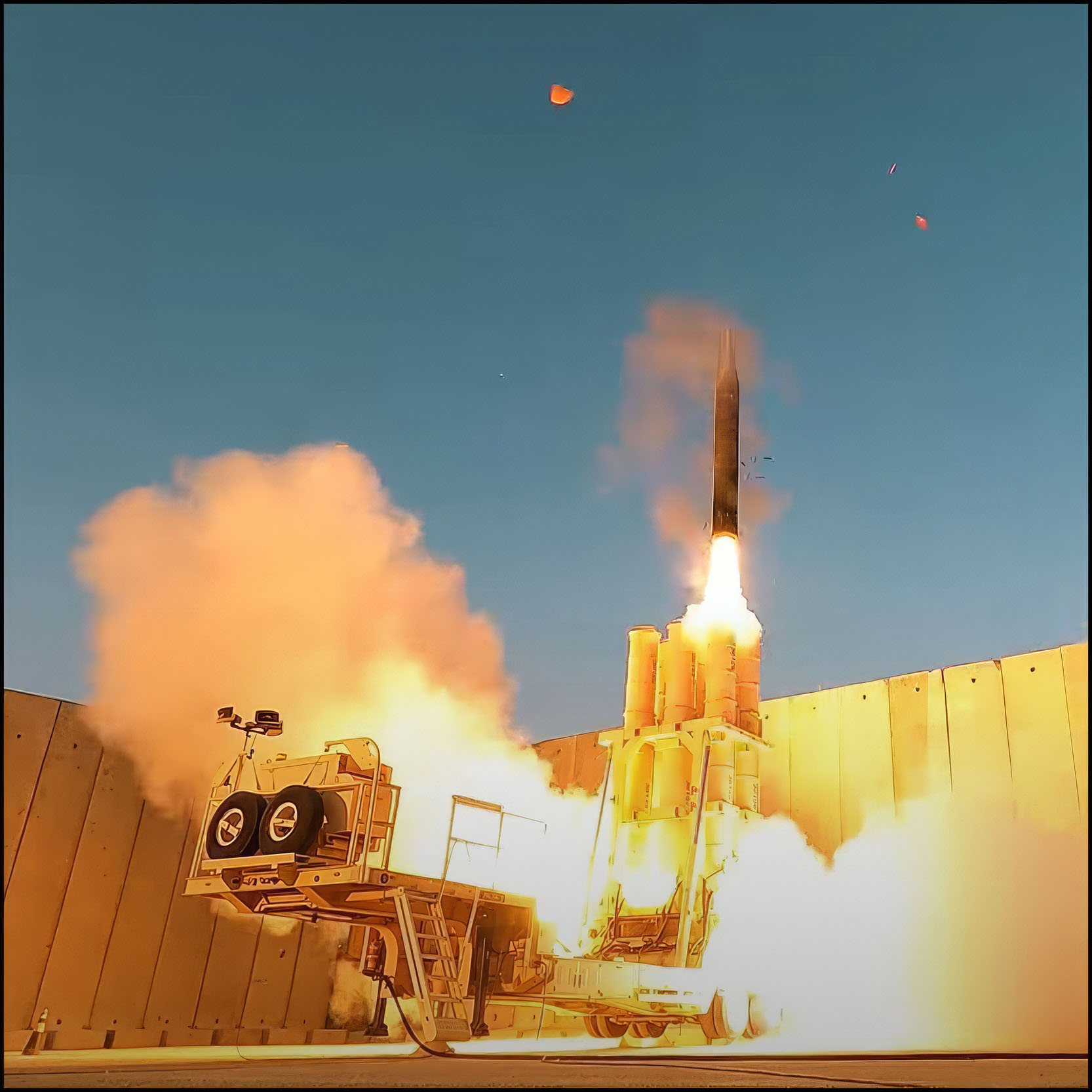
Israel’s Arrow 3 missile defence system, designed to intercept long-range and ballistic missile threats outside the atmosphere.
Photo: Israeli Air Force / Wikimedia Commons (CC BY-SA 3.0)
Earlier this year, Prime Minister Benjamin Netanyahu delivered a speech responding to growing claims that Israel was becoming economically and diplomatically isolated. His reference to Sparta, a small state forced to stand on its own, was widely interpreted as an admission that Israel was being pushed to the margins of the international system.
There is some truth to the claim that Israel has faced increased political and diplomatic pressure during the war. But the facts do not entirely support the broader interpretation of isolation. On the economic front, Israel was recently ranked by The Economist as the third best-performing economy for 2025, a highly unusual outcome for a country fighting a prolonged war.
That context matters, but it does not negate the core lesson Israeli policymakers have drawn from recent experience, particularly in the realm of security. The Sparta reference was not a call to accept isolation. It was an argument that Israel must become more self-reliant in critical capabilities, because it can no longer assume uninterrupted access to foreign arms or political backing.
Israel has accelerated the expansion of its defence industry to achieve that self-reliance. Doing so, however, has also required becoming an increasingly significant global supplier.
Why Independence Has Become Unavoidable
Israel’s instinct for defence self-reliance did not emerge in the absence of allies, but from repeated experience of how vulnerable that reliance can be.
In the early decades of the state’s existence, Israel could not rely on American military support at all. During the 1950s and early 1960s, its principal arms supplier was France. That relationship collapsed abruptly on the eve of the Six Day War, when Paris imposed an arms embargo on Israel.
After Israel’s victory in 1967, the United States gradually replaced France as Israel’s main strategic partner. Even then, American support was not automatic. During the Yom Kippur War in 1973, US resupply arrived only after internal debate and delay, at a moment of acute national vulnerability.
It was in this context that Israel pursued an ambitious program of industrial independence throughout the 1970s and 1980s. Indigenous platforms such as the Merkava tank, advanced missile systems, and eventually the Lavi fighter jet were developed as insurance against strategic dependence.
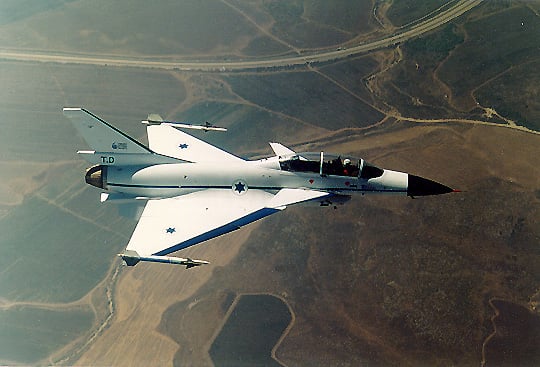
Photo: Israeli Air Force / Wikimedia Commons (Public domain)
The Lavi project was cancelled in 1987, in part due to American pressure and in part because Israel entered a framework of US military assistance under which a substantial portion of aid had to be spent on US-made systems. The arrangement brought clear benefits to both sides, access to advanced platforms and predictable funding for Israel, and a stable export market for the United States.
What is happening today is not a rejection of alliances, but a recalibration shaped by experience. Independence now means focusing on areas of comparative advantage and scaling them rapidly. For Israel, that scale requires capital. In practice, self-reliance and export capacity are inseparable.
Arms Restrictions And Strategic Reality
According to a recent Wall Street Journal analysis, 54% of Israel’s defence exports in 2024 went to Europe, totalling $14.8 billion, despite intensifying political criticism of Israel across the continent. The report highlights the growing hypocrisy of European governments that have publicly criticized Israel while showing increased interest in Israeli military technology, including Norway, whose government has been among the most vocal critics of Israel during the Gaza war.
Another country cited in the report is the United Kingdom, traditionally a close ally of Israel. A large majority of British arms export licenses to Israel were suspended following sustained political and legal pressure. This step did not satisfy critics, who continued to demand a complete embargo and the severing of all defence ties with Israel.
What much of the public debate overlooked was the extent of Israel’s contribution to British security, including intelligence cooperation, counter-terrorism capabilities, cyber defence, and the supply of critical defence components. By contrast, British arms exports to Israel account for well under one percent of Israel’s overall military procurement.
Germany, a major ally and Israel’s second-largest arms supplier, also imposed a partial arms embargo during the war under sustained political pressure. Yet during the same period, negotiations were being finalized for Germany’s purchase of Israel’s Arrow 3 missile defence system. The deal, widely reported at approximately $4.6 billion and later expanded by a further $3.1 billion, was formally approved only weeks after the embargo was lifted, bringing its total value to around $6.7 billion. The episode underscored the gap between political signalling and strategic demand.
Strategic Expansion And Alignment
Alongside political friction in some arenas, Israel’s defence and weapons industry has continued to expand through deeper alignment with states prioritizing capability and long-term cooperation.
The most significant recent example is Israel’s growing security relationship with the United Arab Emirates. Israeli reporting indicates that Elbit Systems has signed a contract worth approximately $2.3 billion with the UAE for a strategic security system based on advanced technology. It is Elbit’s largest deal to date and among the most substantial defence exports Israel has ever concluded.
At the same time, Netanyahu has recently met with the prime ministers of Greece and Cyprus, amid a marked expansion of defence cooperation between the three countries. Greece has already acquired Israeli unmanned aerial systems and surveillance capabilities, while Israeli firms play a central role in training and operational frameworks within the Greek Air Force. Cooperation has also extended to air defence and intelligence-related systems.
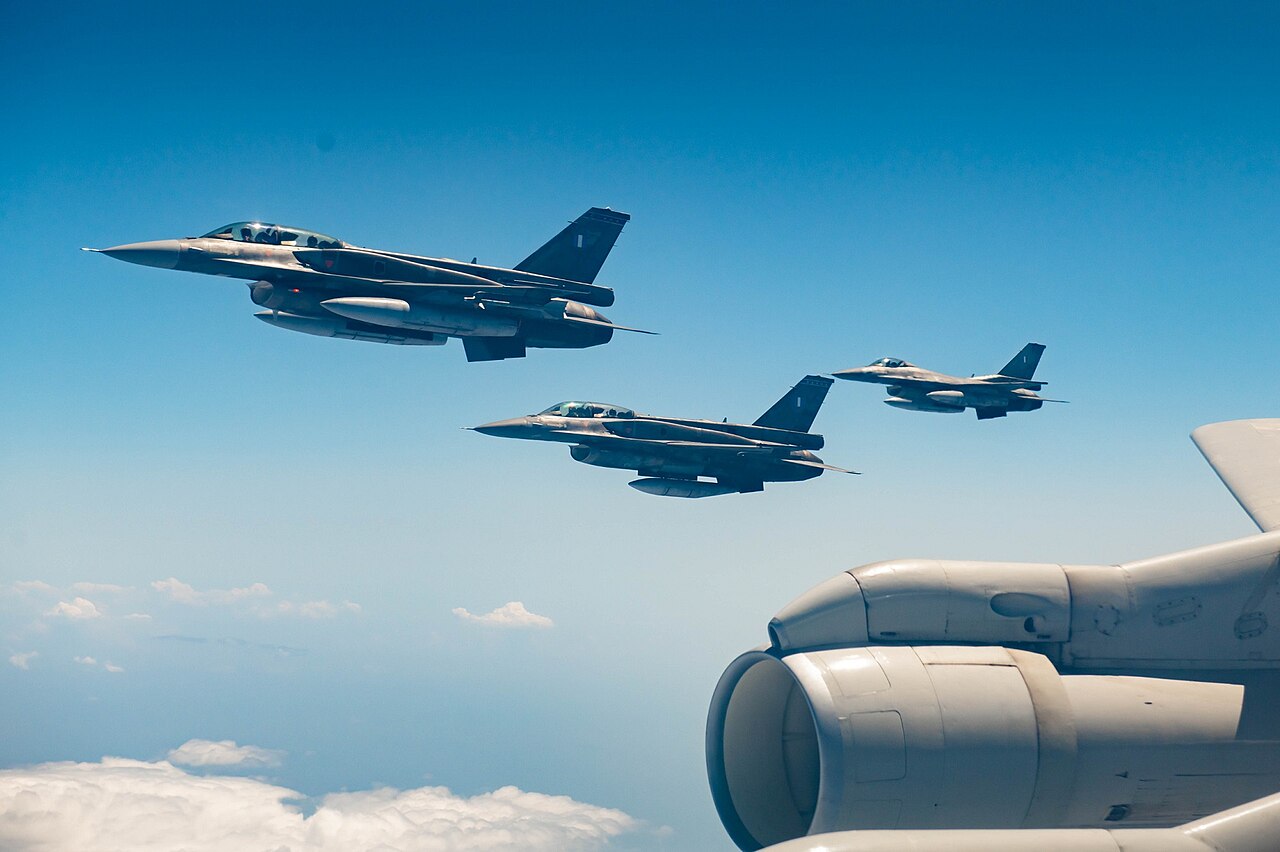
Photo: Roy Kur / Wikimedia Commons (CC BY-SA 3.0)
Recent reporting has described discussions between Israel, Greece, and Cyprus around a deeper strategic framework in the eastern Mediterranean, likened to a Mediterranean-style NATO arrangement.
A Global Customer Base
Beyond the European and regional partners already discussed, including Germany, Greece, Cyprus, and the United Arab Emirates, Israeli defence exports in recent years have reached a wide and geographically diverse set of customers facing very different security challenges.
In Europe, Israeli systems have been purchased or are being actively procured by countries such as Poland, Romania, Czech Republic, Slovakia, Finland, and the Baltic states. In Estonia, Israel Aerospace Industries recently signed a contract for long-range loitering munitions described by Estonian officials as one of the most expensive defence procurements in the country’s history.
Demand extends well beyond Europe. India remains Israel’s largest and most enduring defence partner, with cooperation spanning air defence, sensors, and unmanned systems. In Southeast Asia, countries including Thailand, Singapore, and Vietnam have turned to Israeli technology for surveillance and force protection. Israeli systems have also been supplied to South Korea, reflecting sustained interest in advanced Asian defence markets.
Conclusion
The past few years have accelerated a global shift. Russia’s war in Ukraine, instability in the Middle East, and rising tensions in Asia have pushed states to rebuild military capacity and expand defence budgets. Across Europe, Asia, and beyond, governments are prioritizing capabilities that can be deployed at scale and sustained over time.
Israel has responded by aligning industrial capacity with strategic necessity. By expanding its defence industry, it has strengthened its own autonomy while embedding Israeli systems in the long-term planning of multiple countries facing very different security challenges.
That trajectory is reinforced by Israel’s advances in high-energy laser systems. With the completion of the Iron Beam program, Israel is on the verge of becoming the first country to deploy high-energy laser air-defence systems at operational scale. Initially designed to intercept drones and short-range rockets, among the most persistent and costly threats modern militaries face, the system offers interception at a fraction of the cost of conventional missiles. This is only the first phase, with development already underway to extend laser-based interception to longer-range and ballistic threats.
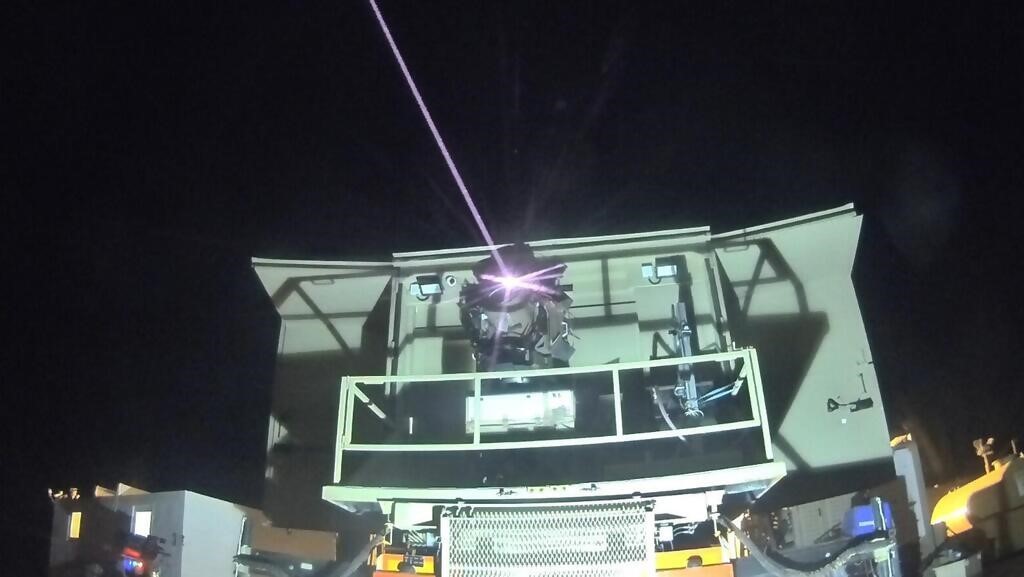
Photo: Israeli Ministry of Defense / Wikimedia Commons (CC BY-SA 3.0)
These developments strengthen the claim that Israel is rapidly becoming a major global defence powerhouse, with capabilities and technologies that are shaping the future of military security.
Related Topics
Related Posts