Vice-Chair, Hadassah Zionist Affairs, Co-Chair, Nurses and Allied Health Professionals Council, Hadassah Writers' Circle
Standing on Herzl’s Balcony: What the 39th World Zionist Congress Taught Me
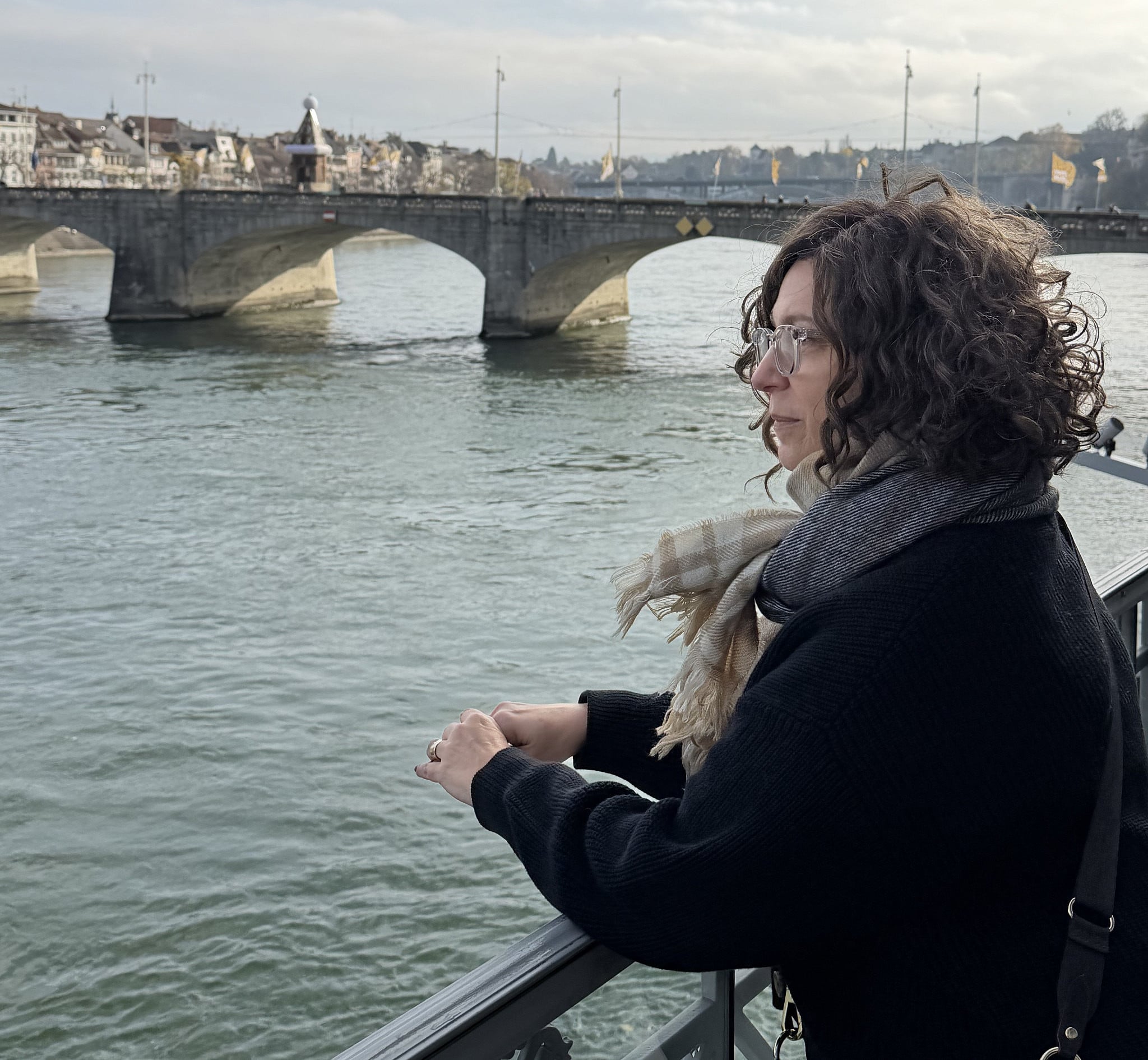
The author standing on Herzl's Balcony in Basel, Switzerland. Photo courtesy of the author.
Just two weeks after participating in October’s 39th World Zionist Congress in Jerusalem, I found myself standing on a hotel balcony in Basel, Switzerland. Yes, THAT balcony. The one in that iconic photo of Theodor Herzl at his hotel, leaning over and looking forward, as he did during the First Zionist Congress in 1897. (Interestingly, the photo of Herzl was actually taken in 1901 during the Fifth Zionist Congress; Herzl reassumed the pose for a photographer!)
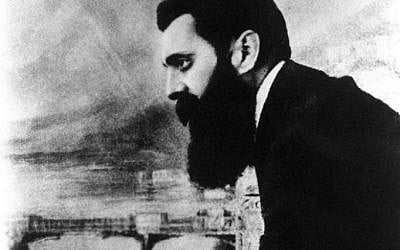
As I stood there, the city was quiet, the Rhine moved steadily below me and the air felt almost suspended between past and present.
I was not prepared for the emotional wave that hit me. Looking out from that vantage point, I felt both awe and clarity. I had just spent days immersed in the modern-day manifestation of Herzl’s dream: a gathering of Jews from around the world convening to debate, collaborate and envision the Jewish future. And now I stood where Herzl once stood when he dared to believe that such a future was possible.
I didn’t arrive at the World Zionist Congress by accident. My journey began years earlier, shaped by family, community and a lifelong relationship with Israel and the Zionist idea. I grew up believing that Israel was central to Jewish identity, not just as a homeland, but as a collective responsibility.
My family instilled in me the idea that supporting Israel meant being active, informed and engaged. Later, my involvement with Hadassah deepened that connection and gave it structure. Through the Hadassah Medical Organization’s medical research and treatment at its two world-class hospitals in Jerusalem, its pioneering work in youth development and its unwavering commitment to Zionism, I found a home for my passion.
Over the years, volunteering with Hadassah taught me something essential: Zionism is not just an ideology — it’s a practice. As vice-chair of Hadassah’s Zionist Affairs Department, I became a delegate to the 39th World Zionist Congress. I carried with me not only my organizational affiliation, but my family history, my identity and a deep sense of purpose. I was there to represent my community, my organization and, ultimately, my slice of the Jewish people.
When Herzl convened that first Congress in Basel, his vision extended beyond the establishment of a Jewish state. He imagined a global civic forum, a representative body that could serve as the address of the Jewish people. A place where disagreements would not fracture us but illuminate the richness of the Jewish collective.
Herzl understood something fundamental: that the Jewish people are diverse, often argumentative and deeply passionate. He believed that the way to channel that passion productively was through a democratic assembly — a parliament long before there was a state with a government.
The World Zionist Organization (WZO) was designed to be that forum, tasked with bringing together Jews of different geographies, ideologies, denominations and backgrounds. In its ideal form, it is the “Parliament of the Jewish People,” the one place where we gather, not as isolated communities, but as a unified nation determining our shared priorities.
The 2025 Congress in Jerusalem was my first. Walking into the convention center felt like stepping into a living tapestry of Jewish life. Delegates from around the globe filled the room. Every movement and ideology, from Orthodox to Reform, right to left, young activists to veteran leaders, had a seat at the table.
The debates were earnest, often impassioned and sometimes contentious. But they were also inspiring. The Congress was not only about resolutions; it was about relationships, shared stories and the recognition that we are part of something larger than ourselves.
One moment that stays with me came from a woman who survived a Jerusalem bus bombing years ago. She told us about her injuries, about the terror of that day. Then, softly but firmly, she told us how the Hadassah Medical Organization saved her life.
As a Hadassah leader, listening to her gratitude, I felt the mission of our work more viscerally than ever before. It reminded me that what happens in the rooms of the Congress, just as in Hadassah’s hospitals, eventually touches real lives and brings about real healing and stronger resilience.
I left the Congress with renewed purpose. I felt a deeper responsibility to bring what I had learned back to my community, to strengthen Hadassah’s influence within the Zionist movement and to ensure that our voice continues to advocate for healthcare excellence, youth development and the values that bind the global Jewish family.
My goal is to accomplish this by expanding educational programming, strengthening partnerships with other Zionist organizations, engaging more young professionals in Hadassah’s mission and ensuring that advocacy for Israel and Jewish peoplehood remains front and center in our local and national initiatives.
Today’s Jewish world is as polarized, diverse and globally scattered as ever. Israel faces external threats and internal strains. Diaspora communities confront rising antisemitism, identity challenges and social fragmentation. At a moment like this, the WZO’s role is not a formality; it is essential.
The WZO remains the only body where the entirety of the Jewish world gathers under one umbrella to:
Affirm shared Zionist principles
Debate priorities for the Jewish future
Allocate resources to global Jewish education and identity-building
Support Israel’s security, resilience and democratic character and
Ensure that the Jewish people speak not in one voice, but in a chorus
For this institution to fulfill its purpose, it must be treated with seriousness, transparency and commitment. Participating in it is not symbolic; it is an act of Jewish responsibility. As Herzl famously declared, “If you will it, it is no dream.”
After attending the Zionist Congress, those words felt more urgent than ever to me. The dream is alive, but it depends on our will, unity and continued commitment to the parliament of the Jewish People.
As I left that hotel balcony in Basel, I carried with me a renewed understanding of Herzl’s legacy and a deeper sense of my personal obligation, not only to Zionist ideals, but also to Zionist action.
Herzl’s dream felt less like history and more like a charge — one that each generation inherits and must renew.
Related Topics
Related Posts