
International Political Consultant
Stop Calling It a Constitutional Crisis
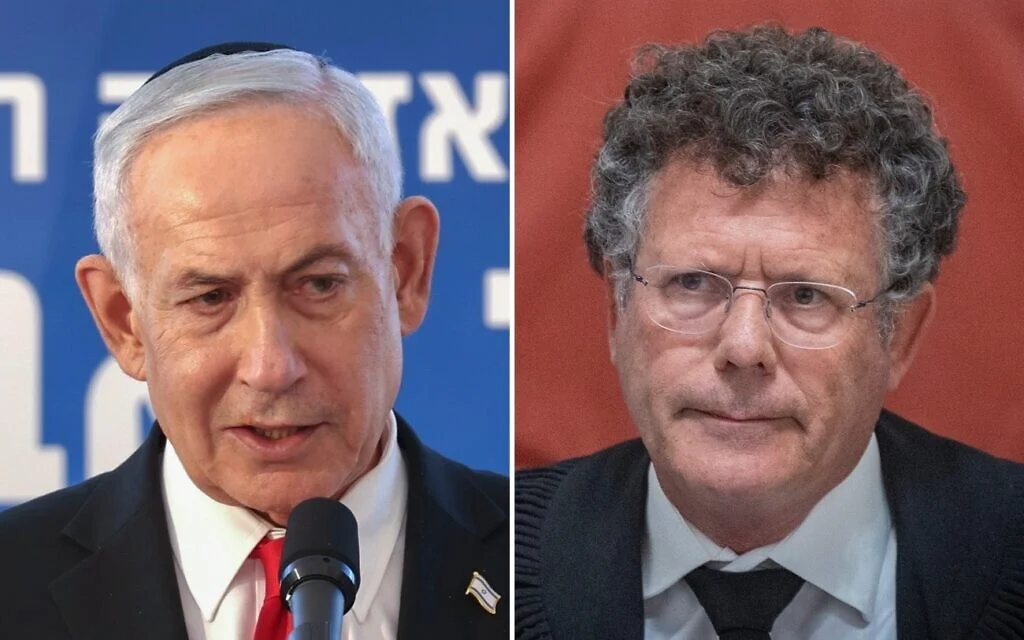
Courtesy of Times of Israel Website (Chaim Goldberg/Flash90)
Israelis love nothing more than an argument. Give us a constitutional dispute, a Supreme Court ruling, or a disagreement over the powers of the Attorney General, and suddenly millions of amateur lawyers emerge overnight. Social media fills with detailed legal analyses, television studios become makeshift courts, and everyone is convinced they understand every clause, precedent, and legal doctrine involved that until yesterday, they had never heard of.
The reality is that most Israelis have no idea about the finer points of constitutional law. And that’s perfectly okay as most of us are not lawyers, nor should we pretend to be. Legal arguments do matter, but they are not where the real battle is being fought. In fact, obsessing over legal technicalities risks missing the much bigger story unfolding before our eyes. Despite what many commentators insist, Israel is not facing a legal crisis. Nor, strictly speaking, is it facing a constitutional crisis, particularly given that Israel doesn’t have a constitution which, of course, is part of the problem.
Former Chief Justice Aharon Barak ruled that Israel’s Basic Laws should be treated as a de facto constitution, fundamentally changing the relationship between the judiciary and the political system. Whether that constitutional revolution was justified, and whether future governments have the authority to reshape those Basic Laws, is an important debate. But that is a discussion for another day. The real story unfolding before us is much simpler.
Israel is witnessing a political battle between three centers of power; The Government, the Attorney General, and the Supreme Court. Each side is fighting not over a single law or a single appointment, but over who will ultimately define the balance of power in the Israeli state for the next generation. We all know that democracies consist of the executive, legislature and judiciary, the battle being waged is which branch sits on top of the triangle. The legal arguments are merely the weapons, the political struggle is the war.
Take the controversy surrounding the election of the State Comptroller. Several Likud MKs posted photographs and videos while casting their vote in what is a secret ballot. The Attorney General and the Supreme Court subsequently suspended the appointment arguing that the integrity of the secret ballot had been compromised. Yet every Israeli general election is also conducted by secret ballot. How many Israelis have posted photographs or videos of themselves voting? Thousands. Tens of thousands. Should the results of those elections be suspended as well?
The principle of a secret ballot has never been that you are forbidden from revealing your vote. It exists to ensure that nobody can compel or intimidate you while you are voting. As Menachem Begin famously observed, “Behind the curtain, we are all free.” Free to choose whoever we wish. The curtain protects the freedom of choice, not absolute secrecy.
Reasonable people can disagree over whether these two situations are legally identical. But the broader point remains. Every procedural disagreement is rapidly transformed into another battle over institutional power.
This week’s decision by the Government to unanimously refuse to abide by the Supreme Court’s ruling regarding the Second Authority for Television and Radio represents another escalation in that struggle. It raises the stakes dramatically, not simply because of the legal questions involved, but because it demonstrates that neither side is prepared to concede absolute authority. Arguing which side is legally correct risks missing the bigger picture.
This is politics. The Government is intent to move the national conversation away from issues such as ultra-Orthodox conscription, the detention of draft dodgers, and its own political failures. Constitutional confrontation offers something far more attractive, a battle against unelected officials that energizes its political base while postponing uncomfortable conversations that are far harder to win.
The legal and judicial establishment also has its own interests at play. Large parts of the judiciary and the Attorney General’s office increasingly see themselves not merely as interpreters of the law but as guardians of the state’s democratic character in their image only. When they believe government policy threatens that vision, they intervene aggressively. Their critics argue that this has evolved into an unelected veto over elected governments, with judges and legal advisers exercising influence that should belong to politicians accountable to voters.
Whether that criticism is fair is almost beside the point. Each institution is convinced it is defending Israeli democracy. Each believes the other represents a danger to the country’s future and democratic nature. And each therefore believes extraordinary measures are justified.
That is what makes this so dangerous for the whole country. Political systems survive not because every institution agrees, but because every institution accepts that there are limits to its own power. Once every disagreement becomes an existential struggle, compromise disappears. Every court ruling becomes a constitutional showdown. Every government decision becomes a test of democratic legitimacy. Every legal dispute becomes another battle in an endless war over who truly governs Israel.
None of this will be resolved by another Supreme Court ruling, another Attorney General’s opinion, or another piece of legislation. It will only end when Israel finally has the debate it has postponed for decades. What should be the relationship between the judiciary and elected officials? What powers should the Attorney General possess? Should Israel finally adopt a formal constitution? What are the limits of judicial review and who can petition the Supreme Court?
These are not merely legal questions. They are profoundly political ones, and they deserve to be decided through an honest national conversation rather than through an endless institutional warfare of us against them. Until that happens, every controversy will simply become another chapter in the same conflict.
Israel does not suffer from a constitutional crisis, it suffers from the absence of constitutional consensus.
Related Topics
Related Posts