


Lawyer, Blogger, Jewish Advocate, Podcast Host
Stop Insisting on Moral Asymmetry
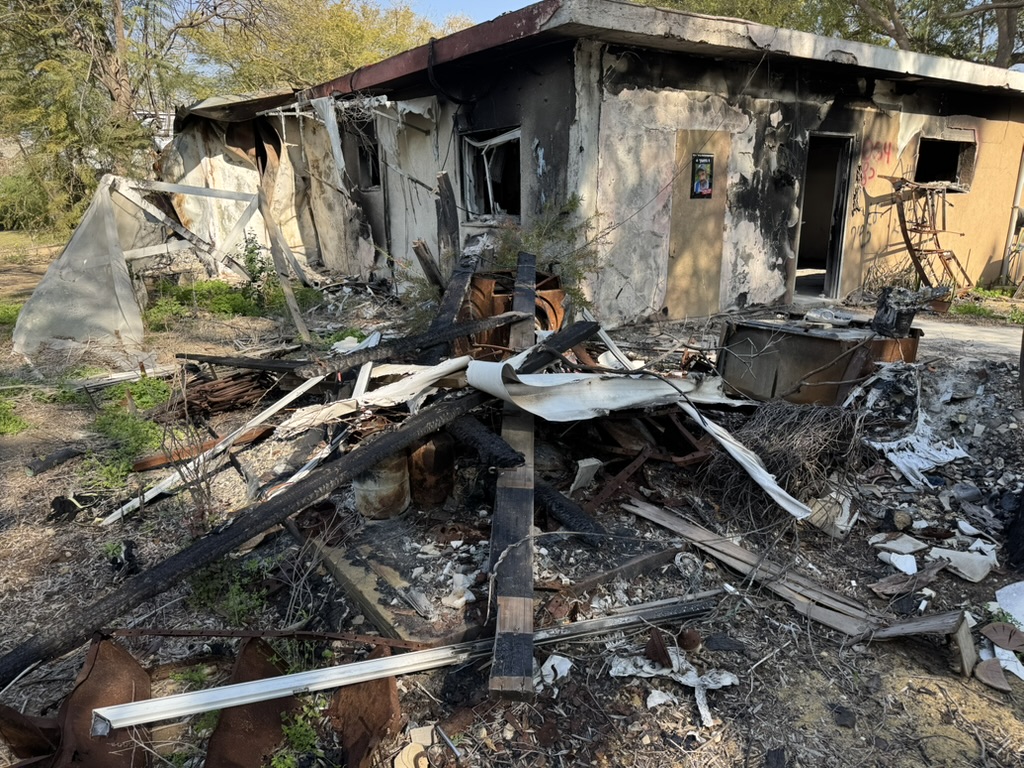
Kibbutz Nir Oz - Death and Destruction
The Jewish Self-Blame Game Needs to End
Attending a lecture earlier this week in Tel Aviv by the head of a prominent Israeli think tank, I was struck by his criticism that the Israeli public lacks sufficient empathy for Palestinians. To support his position, he cited highly selective interpretations of Torah to advance the moralistic belief that “we Jews are better than that.”
The idea that Israelis, and Jews more broadly, must hold themselves to a higher moral standard, as though what we are currently doing is morally insufficient, has become a recurring and troubling theme in our communal discourse.
That premise is deeply flawed.
Israel is judged not only on whether it meets the standards of just war and legitimate self-defense — where it is already scrutinized beyond what most nations confronting terror would reasonably face — but also on whether Israelis display sufficient emotional empathy toward those who seek their destruction.
The asymmetry operates on two levels: conduct and conscience.
When civilians elsewhere are massacred, the moral conversation centers on their right and obligation to defend themselves and prevent another massacre from ever happening again. The world fully supports their trauma and their need to heal.
When Israelis are massacred, the sequence is different. First comes blame — of Israel and of Jews. Then uniquely heightened scrutiny of Israel’s military response. Then expansive humanitarian demands toward the very population from which the attacks emerged. And finally, the question of whether Israelis are sufficiently empathetic toward the other side.
This is not moral refinement.
It is moral distortion. It is a double standard. And this “Never Enough” mindset ultimately undermines our commitment to “Never Again.”
As a Jewish community, we must firmly reject any framework that uniquely burdens Jewish survival and healing with expectations no other nation bears.
History makes the point plainly. No one would have expected Jews, in the immediate aftermath of World War II, to feel sorrow for German civilian suffering. It took decades — and genuine German reckoning and transformation — before empathy became possible. Trauma must be processed before it can be transcended.
Our own tradition reflects this tension honestly. Later rabbinic sources wrestle with the idea that God may have grieved as the Egyptians drowned. But the Torah itself is explicit: the Jewish people sang — first through Moses, then through Miriam — in celebration of their deliverance at the sea. There is no rebuke of their joy, even though their song acknowledged the destruction of their enemies. Their celebration was not framed as a moral failing.
Moral Superiority Is a Trap
There is another danger embedded in this asymmetry.
When Jews internalize the idea that we must prove ourselves morally superior in order to justify sovereignty — that we must meet standards no other nation is expected to meet — it does not elevate us.
It reinforces the narrative that Jewish power is inherently suspect unless it performs exceptional moral restraint beyond what history has required of others.
That approach does not protect us. It weakens us.
Jews are not called to be morally self-erasing. We are called to be morally responsible.
Responsibility means minimizing civilian harm whenever possible. It means maintaining vigorous internal debate. It means valuing human life — even the life of an enemy — all of which Israel has done. And it means having the time and space to mourn trauma honestly and to ask serious questions about whether peace is possible in the face of barbarism.
But responsibility does not mean consenting to a framework that uniquely burdens Jews and Israelis with emotional expectations no other nation bears.
The self-blame reflex may feel virtuous. It may feel spiritually elevated. But when it reinforces asymmetry, it becomes self-defeating.
No double standard.
No uniquely higher bar.
No moral conditions placed on Jewish survival.
That is not a retreat from Jewish ethics.
It is their defense.