
Author, Teacher, and Community Leader
Stop Rearranging Deck Chairs on the Titanic
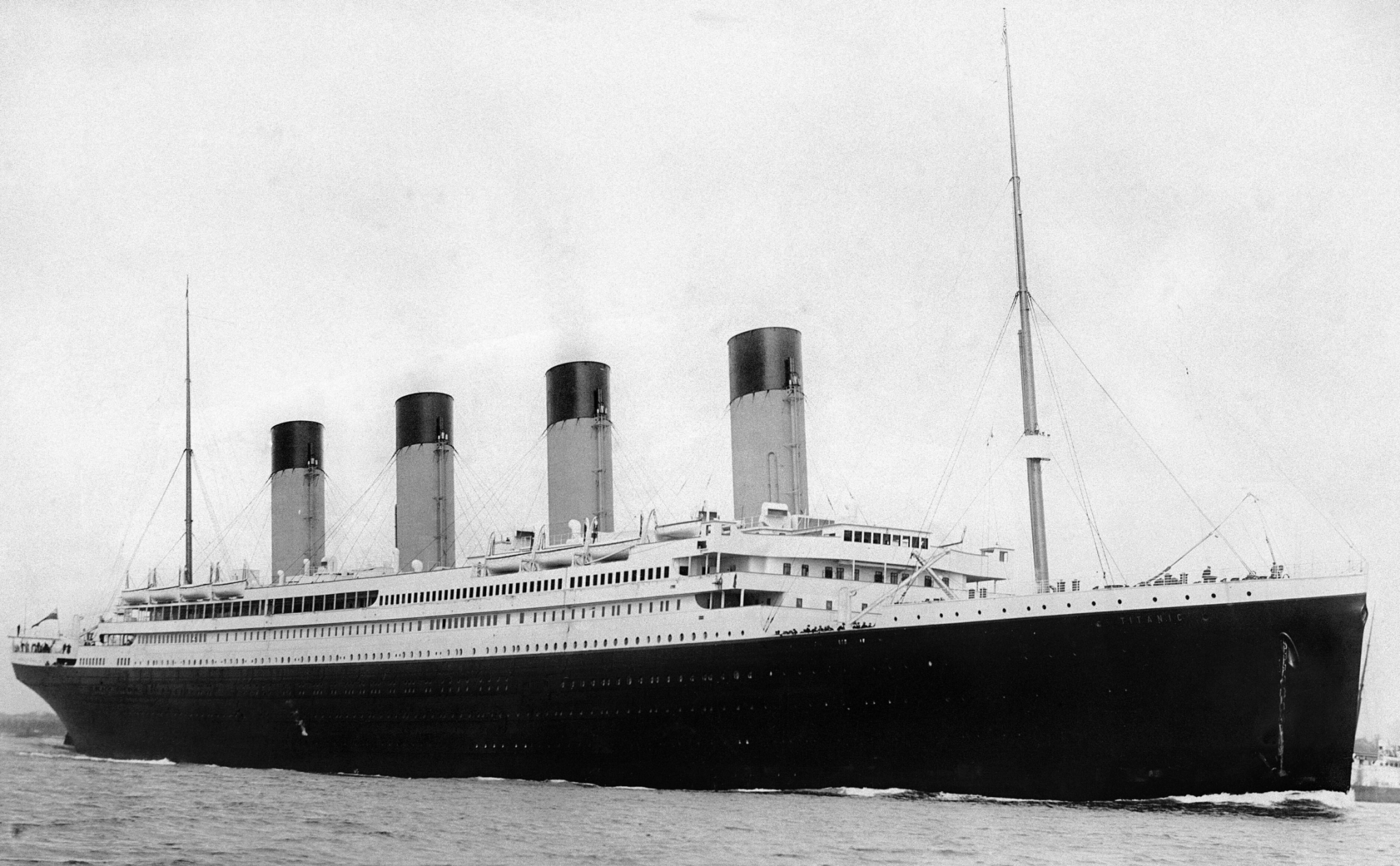
RMS Titanic departing Southampton on April 10, 1912. Public use at Wikicommons.
I sat recently with a rabbi, someone more or less of my generation, perhaps a touch younger, but exceedingly more wise and experienced in guiding a spiritual ship.
Toward the end of an insightful conversation, we arrived at the inevitable question—part Shakespearean tragedy and part cliché—where such encounters often find themselves marooned.
“You know,” she said, leaning in to be heard in a cafeteria full of rabbis brimming with animated talk about the future, “sometimes I ask my colleagues if we aren’t just rearranging the deck chairs on the Titanic.”
It was the second time in a week that someone for whom I have great respect had applied this metaphor to the challenges of leading a community. A string of associations followed, some shared aloud and others brushed aside in my head.
There is the Titanicitude of any institution, lumbering forward against waves of resistance. How do you transport the people in the pews and the precious cargo of tradition to the port of meaning and fellowship when the best route is unclear, when supplies of both spirit and funding are limited, and time feels like it’s running out?
Does a synagogue, a denomination, or a faith itself see the iceberg ahead? And what is the iceberg? Aging congregations? Antisemitism? The incompatibility of ancient doctrines and rituals with the most pressing questions of the day?
The metaphor does not stop there. It extends itself to the world as a whole. Fundamentalism. Global warming. Airborne viruses. The widening gap between those pirating away unimaginable wealth and everyone else.
Both the Jewish world and the ship of humanity have no shortage of icebergs ahead. So are we, or are we not, simply arranging deck chairs on the Titanic before we drown?
I suggested to the rabbi that there might be other ways of understanding the question.
First, there are the stories we tell.
Most of us know the narrative: a great ship, an iceberg, some heroes, and many living by the creed of “every man for himself”—all going down in a preventable disaster.
But what most of us remember when we think about the Titanic is the most popular movie of all time, in which the forever-young and beautiful Leonardo DiCaprio and Kate Winslet transcend class and fear as the lovers and heroes we would all like to be. An act of extraordinary self-sacrifice and devotion forever animates the life of a quirky old woman who survives to tell the tale.
In this sense, what remains of the Titanic in the popular imagination is a love story for the ages. But there is also something more strategic, more connected to leadership, and perhaps more livable about the story of the Titanic than this mythic tale of love.
We often build things like the Titanic driven by a kind of edifice complex—a desire to make something big that will last and impress, that will withstand the forces around it, something we can bequeath to the next generation as a symbol of what mattered to us most.
The people in the nicest cabins pour massive resources into these symbolic fortresses while those with less labor below deck to keep the thing moving forward. And then the supposedly well-trained caretakers of the ship, somehow blind to the forces of the future, ram that magnificent vessel and all of its resources into oblivion.
Human ambition probably makes this part of the story unavoidable, but the story does not have to end there. There is another scene waiting to be explored.
The Titanic can also be seen as a receptacle of tremendous resources that might very well be saved and repurposed if we could think smaller, not bigger. Through the lifeboats lowered into the sea as the ship strikes the iceberg, the singular Titanic can become an armada of possibilities.
Those boats ferry forth people who leave the great ship as they set out for new waters and new lands, outlive the blow, and carry forward the best part of what the Titanic was meant to be.
After all, the great ship was built to transport people, to reflect the grandeur of new ideas and new technologies. It was something to be proud of, something that reflected the majesty of human imagination and still captures that imagination more than a century later.
What if, on my ship or your ship, we settled in with a small band of like-minded people and decided anew where we wanted to go? Maybe we would notice another ship nearby heading in roughly the same direction and agree to sail together.
We could share resources, help the injured and sick, redirect one another when our compasses seemed off, comfort each other, share fire, food, and stories, and take turns keeping watch at night. Together we could ensure that we were greater than the sum of our individual boats.
Is it not possible that an armada of small, determined, nimble ships could escape the Titanic and carry forward the very best of its intent?
Let the deck chairs fall into the sea. Not much happens in a deck chair anyway. We nap. We sun ourselves. We drink. It gets very boring up there.
But in a small ship with people who care about the things we care about, passing by other ships where people care about different things but are moving in the right direction in their own way, perhaps we would discover that the Titanic actually gave birth to us.
Both human history and Jewish history are often like that. What seems at one moment to be the most impressive and important idea winds up giving rise to many smaller ideas that carry its deeper hopes forward.
So are we on the Titanic—as communities, as denominations, as people of faith, as nations, perhaps even as a planet? The answer is undoubtedly yes.
But now that we know where we are, the next question is whether we should spend our time rearranging the deck chairs or preparing ourselves to return to the water, to band together in dynamic, ever-changing ways, and to set forth in new vessels for the next part of the journey.
The deeper lesson of our cultural obsession with the Titanic is not what it lost, but the new fleet it might unknowingly launch.
Related Topics