


Strategic Patience in Diplomacy: Why Small States Must Think Long-Term
Introduction
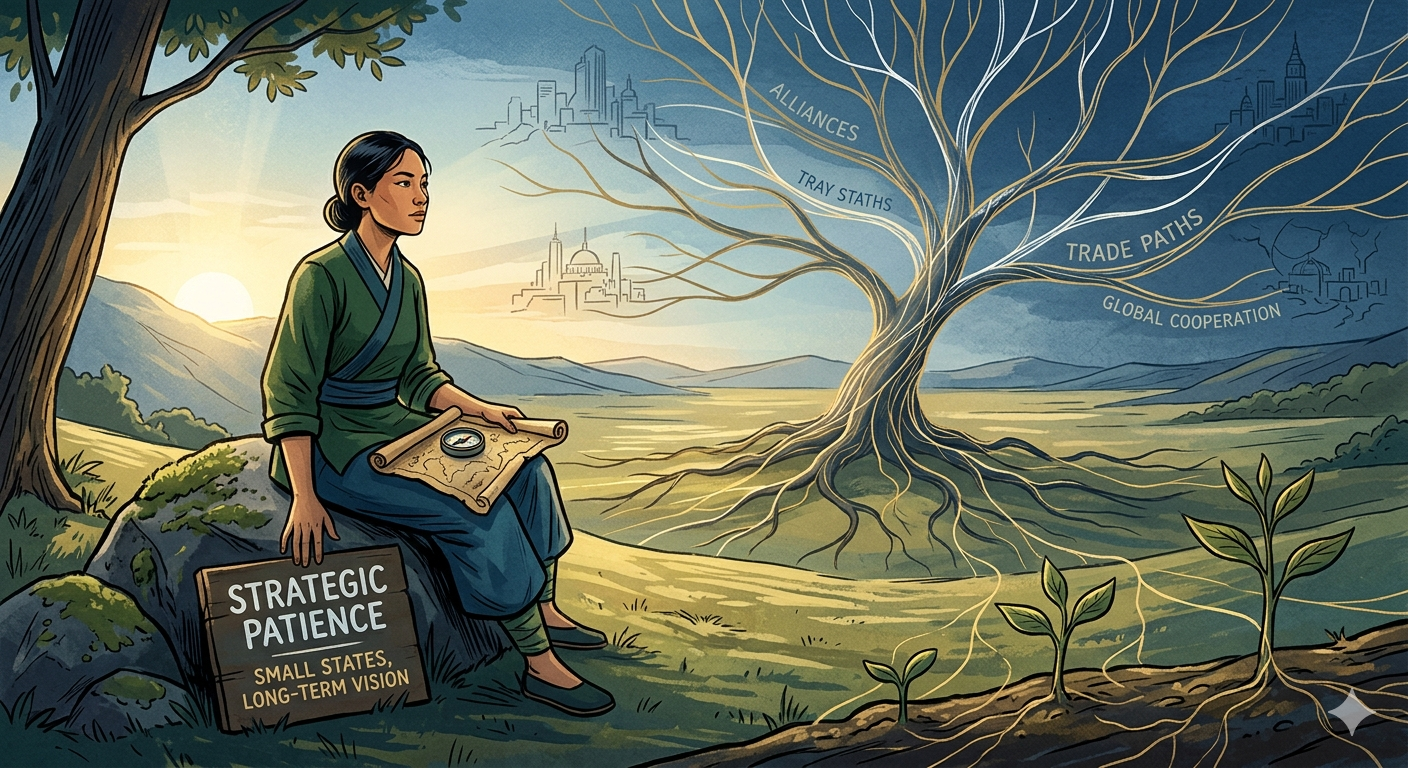
In international politics, power is often measured through military strength, economic capacity, territorial influence, and global alliances. Major powers dominate headlines, shape institutions, and frequently determine the direction of international affairs. Yet history demonstrates that small states are not necessarily powerless. Many have survived, adapted, and even prospered in highly competitive geopolitical environments through one essential strategy: strategic patience.
Strategic patience in diplomacy refers to the ability of a state to pursue long-term national interests through calculated persistence, institutional resilience, measured diplomacy, and pragmatic engagement rather than emotional reactions or short-term political gains. For small states especially, patience is not weakness; it is a strategic necessity.
In an increasingly multipolar world characterized by shifting alliances, economic competition, proxy conflicts, and geopolitical uncertainty, small states must think beyond immediate recognition, temporary political victories, or reactive diplomacy. Their survival and success depend on their ability to build sustainable institutions, maintain diplomatic consistency, and navigate complex international environments with discipline and foresight.
This article explores the importance of strategic patience in diplomacy, the challenges small states face in international relations, and why long-term thinking has become essential for political survival and international relevance.
Understanding Strategic Patience in Diplomacy
Strategic patience is the deliberate use of time as a diplomatic asset. Rather than rushing into confrontations or impulsive decisions, states adopting strategic patience focus on gradual progress toward national objectives. This approach requires political maturity, institutional continuity, and careful assessment of international trends.
For small states, diplomacy is rarely about coercion. It is about influence, legitimacy, partnerships, and credibility. Since smaller nations often lack extensive military or economic leverage, they depend heavily on soft power, negotiation, strategic alliances, and international reputation.
Strategic patience involves:
- Maintaining consistent foreign policy objectives over time.
- Avoiding unnecessary diplomatic escalation.
- Building trust with international partners gradually.
- Investing in institutions rather than temporary political symbolism.
- Understanding that recognition, influence, and legitimacy often develop incrementally.
Many successful states in modern history did not achieve international influence overnight. Their progress resulted from decades of institution-building, diplomatic engagement, economic reform, and national resilience.
The International Challenges Facing Small States
Small states operate within an international system largely influenced by powerful nations. This creates several structural challenges.
- Limited Political Influence
Large powers often dominate global institutions, security arrangements, and economic systems. Small states may struggle to have their voices heard in international decision-making forums.
- Economic Vulnerability
Many small states rely heavily on external trade, aid, remittances, or strategic partnerships. Economic shocks, sanctions, or regional instability can therefore have disproportionate effects on their domestic stability.
- Security Pressures
Geopolitical competition frequently transforms strategically located small states into arenas for regional rivalry. External actors may attempt to influence domestic politics, security structures, or foreign policy orientation.
- Recognition and Legitimacy Challenges
Some small or emerging political entities face difficulties in gaining broad international recognition despite demonstrating internal governance and stability. In such contexts, diplomatic impatience can become counterproductive.
- Institutional Fragility
Weak governance systems, political fragmentation, corruption, and inconsistent policies can undermine long-term diplomatic credibility.
These realities make strategic patience an essential framework for survival.
Why Long-Term Thinking Matters
Building Credibility Takes Time
International trust is not created through declarations alone. States gain credibility by demonstrating consistency, stability, predictability, and responsible governance over long periods.
Countries and international organizations closely observe:
- Institutional performance,
- Democratic practices,
- Security management,
- Rule of law,
- Economic governance,
- and diplomatic conduct.
A small state that remains politically stable and diplomatically responsible over time gradually strengthens its international standing.
Diplomacy Is a Marathon, Not a Sprint
Short-term diplomatic victories may generate domestic excitement, but sustainable influence requires endurance. Many foreign policy goals take years—or even decades—to materialize.
Recognition campaigns, regional integration efforts, trade partnerships, and security cooperation all require patient engagement. Abrupt policy shifts or emotional diplomatic reactions often damage credibility more than they create leverage.
Geopolitics Constantly Changes
International politics is dynamic. Alliances shift, global powers rise and decline, and regional priorities evolve. A state that appears marginalized today may become strategically important tomorrow.
Small states that maintain institutional resilience during difficult periods are often better positioned to benefit from future geopolitical changes.
The modern multipolar environment has created new opportunities for smaller actors to diversify partnerships rather than depend exclusively on one major power.
Strategic Patience and Small-State Diplomacy
The Power of Consistency
Consistency is one of the most valuable assets small states possess. Frequent changes in foreign policy direction create uncertainty among international partners.
A patient diplomatic strategy requires:
- Clear national interests,
- Long-term planning,
- Professional diplomatic institutions,
- and policy continuity beyond electoral cycles.
Consistency allows small states to gradually cultivate trust and attract partnerships.
Soft Power as a Strategic Tool
Small states often gain influence not through military projection but through soft power:
- good governance,
- peacebuilding,
- education,
- cultural diplomacy,
- economic openness,
- and mediation roles.
Countries with limited hard power can still become respected diplomatic actors if they build reputations for stability and constructive engagement.
Avoiding Reactive Diplomacy
Diplomatic reactions driven by anger, nationalism, or domestic political pressure may produce temporary popularity but long-term strategic costs.
Strategic patience encourages:
- measured responses,
- calculated negotiation,
- and diplomatic flexibility.
This does not mean surrendering national interests. Rather, it means pursuing them intelligently and sustainably.
The Role of Institutions
Strong institutions are essential to strategic patience. Diplomacy cannot depend solely on personalities or short-term political leadership.
Institutional strength includes:
- professional foreign ministries,
- competent civil services,
- independent legal systems,
- credible electoral systems,
- and stable governance structures.
When institutions are strong, foreign policy remains coherent even during political transitions.
For small states, institutional legitimacy often becomes more important internationally than military strength.
Economic Diplomacy and Long-Term Stability
Economic resilience is closely connected to diplomatic influence. States facing chronic economic instability often struggle to maintain independent foreign policies.
Strategic patience therefore requires:
- investment in infrastructure,
- economic diversification,
- regional trade cooperation,
- youth employment,
- and sustainable development.
Economic diplomacy allows small states to transform geographic or strategic advantages into long-term partnerships.
Ports, trade corridors, renewable energy projects, digital connectivity, and investment reforms can strengthen both economic and diplomatic relevance.
Lessons for Emerging and Unrecognized States
For politically contested or partially recognized states, strategic patience becomes even more critical.
International legitimacy is often influenced by:
- governance performance,
- democratic credibility,
- internal stability,
- peace and security,
- and constructive regional engagement.
Aggressive rhetoric alone rarely produces recognition. Sustainable legitimacy emerges through demonstrated responsibility and long-term institutional success.
Emerging states must therefore prioritize:
- state-building,
- international partnerships,
- development cooperation,
- and diplomatic professionalism.
Over time, practical engagement can sometimes achieve more than confrontational diplomacy.
The Multipolar World and New Opportunities
The global order is becoming increasingly multipolar. Traditional power structures are evolving as middle powers and regional actors gain greater influence.
This changing environment presents opportunities for small states:
- diversifying alliances,
- engaging multiple partners,
- increasing strategic bargaining space,
- and participating in regional economic networks.
However, multipolarity also increases competition among external actors. Small states must therefore avoid becoming overly dependent on any single geopolitical bloc.
Strategic patience enables balanced diplomacy.
Conclusion
In international relations, survival often depends less on speed than on endurance. Small states rarely possess the luxury of coercive power, but they can cultivate resilience, legitimacy, credibility, and strategic relevance through patience and long-term thinking.
Strategic patience is not passive diplomacy. It is disciplined diplomacy. It requires vision, institutional strength, national unity, and careful adaptation to changing geopolitical realities.
For small states navigating uncertain international environments, the most effective strategy is not impulsive confrontation or short-term symbolism. It is the steady pursuit of national interests through consistency, resilience, and intelligent engagement with the world.
Ultimately, the future belongs not only to the powerful, but also to those capable of thinking beyond the present moment.